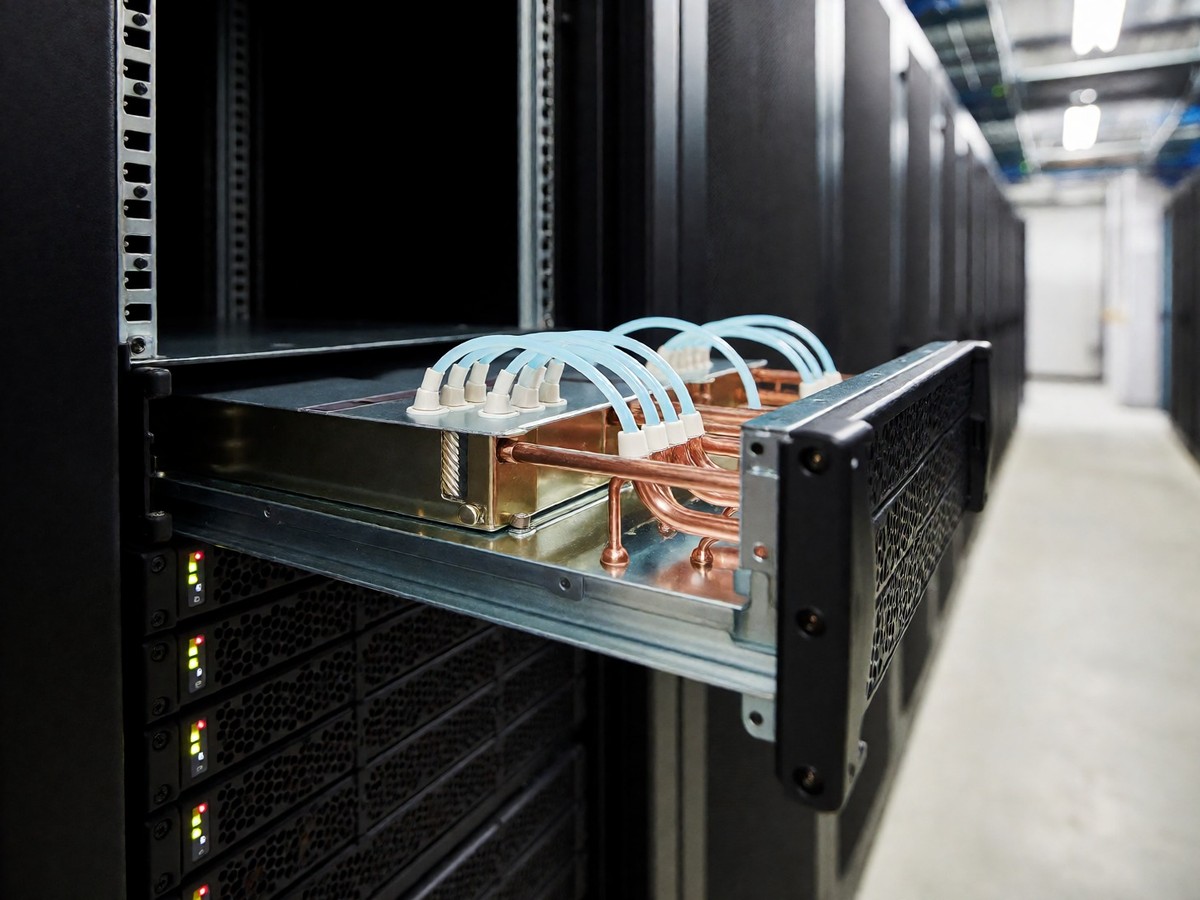
A GB300 NVL72 rack costs just under $5.0M without an in-rack CDU, while adding a 250 kW CDU increases that price by ~$32K. This single unit contains 72 Blackwell Ultra GPUs and 36 Grace CPUs housed in 18 liquid-cooled compute trays. Nine NVLink switch trays fuse these components into a coherent domain providing 130 TB/s of aggregate bandwidth. The system draws between 132 and 140 kW, which is ten times the power of a conventional enterprise rack. It ships crated at nearly 4,000 lbs.
Hardware density and deployment costs
The compute trays represent about 87% of the total value. Within these trays, the 72 GPU modules alone cost ~$3.4M, while the Grace complex, NICs, and tray hardware make up the remaining amount. NVIDIA content exceeds 92% when you include the NVLink fabric. Everything else, such as power shelves, busbar, cold plates, steel, cabling, and integration, accounts for under 8% of the cost. Morgan Stanley notes that in-rack cooling content rises about 20% per generation, moving from $42K on the GB200 to $50K on the GB300.
| Specification | GB300 NVL72 |
|---|---|
| GPU Count | 72 Blackwell Ultra |
| CPU Count | 36 Grace |
| Aggregate Bandwidth | 130 TB/s |
| Power Draw | 132 – 140 kW |
| Weight | ~4,000 lbs |
| HBM3e per GPU | 288 GB |
| Total Rack HBM3e | ~21 TB |
Deploying this hardware adds significant expenses beyond the purchase price. A purchased rack arrives EXW, meaning the buyer handles transport from the loading dock. Making the rack produce tokens in an existing facility requires managing power and facility costs. Even at $0.15/kWh, five years of electricity totaling ~$1.1M stays under one fifth of the deployed capex. Facility costs remain meaningful, but depreciation dominates the monthly budget. A center pays roughly $12K to $34K a month for the facility compared to $95K to $158K a month for straight-line hardware depreciation. I find the massive depreciation figures more intimidating than the power bills.
Economics of the GPU hour
One rack holds 630,720 GPU-hours per year. At 80% utilization, the rack produces compute at $2.56 per utilized GPU-hour. If utilization slips to 60%, the cost rises to $3.84. Most hyperscalers like Microsoft, Google, and Oracle depreciate AI servers over 4 to 6 years, while CoreWeave uses 6 years. These companies must keep 72 GPUs busy before the next generation resets the economics.
The hardware presents reliability challenges during large runs. An illegal memory access can trigger an Xid 137, which is an "NVLink privilege error" reported by a remote GPU’s memory unit. Because a large run splits work across every GPU in the cluster, these peer-to-peer permission faults occur regularly. When a fault fires, the job on that GPU aborts and the run rolls back to its last checkpoint. How will providers manage the lost hours when a single fault kills a massive training job?