OpenAI’s Stargate project encompasses a $500 billion investment to build several large data center campuses across the United States over four years. This initiative targets 10GW of total capacity to power next-generation artificial intelligence. The flagship site in Abilene, Texas, already operates at 0.3GW and contains two buildings that energized in September 2025. This Abilene site, which manages the deployment of 450,000 NVIDIA GB200 GPUs, aims for a total capacity of 1.2GW. Because the project requires massive physical infrastructure, the scale of the endeavor continues to grow. The current buildout involves a complex network of partners, including Oracle, SoftBank, and Crusoe.
The Abilene site’s expansion depends on the second phase of construction, which began in March 2025. This phase includes six additional buildings and another gigawatt of capacity, with an expected completion date in the fourth quarter of 2026. While the first buildings handle training and inference workloads, the total site capacity could exceed 1GW if expansion continues. SoftBank and OpenAI invested $19 billion into the venture, while Oracle and Abu Dhabi’s MGX contribute a combined $7 billion. OpenAI also expects to spend $1.4 trillion on cloud commitments. The development of these sites relies on a massive supply of high-performance silicon and specialized infrastructure.
TSMC capacity and packaging bottlenecks
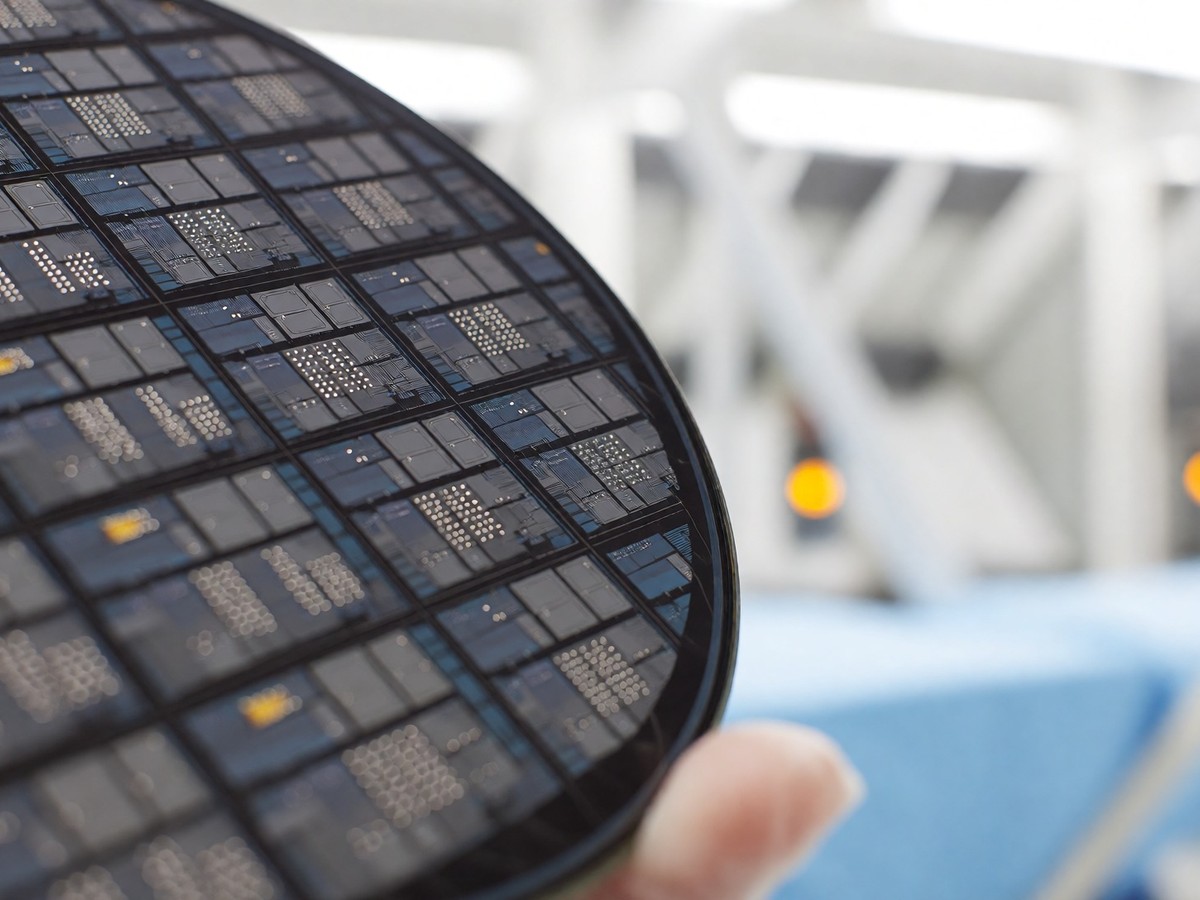
TSMC manages the CoWoS advanced packaging required for NVIDIA Blackwell and AMD MI350 series accelerators. TSMC currently produces 36,000 wafers per month for CoWoS. The company plans to increase this to 90,000 wafers per month by the end of 2025 and 130,000 wafers per month in 2026. NVIDIA CEO Jensen Huang stated that CoWoS assembly capacity remains oversubscribed through at least mid-2026. This capacity constraint directly impacts the volume ramps for Blackwell Ultra.
The competition for these limited packaging slots involves every major chip designer. AMD, Broadcom, Google, Amazon, and Meta all compete for the same finite CoWoS capacity. TSMC expects to expand CoWoS capacity by 60% in 2025 and 50% in 2026, but new cleanroom modules remain spoken for long before they open. If a manufacturer does not secure capacity for leading-edge nodes like 3nm or 2nm, they face significant delays. TSMC’s 2nm fabs in Arizona and Kaohsiung will not reach meaningful output until late 2026 or early 2027.
The fabrication of Blackwell architectures depends heavily on these packaging timelines. NVIDIA’s Blackwell Ultra GB300 shipments aim for a 129% year-over-year increase in 2026. However, the industry has not yet realized the full potential of these newer servers. Manufacturers like Foxconn have adjusted to supply chain requirements by using the older Bianca board configuration for Blackwell Ultra to improve production yield rates. This design choice helps mitigate some complexity in the supply chain.
HBM memory shortages and lead times
High-bandwidth memory (HBM) remains the most significant bottleneck in the AI hardware stack. The scarcity of HBM forces customers to reserve capacity 18 to 24 months in advance. The HBM capacity for calendar 2025 and 2026 remains fully booked for Micron. SK hynix expects supply to remain tight compared to demand into 2027. Samsung also noted that customer demand for next year will exceed its supply. These shortages affect next-generation platforms including Blackwell Ultra, Rubin, and AMD MI400.
The demand for HBM creates ripple effects across the entire semiconductor industry. Capacity for HBM eats into the availability of conventional DRAM, such as DDR5 and LPDDR5. This tension sets up shortages in other sectors like smartphones and automobiles through 2026. Procurement teams face 12 to 18 month lead times for GPU and AI server orders. This makes the delivery timeline for Stargate’s various phases highly dependent on memory allocations.
| Specification | NVIDIA Blackwell B200 | NVIDIA Blackwell Ultra B300 | AMD Instinct MI355X |
|---|---|---|---|
| HBM Capacity | 192 GB | 192 GB | 288 GB |
| Memory Bandwidth | 7.7 TB/s | Not Specified | 8 TB/s |
| Power Draw | Not Specified | Not Specified | 1,400 W |
| Performance (FP4) | 20 PFLOPS | 1.3x faster than MI355X | Not Specified |
Regulatory delays in New Mexico
The Project Jupiter site in Dona Ana County, New Mexico, faces direct regulatory hurdles that threaten its timeline. STACK Infrastructure develops this 2.2GW facility using four large buildings. The air-permit hearing originally scheduled for September 14, 2026, did not occur because the New Mexico Environment Department must appoint a new hearing officer. On September 17, 2026, the New Mexico Supreme Court denied the due-process petitions behind the August 23 stays. This decision lifted the holds, but the air-permit proceeding and the use of the construction well require a new schedule.
Legal challenges regarding water usage also threaten the development of the New Mexico site. Water-well protest hearings before the Office of the State Engineer will not proceed before 2027. This delay directly impacts the ability to build the foundation and infrastructure for the 2.2GW project. Will the regulatory delays in New Mexico eventually halt the progress of Project Jupiter? The project relies on Bloom Energy fuel cells and a natural gas microgrid to manage energy needs. These site-specific designs attempt to bypass grid connection delays but add to the complexity of the buildout.
Power infrastructure and grid connection constraints
Gigawatt-scale AI data centers require massive power loads that exceed traditional grid capabilities. To avoid long queues for grid connections, several Stargate sites utilize on-site natural gas plants. The Shackelford County site in Texas plans for 2.0GW of capacity. The Dona Ana County site in New Mexico targets 2.2GW. The Milam County site in Texas plans for 1.2GW. These sites use natural gas to provide power, which reduces the time needed for utility interconnection.
In Wisconsin, the Port Washington site, developed by Vantage, targets 1.3GW of capacity. This site uses a combination of solar, wind, and battery storage. The project in Saline Township, Michigan, also uses a battery storage system to augment power from DTE Energy. In Texas, SB Energy provides power for the Milam County site through new energy generation and storage. These power strategies aim to ensure that the massive load of Stargate does not increase electricity prices for local residents.
The ability to deliver compute depends entirely on the stability of these power solutions. The project in Lordstown, Ohio, provides less than 0.3GW through a joint venture between SoftBank and Foxconn. This site relies on a substation that already connects to the grid. However, the massive power requirements of Blackwell and Rubin architectures demand continuous, high-capacity energy. Any failure in the power flywheel or delays in energy infrastructure will slow the deployment of the 10GW total commitment.
AMD competition and memory advantages
AMD competes with NVIDIA by targeting the inference market with the MI350 series. OpenAI holds a 10% stake in AMD to secure 6GW of GPU supply. The MI355X carries 288GB of HBM3E memory, which exceeds the 192GB capacity of the NVIDIA B200. This memory advantage allows the MI355X to handle larger models in a single node. The MI355X draws 1,400 watts of power, which matches the requirements for Blackwell Ultra.
The MI355X delivers 2.6 times the inference throughput of an H100 on Llama 3.1 405B models. AMD targets the inference market where the software moat of CUDA is narrower. The MI355X provides a lower cost per token for certain workloads compared to NVIDIA’s stack. AMD uses its strong balance sheet to support the Neocloud ecosystem by renting GPUs back to cloud providers. This strategy helps drive adoption among companies looking for alternatives to NVIDIA.
The MI400 series will arrive in the second half of 2026 as a true rack-scale solution. AMD’s MI400 will use Broadcom Ethernet Tomahawk 6 switches because other options will not be ready. The MI400 aims to compete with NVIDIA’s VR200 NVL144 in terms of scale-up bandwidth. While NVIDIA maintains a dominant market share, AMD’s growth in the inference segment creates a multi-vendor environment. You know the hardware requirements for training frontier models, so look at the specific power and memory constraints.
Supply chain convergence and delivery risks
The delivery of Blackwell Ultra for the Stargate timeline faces a convergence of three distinct risks. First, the CoWoS packaging capacity remains the primary governor on GPU output. Second, the HBM supply is completely booked through 2026, which creates a physical limit on how many GPUs can be assembled. Third, regulatory and permitting delays in states like New Mexico threaten the completion of large-scale campuses like Project Jupiter.
The scale of Stargate is so large that even small delays in any single component create massive downstream effects. The project requires a constant flow of power, land, shell, and IT components. If NVIDIA cannot ramp Blackwell Ultra due to TSMC capacity, the $500 billion investment loses momentum. If HBM vendors cannot meet demand, the project will lack the necessary compute density. The project’s success depends on the ability of partners like Oracle and SoftBank to synchronize these volatile supply chains.