Memory-first efficiency vs. Interconnect scale
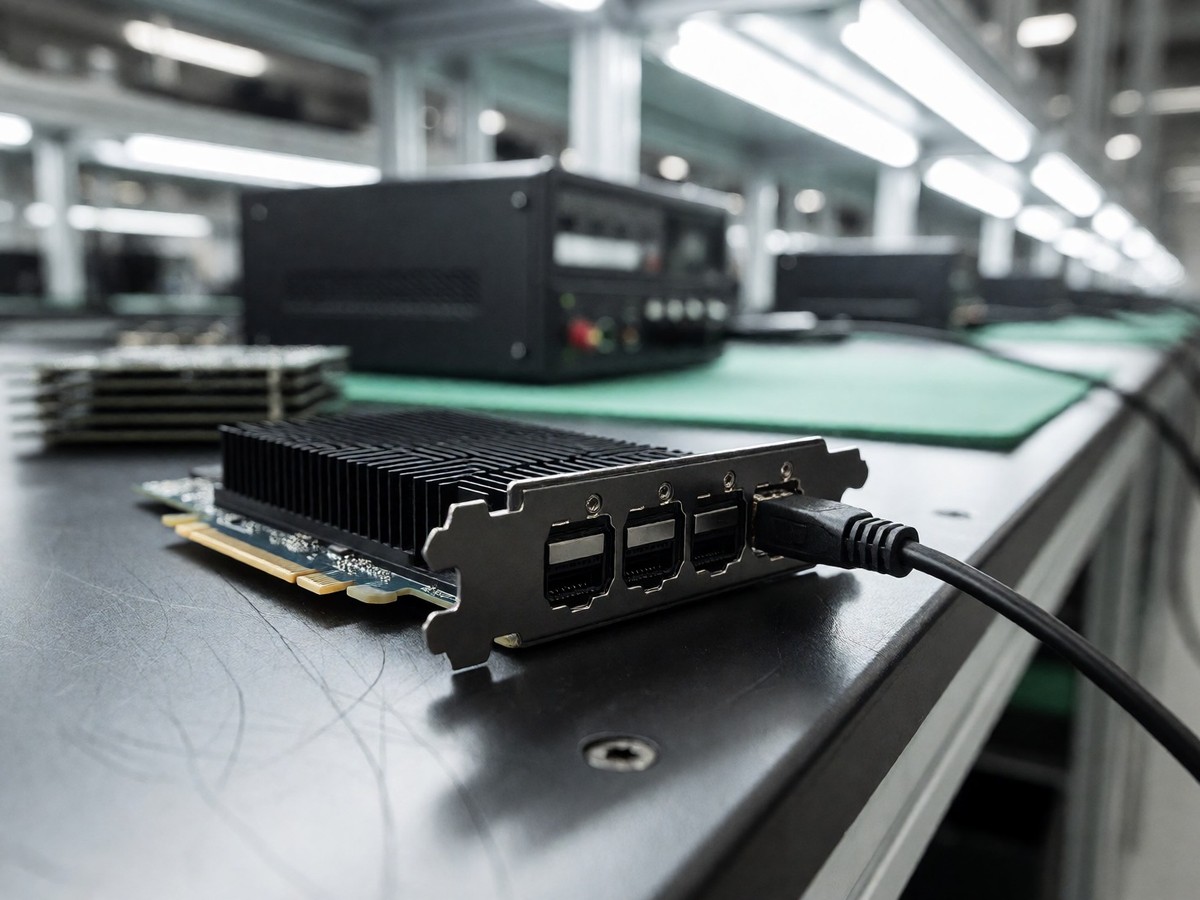
Reno-based Positron AI raised $875M in Series C financing to advance its next-generation AI inference hardware. The company builds memory-first inference systems to address memory bandwidth and power bottlenecks. Its architecture uses LPDDR5X instead of constrained HBM. The Titan system, designed for long-context workloads, contains up to 2.3TB of memory per chip. Positron claims its Atlas systems deliver 3.5 times better performance per dollar and 3.5 times greater power efficiency than Nvidia H100 GPUs for inference. This translates to 70% faster inference at 66% lower power consumption compared to H100 or H200 setups. You should focus on how these chips handle weight movement during inference. Positron already deployed 50+ Atlas racks at Oracle Cloud Infrastructure, which support models with up to 500 billion parameters. The company’s Asimov silicon will power Titan, a system built for agentic and next-generation AI workloads. This architecture sidesteps the reliance on high-bandwidth memory to lower costs. The company aims to reduce data center capital expenditure by 50% through these advancements. The funding funds the Asimov tapeout, a 2MW+ engineering data center and Titan’s production ramp. New Enterprise Associates, Atreides Management, LP, Valor Equity Partners, Andra Capital, SemiAnalysis, and Jim Clark co-led the round. Positron targets the growing demand for energy-efficient solutions for memory-intensive AI applications. The company targets strong revenue growth in 2026.
The Passage platform
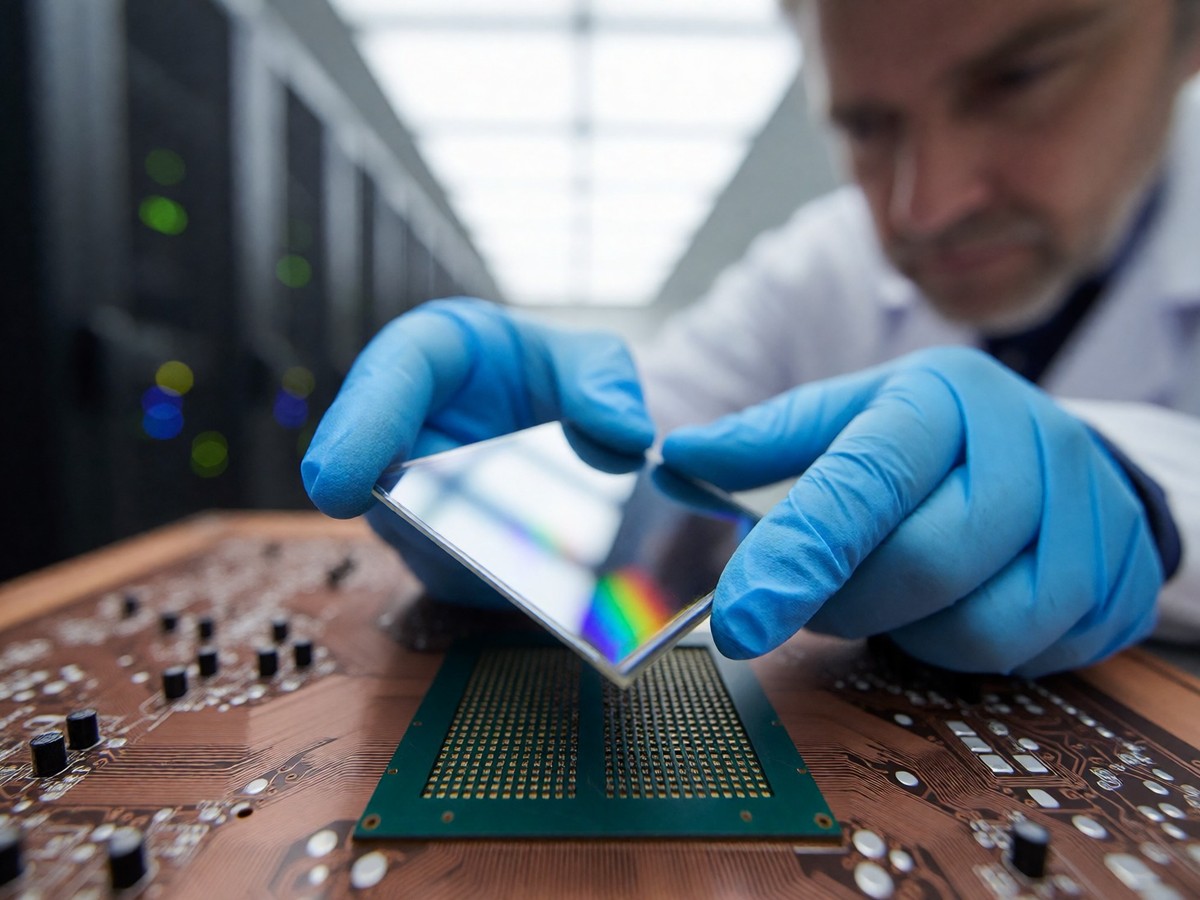
Lightmatter targets the data center interconnect bottleneck with its Passage platform. The M1000 platform uses a 3D photonic interposer to connect up to 34 chiplets. This 4,000 mm2 die area provides 114 Tbps of bidirectional bandwidth. While Positron targets the specific memory constraints of LLM inference through its LPDDR5X-based Asimov architecture, Lightmatter focuses on solving the scale-up problem by using a 3D photonic interposer to connect up to 34 chiplets with 114 Tbps of bandwidth. Lightmatter’s full-surface approach increases manufacturing and integration complexity compared to edge-only chiplet solutions. The L200 models provide 32 Tbps and 64 Tbps of aggregate bandwidth. These modules arrive in 2026 to support next-generation XPUs and switches. The Passage platform uses light to move data between chips more efficiently than traditional copper wires. Lightmatter integrates optical fiber directly into chip packaging to enable fast communication between chips. The M1000 platform provides 1,024 high-speed SerDes lanes. The L200 and L200X models provide 32 and 64 terabits per second of aggregate bandwidth respectively. These L-series modules use 16 wavelength division multiplexing per waveguide to support 800 Gbps or 1.6 Tbps per fiber. The M1000 provides 114 Tbps from a single package via 256 optical fibers. The Passage M1000 arrived in summer 2025, while the L200 arrives in 2026. The L20 offers 12.8 Tbps for near-package or on-board optics.
| Product | Max Bandwidth | Key Feature |
|---|---|---|
| Passage M1000 | 114 Tbps | 4,000 mm2 interposer |
| Passage L200 | 32 Tbps | 16 wavelength division multiplexing |
| Passage L200X | 64 Tbps | 106/112 Gbps PAM4 |
| Passage L20 | 12.8 Tbps | Near-package/On-board |
The verdict for data center deals
The two technologies solve different parts of the AI scale problem. Positron prioritizes memory economics to reduce the cost of running agents and copilots. Lightmatter prioritizes data movement to collapse datacenter-level communication into a single superchip. Positron’s architecture targets the memory wall by using LPDDR5X instead of the expensive HBM used by Nvidia. This choice reduces the power and cost of moving weights. Lightmatter addresses the interconnect bottleneck by replacing traditional shoreline-limited I/O with edgeless connectivity. The Passage M1000 supports multi-reticle die complexes that enable larger chip areas. This overcomes the limits of single-chip performance. You should decide if your priority is lower cost per inference or higher density per rack. Positron provides the better path for standalone inference appliances. Lightmatter provides the better path for high-performance supercomputing platforms. Data center energy consumption might reach 20% of global power by 2030, so both companies aim to reduce this footprint. Positron uses its memory-first architecture to address the power consumption of large models, while Lightmatter uses its 3D photonic engine to provide massive bandwidth density. Positron wins the inference efficiency battle for standalone deployment, whereas Lightmatter provides the superior architecture for scaling entire clusters via interconnects. Will the market favor memory-centric efficiency or massive interconnect bandwidth?