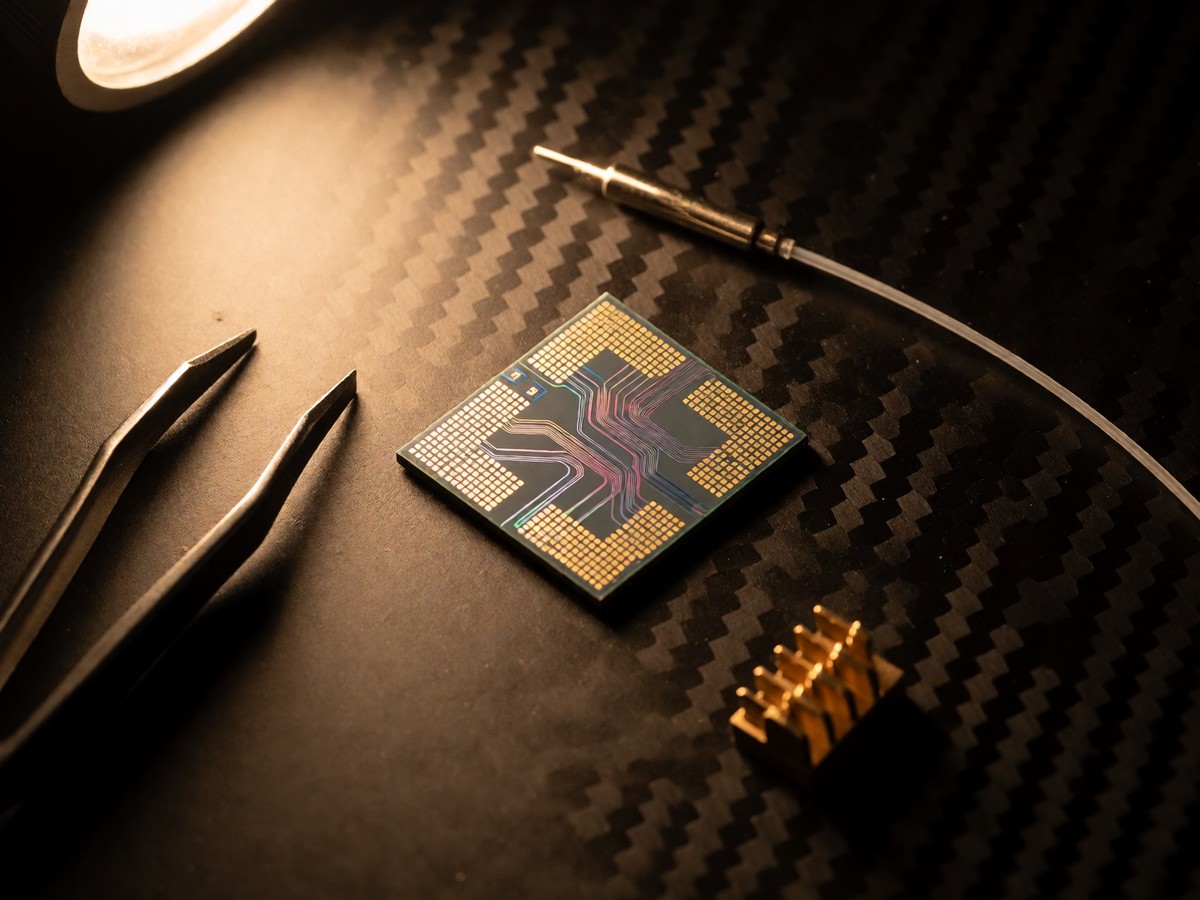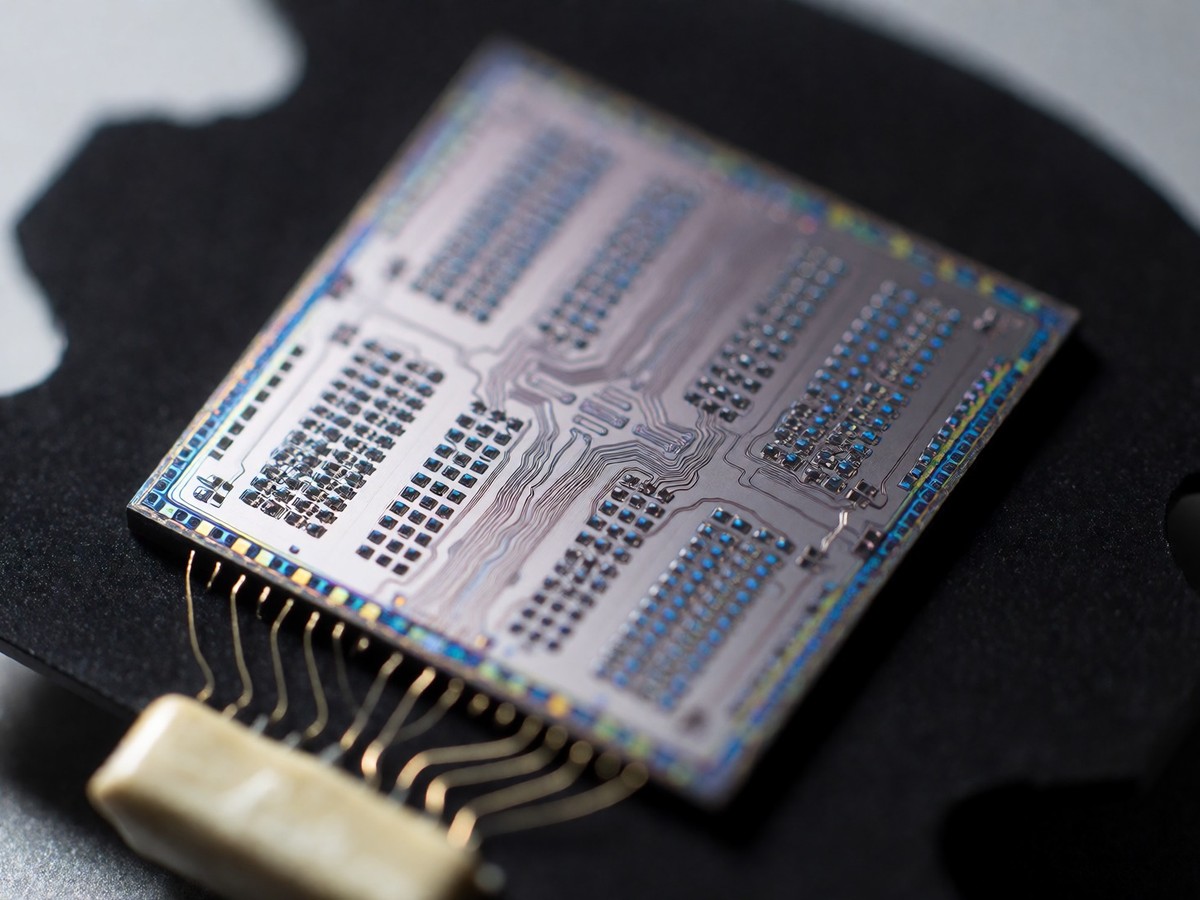
Positron AI funding and the Titan roadmap
Positron AI secured $875 million in Series C funding in September 2026. This funding round included investors like New Enterprise Associates, Atreides Management, Valor Equity Partners, Andra Smart Capital, Dylan Patel’s SemiAnalysis Capital, and Jim Clark. The company follows a $234 million Series B in January 2026 and a $51.6 million Series A in June 2025. CEO Mitesh Agrawal leads the firm alongside CTO Thomas Sohmers and Chief Scientist Edward Kmett. The company produces memory-optimized hardware for the AI inference market, which reached $113.47 billion in 2025 and grows at a 17.5% CAGR to reach $253.75 billion by 2030. Positron’s Atlas system supports 500-billion-parameter models using an FPGA-based architecture with 93% bandwidth utilization. The upcoming Titan system arrives in 2026 and uses Asimov silicon to support 16-trillion-parameter models. This Titan system provides 2TB of memory per accelerator and enables parallel hosting of multiple agents. This capability removes the 1:1 model-to-GPU constraint for developers. Early customers include Cloudflare and Parasail via SnapServe. The company operates within a $320 billion AI infrastructure spending wave. The 2025 AI Action Plan prioritizes domestic semiconductor production with $540 billion in private investments announced since 2020. This plan includes Advanced Manufacturing Investment Credits and streamlined permitting for data centers.
Performance comparisons at the edge
Positron’s Atlas hardware delivers 70% faster inference and 66% lower power consumption than H100 or H200 setups, which reduces data center capital expenditures by 50% for enterprises managing large language models. While legacy GPU systems consume up to 10,000 watts per server and utilize only 10% to 30% of their bandwidth, Positron’s memory-optimized architecture hits 93% bandwidth utilization. This provides 3.5x better performance per dollar than the NVIDIA H100. Intel’s Gaudi 3 provides a different alternative, delivering 1.5x faster inference than the H100 and 50% faster performance on select workloads. Gaudi 3 provides 128 GB of High-Bandwidth Memory and 3.7 TB per second of bandwidth. The Gaudi 3 doubles the number of Tensor cores from 24 to 64 and quadruples peak BF16 matrix throughput. The Gaudi 3 also provides 30% faster inferencing compared to the H200 and 50% faster training for Meta’s Llama 2 model than the H100. Although Gaudi 3 provides 1.4x the peak throughput of the AMD MI300X, it falls 28% short of NVIDIA Blackwell. You already know the H100 dominates training, but the real fight happens at the edge.
| Spec | Positron Atlas | Intel Gaudi 3 |
|---|---|---|
| Max Model Support | 500B parameters | Large language models |
| Next-Gen Support | 16T parameters | N/A |
| Inference Speed | 70% faster vs H100 | 1.5x faster vs H100 |
| Power Efficiency | 66% lower vs H100 | N/A |
| Memory Bandwidth | 93% utilization | 3.7 TB/s |
Deployment and interconnect strategies
Intel targets enterprise customers by selling Gaudi 3 through partners such as Dell, Hewlett Packard Enterprise, Lenovo, and Supermicro. The Gaudi 3 uses Ethernet for chip-to-chip and board-to-board interconnects. This differs from the proprietary high-speed local interconnects used by other designers. Customers tuning software to the underlying hardware will avoid Gaudi 3 because Intel will develop no further chips based on its architecture. Positron relies on domestic manufacturing in the United States, including fabrication in Arizona, to mitigate supply chain risks. The 2025 AI Action Plan prioritizes domestic production, and the rescission of Biden-era export restrictions on AI chips opens more markets. Data centers use 2% of global electricity, and AI inference will consume 40% of that by 2030. Positron’s architecture addresses power constraints in legacy data centers where high-power GPUs consume 10,000 watts per server. Intel’s Gaudi 3 uses a 5nm process, while the Gaudi 2 used a 7nm node. Intel’s Gaudi 3 provides 1.5x higher HBM memory bandwidth than its predecessor and can scale to 1,024 nodes with eight units each to deliver 15 Exaflops of theoretical performance. Microsoft plans to spend $80 billion on AI infrastructure, and OpenAI announced a $500 billion Stargate program. Will the industry prioritize Intel’s open Ethernet approach or stick to proprietary interconnects?