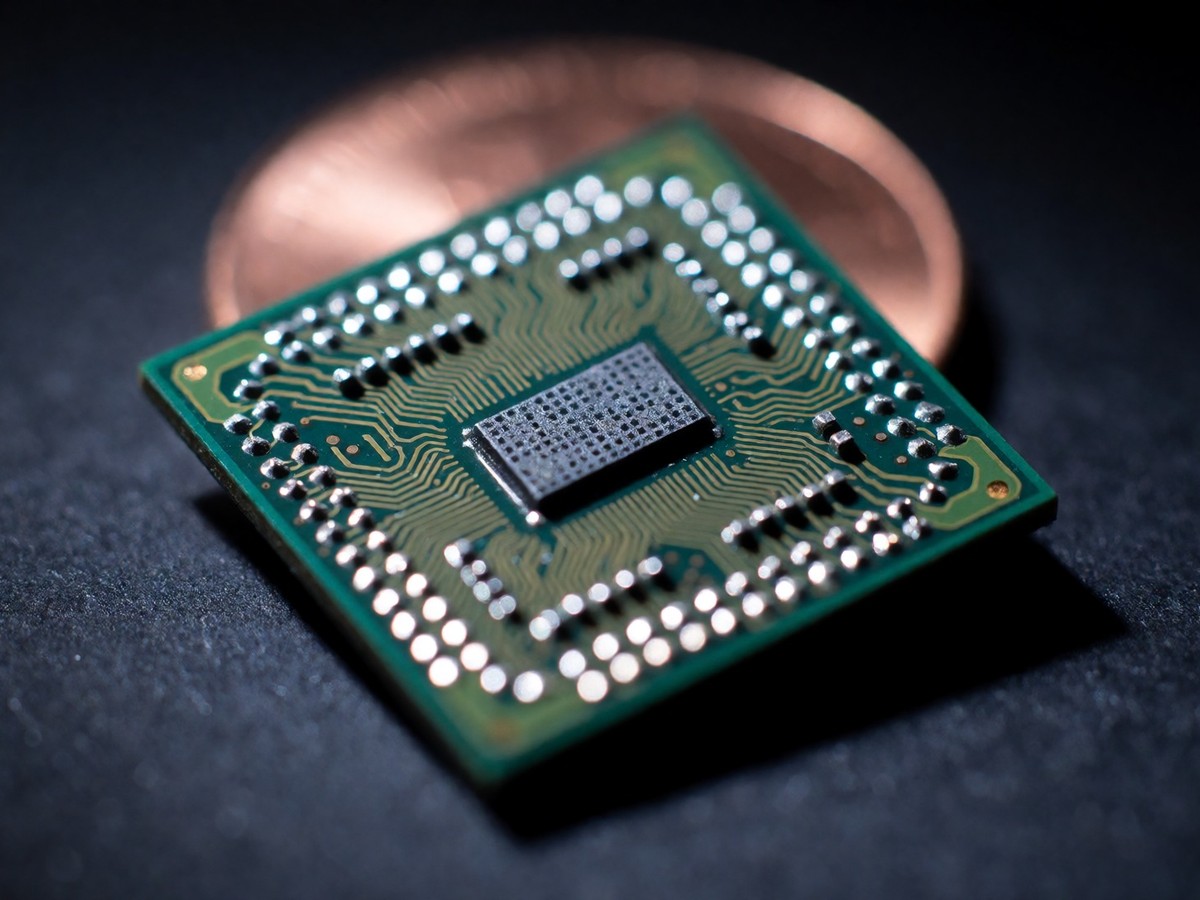
Foxconn integrates the Hailo-8 M.2 module into its BOXiedge edge computing platform to process 20 camera streams simultaneously. This module uses the Hailo-8 AI accelerator, which delivers 26 TOPS of performance and consumes 2.5W of power. Hailo-8 works with TensorFlow and ONNX frameworks through the Hailo Dataflow compiler. The chip adapts to the neural network’s needs automatically. For users in industrial or automotive sectors, Hailo-8 provides options that withstand temperatures from -40°C to 105°C. Hailo-8 delivers 3 TOPS per watt of power efficiency, which allows it to analyze more frames per second than Intel’s Myriad-X or Google’s Edge TPU. The chip is smaller than a penny, and manufacturers offer this solution on various M.2 card options. This allows for easy integration without external memory. Foxconn uses the M.2 module as a standard solution, which eliminates the need for hardware rework. Axiomtek uses the Hailo-8 in the RSC100 i.MX Quad system to process video with dual Gigabit Ethernet for cameras and LiDAR. The Axiomtek RSC101 provides a palm-sized solution with a wide operating temperature from -10°C to +60°C.
Local Generative AI Inference
The Hailo-10 GenAI accelerator targets personal computers and automotive infotainment systems to run large language models locally. This module delivers 40 TOPS of performance at a typical power draw of 3.5W. The Hailo-10 GenAI accelerator enables users to run chatbots, copilots, and other emerging content generation tools locally on edge devices without needing to register for cloud-based services or suffer from the latency issues often found in cloud-based processing. It runs Llama2-7B with 10 tokens per second at under 5W of power. It also processes Stable Diffusion 2.1 images in under 5 seconds within the same power envelope. The Hailo-10H M.2 module provides 40 TOPS of INT4 compute performance. Developers currently use the Hailo-10H on Raspberry Pi 5 via the Hailo-10H AI HAT+ 2. This setup allows the concurrent operation of services like Hailo-Whisper and Hailo-Florence. Hailo-Whisper handles speech-to-text tasks, while Hailo-Florence provides multi-model support for captioning and visual question answering. You should note that the Hailo-10H hardware requires a PCIe M.2 slot for integration. The 8GB LPDDR4 ceiling on the Hailo-10H limits models larger than 7B parameters unless developers use aggressive quantization. The Hailo-10 architecture provides maximum GenAI performance with minimum power. It allows users to perform real-time translation, software code generation, and image or video creation from text prompts on PCs or other edge systems. The Hailo-10 provides continuous access to GenAI services regardless of network connectivity. This removes latency concerns and improves privacy by keeping personal information anonymized. The technology reduces reliance on the processing power of cloud data centers.
| Specification | Hailo-8 | Hailo-15 (Industrial) | Hailo-10H |
|---|---|---|---|
| Max Performance | 26 TOPS | 20 TOPS | 40 TOPS |
| Typical Power | 2.5W | Camera SoC level | 3.5W |
| Use Case | Vision/Industrial | Vision/Camera | GenAI/PC |
The Hailo-15 series provides high-frame-rate processing and supports 4K60 image quality with built-in High Dynamic Range and Noise Reduction. The industrial-grade Hailo-15 SoCs provide options for 7, 11, or 20 TOPS of processing capability. These SoCs target camera, image, and video processing workloads. Will the integration of specialized GenAI chips eventually replace general-purpose NPUs in consumer electronics?
Market Shifts and Corporate Acquisition
Microchip acquired Hailo in July 2026. This acquisition followed a period of market volatility where Hailo’s valuation fell to under $500 million, a significant drop from its April 2024 valuation of $1.2 billion. Delek Automotive recorded a loss of approximately $77 million on its investment in 2025. In January 2026, the company laid off 10% of its workforce to focus on robotics. Hailo raised more than $340 million across its funding rounds. The company reached unicorn status in 2021 after raising $136 million. Investors in the 2024 Series C extension included the Zisapel family, Gil Agmon, Delek Motors, and others. The founding team includes Orr Danon, Avi Baum, Hadar Zeitlin, and Rami Feig, all of whom emerged from the Israel Defense Forces’ Unit 81. Hailo maintains offices in the United States, Europe, Japan, South Korea, China, and Taiwan. In January 2026, Delek Automotive provided a $9 million loan at a 1.5% monthly interest rate to address cash flow needs. Hailo serves more than 300 customers in the automotive, security, retail, industrial automation, medical devices, and defense sectors.