The London origins
Demis Hassabis, Shane Legg, and Mustafa Suleyman founded DeepMind in 2010 in London. The founders aimed to build general-purpose AI by teaching machines to play games from the 1970s and 1980s. Hassabis brought a PhD in neuroscience, Legg provided theoretical accounts of AGI, and Suleyman provided social-entrepreneurship experience. Horizon Ventures and Founders Fund provided early investment in 2011. Google acquired the company in 2014 for $500 million. This acquisition included a commitment to an independent ethics board, but that board never appeared. I find the absence of that board a failure of the original agreement. Cambridge Computer Laboratory named the company "Company of the Year" in 2014. In 2013, the company published research on an AI system that surpassed human abilities in games like Pong and Enduro. A December 2013 NIPS paper introduced the Deep Q-Network, which led to a February 2015 Nature paper describing a single DQN that reached human-level play across 49 Atari games. In 2016, DeepMind became a founding member of the Partnership on AI alongside Amazon, Google, Facebook, IBM, and Microsoft. The company also launched DeepMind Health in 2016, which included the acquisition of the healthcare app Hark and a collaboration with Moorfields Eye Hospital to analyze eye scans. In August 2016, a research programme with University College London Hospital aimed to develop an algorithm to differentiate between healthy and cancerous tissue in head and neck areas. In 2017, the company opened the DeepMind Ethics and Society unit with philosopher Nick Bostrom and released GridWorld, an open-source testbed to evaluate if algorithms learn to disable kill switches. In 2018, the company developed the Streams app to send alerts to doctors about patients at risk of injury.
The reinforcement learning revolution
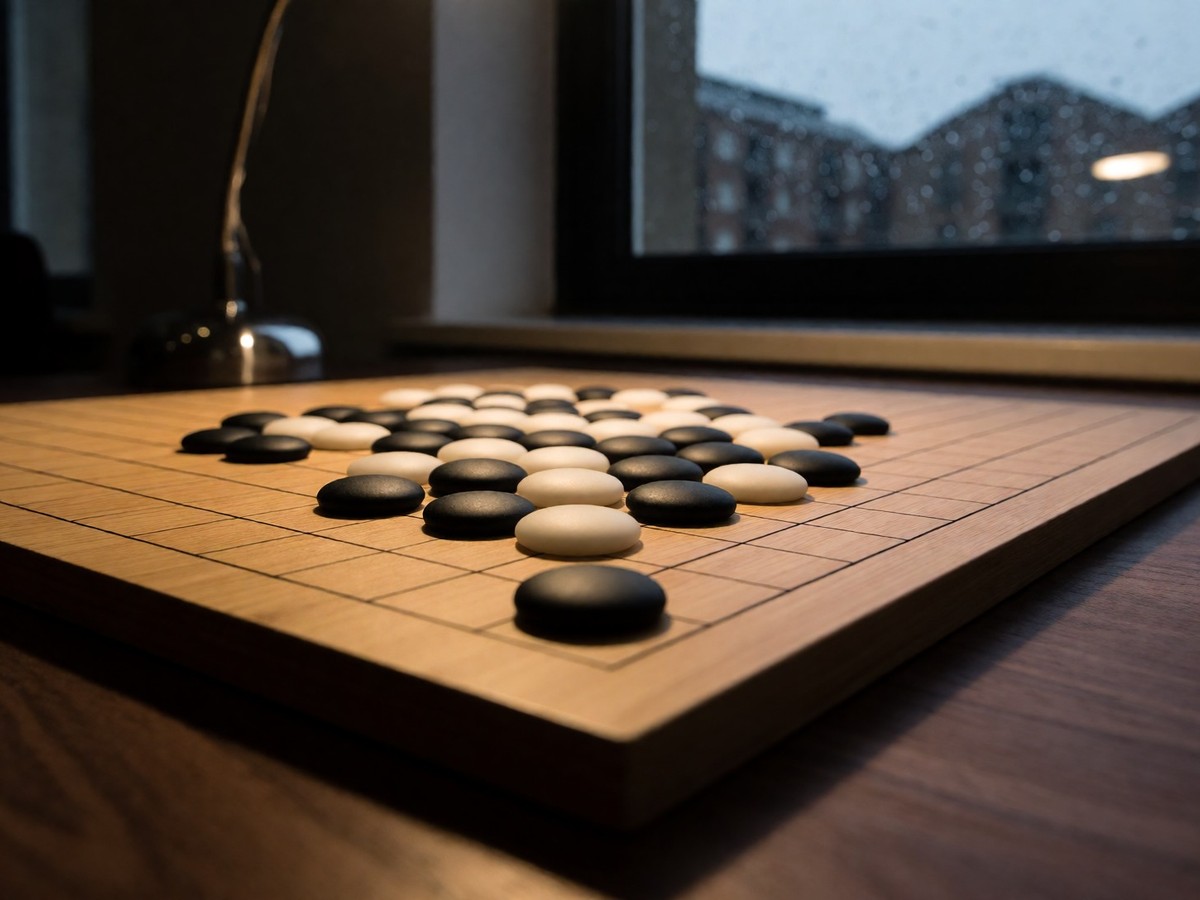
The 2016 match between AlphaGo and 18-time world champion Lee Sedol proved the power of reinforcement learning. AlphaGo won the match series 4-1 in South Korea. Because Go has a massive number of possible moves, traditional brute force methods cannot succeed. The AlphaGo system used two separate neural networks to predict the probable best move and the eventual winner. In 2017, the company released AlphaGo Zero, which learned the game from first principles without human data. In just three days and 4.9 million training games, AlphaGo Zero reached the same level that took its predecessor several months and 30 million training games to achieve while it utilized only four tensor processing units. This new version used only four of Google’s tensor processing units compared to the 48 used by the original AlphaGo. The system merged the two neural networks into a single one with many more layers of artificial neurons. It also discarded "rollouts" in favor of a higher-quality neural network to make predictions. The program independently discovered moves that humans took millennia to develop. You know that scaling data is usually the priority, but this showed algorithms matter more. The AlphaGo Zero model started with a blank slate, learning entirely from playing games against itself starting with completely random moves. AlphaZero later mastered chess and shogi through similar self-play methods.
| Metric | AlphaGo Original | AlphaGo Zero |
|---|---|---|
| Training Games | 30 million | 4.9 million |
| Training Time | Several months | 3 days |
| TPU Usage | 48 | 4 |
Biological breakthroughs
DeepMind applied reinforcement learning to protein folding to solve a biological challenge. In 2018, AlphaFold won the 13th CASP by predicting the structure for 25 out of 43 proteins. In 2021, DeepMind and the European Bioinformatics Institute launched the AlphaFold Protein Structure Database. This database contains over 200 million entries and serves more than 3 million researchers in 190 countries. Hassabis and John Jumper won the Nobel Prize in Chemistry on 9 October 2024 for their structure prediction work. The 2021 methods paper has passed 34,000 citations. AlphaFold 2 won CASP14 decisively in 2020. AlphaFold 3, released in May 2024, predicts interactions between proteins and DNA or RNA. Isomorphic Labs, which is overseen by Hassabis, announced in February 2026 that the IsoDDE engine more than doubles the accuracy of AlphaFold 3 on difficult systems. This announcement followed a US$2.1 billion Series B led by Thrive Capital in May 2026. The AlphaFold server provides a free online tool for biologists to test hypotheses. However, the AlphaFold 3 model remains a black box because the developers did not release the model code. Can researchers fully trust these predictions if the code stays private?