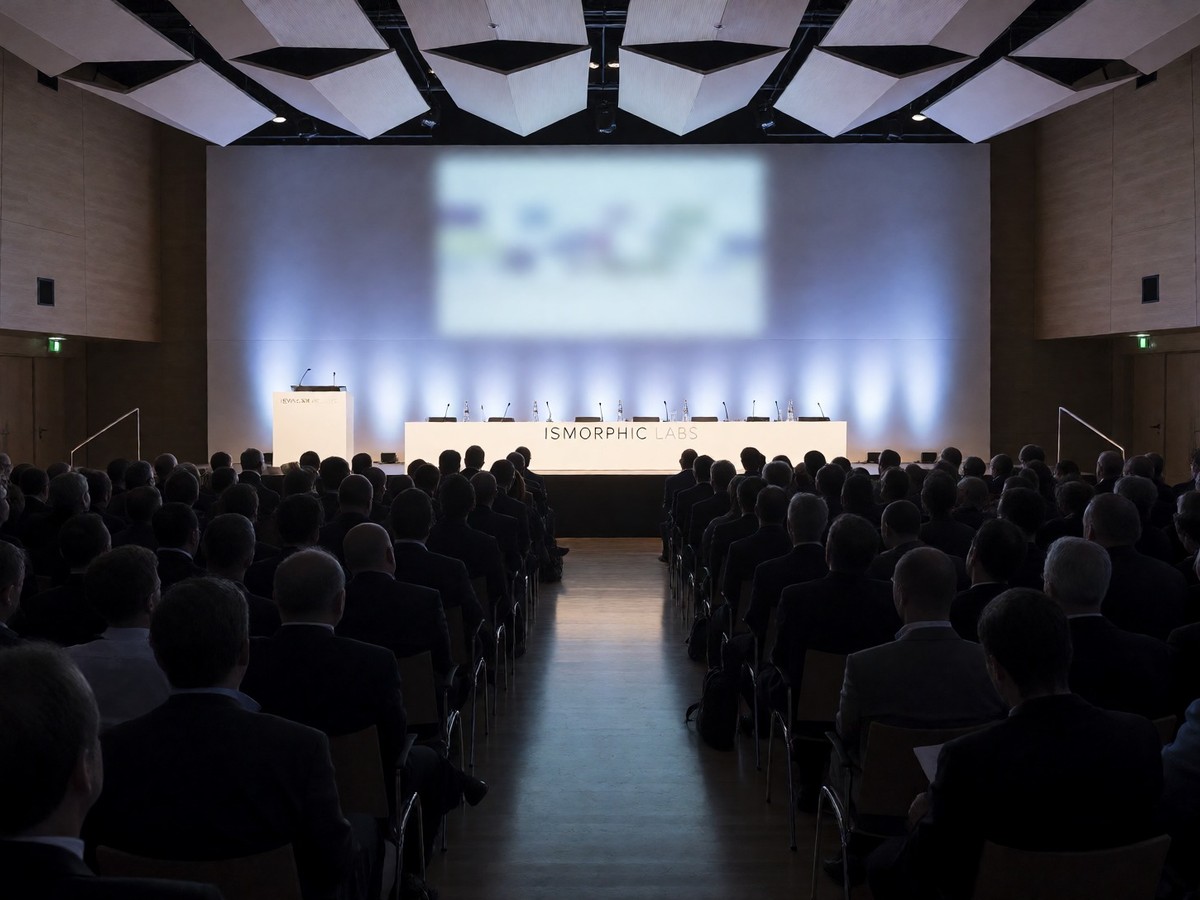
The 2024 Nobel Prize in Chemistry recognized Demis Hassabis and John Jumper for solving the protein folding problem, yet the commercial engine that followed was built on a foundation of distinct personalities and technical pivots. Isomorphic Labs, launched in 2021 as a spinout from Google DeepMind, aimed to translate AlphaFold’s structural predictions into viable therapeutics. This transition required more than scientific accuracy; it demanded a shift from pure research to industrial application. The company raised $600 million externally before securing a massive $2.1 billion Series B led by Thrive Capital. These funds targeted the development of IsoDDE, a proprietary drug design engine capable of modeling protein-drug complexes with high precision. While the prize validated the science, the subsequent deals with Johnson & Johnson, Lilly, and Novartis tested the business model. I view this period as the critical bridge between academic triumph and clinical reality, where the theoretical promise of AI had to meet the rigid demands of pharmaceutical development.
From Chess Prodigy to Drug Designer
Demis Hassabis began his journey as a chess prodigy, achieving master level at age thirteen before turning to computer programming and game design. His early work on simulation games like Theme Park embedded artificial intelligence as a core gameplay component, a philosophy that carried over to his founding of DeepMind in 2010. He co-founded the lab with Shane Legg and Mustafa Suleyman, focusing initially on reinforcement learning breakthroughs like AlphaGo. In 2014, Google acquired DeepMind, integrating its talent into a larger corporate structure while preserving some autonomy. Hassabis then directed the team toward the protein folding challenge, leveraging neural networks to predict structures from amino acid sequences. John Jumper joined the effort after completing his doctorate in theoretical physics in 2017, bringing insights from simulating protein dynamics with supercomputers. Jumper’s background in physics helped refine the architecture of AlphaFold2, which utilized transformer models to process vast databases of known structures. By 2020, the system predicted nearly 90% of structures with near-experimental accuracy, effectively solving a fifty-year-old biological puzzle. This success allowed the AlphaFold Protein Database to cover almost all known proteins, a resource accessed by over two million researchers across 190 countries. The collaboration between Hassabis and Jumper created a tool that bypassed traditional wet-lab bottlenecks, enabling computational screening of chemical space at unprecedented speed.
Structural Shifts and Strategic Partnerships
The path from prediction to prescription involved significant organizational changes and aggressive capitalization. Isomorphic Labs established offices in London, Lausanne, and Cambridge, operating under a hybrid work model that required three days in the office per week. The company focused on oncology and immunology, aiming to design small molecules and biologics that could enter clinical trials by the end of 2026. A major milestone was the partnership with Novartis, whose executive Fiona Marshall noted the ability to explore "new chemical spaces unavailable to probe through traditional methods." This endorsement signaled confidence in the AI’s capacity to identify novel scaffolds that conventional screening would miss. However, the leadership landscape shifted dramatically in August 2026 when Hassabis stepped down as CEO of Google DeepMind to become Chair and Chief Scientist of Alphabet. He retained his role leading Isomorphic Labs, allowing him to focus exclusively on the drug discovery mission. Koray Kavukcuoglu assumed day-to-day control of DeepMind, overseeing Gemini model development and frontier AI research. This move stripped DeepMind of its unique status as a division with a CEO, reducing it to an SVP-led subdivision within Google. Simultaneously, John Jumper left DeepMind to join Anthropic, marking a significant loss of institutional knowledge. Despite these departures, Isomorphic Labs continued to advance its pipeline, relying on the robust financial backing and strategic partnerships secured during the earlier years. The separation of Hassabis from daily DeepMind operations suggests a deliberate prioritization of biotech over general AI development. Whether this split will accelerate or hinder the broader AI-in-pharma thesis remains an open question.