Physical Intelligence, a San Francisco startup founded two years ago, negotiates a $1 billion funding round at a valuation above $11 billion. The company builds general-purpose AI models for robots and focuses on scaling compute and capabilities. This round includes Founders Fund, and Lightspeed Venture Partners discusses joining existing investors Thrive Capital and Lux Capital. Figure AI maintains a $39 billion valuation after raising $1 billion in September 2025. The company’s total funding exceeds $1.9 billion from investors such as Jeff Bezos, Microsoft, and NVIDIA. Figure AI uses a proprietary Helix Vision-Language-Action model with a dual-system architecture where System 1 runs at 200 Hz and System 2 runs at 7-9 Hz. Brett Adcock, the CEO of Figure AI, ended the company’s collaboration with OpenAI in 2025. He stated that companies must vertically integrate robot AI to solve embodied AI problems at scale. OpenAI, which previously partnered with Figure in February 2024, is now pursuing its own hardware and robotics research. Sam Altman, the CEO of OpenAI, noted that the company previously put its robotics project on hold because of bad simulators and breaking tendons. Figure AI remains a formidable competitor to Tesla, which targets the production of one million Optimus units annually.
Production Realities at BMW
BMW moved humanoid robotics from lab experiments to production workflows. The pilot at the Spartanburg plant in South Carolina used the Figure 02 robot for chassis assembly. This robot handled sheet-metal parts during the welding process for more than 30,000 BMW X3 vehicles. The robot worked ten-hour shifts, handled more than 90,000 components, covered approximately 1.2 million steps, and accumulated roughly 1,250 operating hours during its ten-month deployment at the Spartanburg facility in South Carolina. I think these production metrics provide a more honest view of robot utility than any marketing demo. BMW is now expanding this work to Leipzig, Germany, where it works with Hexagon Robotics on high-voltage battery assembly.
| Robot Model | Primary Application | Key Hardware Feature |
|---|---|---|
| Figure 02 | Chassis assembly | Industrial grippers |
| Figure 03 | Logistics sequencing | Tactile sensors and palm cameras |
| Unitree G1 | Research and development | Low price point |
| 1X NEO | Home assistance | Designed for indoor interaction |
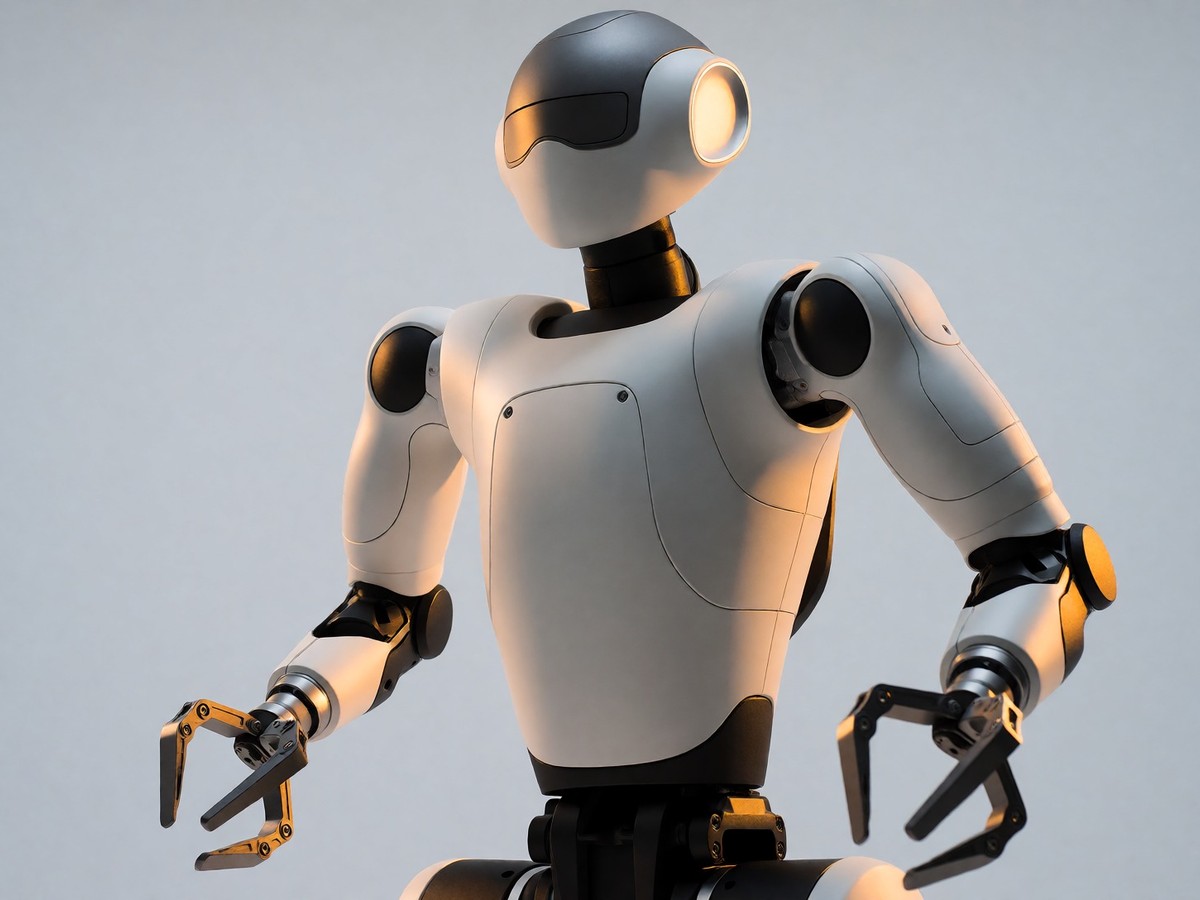
The Figure 03 robot is equipped with soft exterior components, wireless charging, upgraded hands, and improved sensor technology to increase precision and dexterity during manufacturing assembly operations. The Figure 03 model handles complex sequencing tasks in logistics. It picks individual components from large, unsorted containers and organizes them into sequencing trolleys. These trolleys then go to the assembly line via automated tugger trains or Smart Transport Robots. BMW defines Physical AI as the combination of digital artificial intelligence with real machines and robots operating inside production environments.
The Commercial Race
The humanoid robotics market reached $29 billion in 2025. Figure AI signed a deal with Catalyst Brands in May 2026 to deploy robots at a distribution center in Reno, Nevada. The robots handle sorting and packing tasks in the Joey Pouch system. This deployment targets retail logistics, moving away from the automotive focus of earlier trials. You should watch how these machines handle the messy reality of a distribution center. Tesla targets the production of one million Optimus units annually, but the robot is not yet substantively deployed in factories. Agility Robotics already has the Digit robot in customer warehouses for logistics tasks.
The industry still faces technical hurdles. Developing robots that walk on two legs or manipulate small objects reliably remains difficult. Humanoids remain awkward and pose huge technical challenges. Companies like Apptronik focus on robots for warehouse work, while 1X Technologies targets the home market with the NEO robot. The NEO robot costs about $20,000 or a $499 monthly subscription. Tesla’s Optimus Gen 2 is 5 feet 8 inches tall and weighs about 125 lbs. Can humanoid robots eventually replace the flexibility of human workers in semi-structured environments?