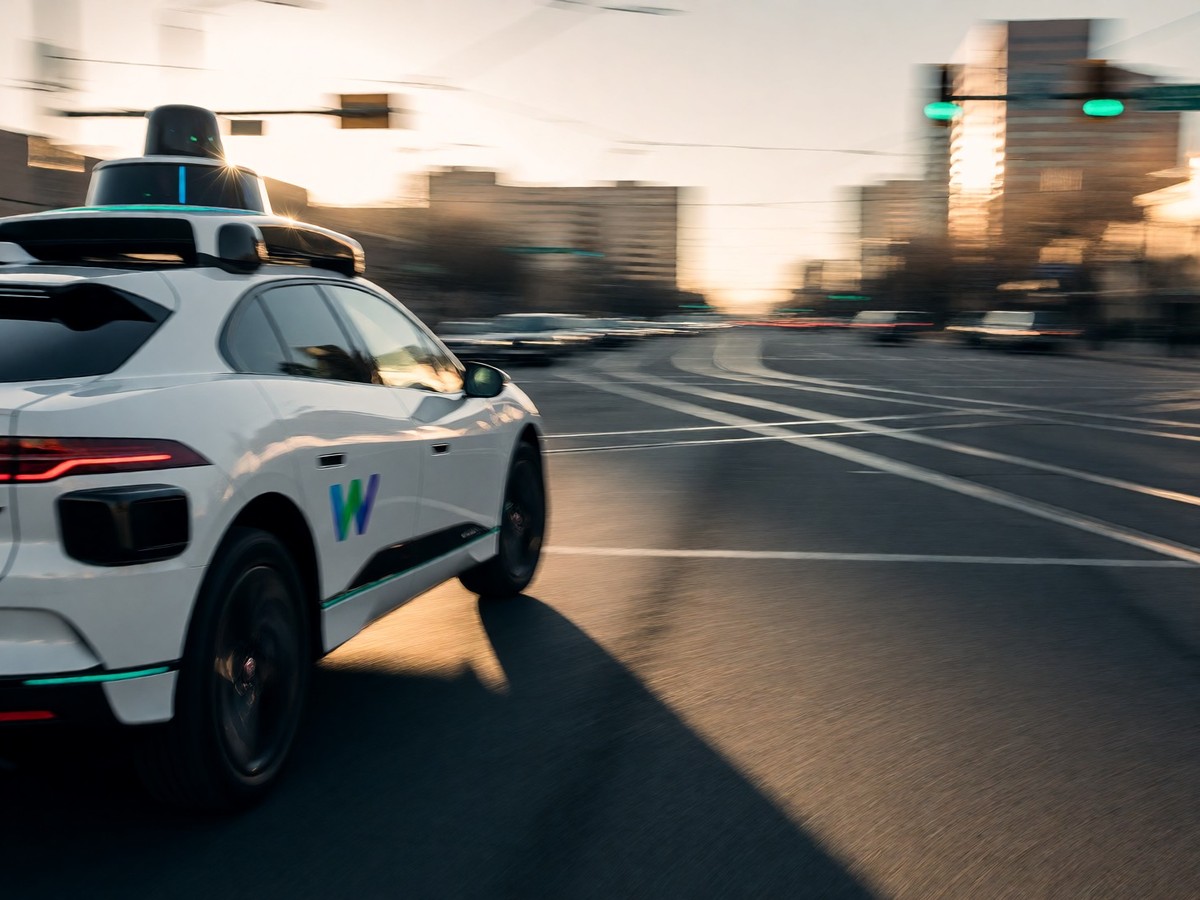
Waymo scales through geography and ride volume
Waymo operates in 14 US metropolitan markets. In July 2026, the company added Denver, San Diego, and Tampa to its public service list. Waymo also maintains a presence in Austin and Atlanta through a partnership with Uber. As of mid-2026, the company handles 500,000 paid rides per week. Tekedra Mawakana expects the company to reach one million trips per week by the end of 2026. The company added nearly 250 square miles of coverage in a single week across Los Angeles, Nashville, Orlando, San Diego, and the San Francisco Bay Area. In the San Francisco Bay Area, service reaches the South Bay, extending from San Francisco down the Peninsula to San Jose and Campbell. Waymo has completed 20 million lifetime paid trips since its 2020 launch. Waymo’s expansion in San Diego reaches La Jolla, University City, and Clairemont. While Waymo operates in 14 metros, it also maintains a presence in Las Vegas, though that market remains in an employee-first testing phase. Waymo’s expansion into cities like Denver and San Diego tests its ability to handle high-altitude environments and beach-market tourism edge cases that traditional testing in sunny Phoenix could never replicate, which provides critical data.
Hardware shifts and the cost of autonomy
The fleet uses Jaguar I-PACE vehicles and the new Ojai minivans. These Zeekr-based Ojai vehicles carry the sixth-generation Waymo Driver and include automatic sliding doors. Waymo’s sensor suite includes 29 cameras, 5 lidar sensors, 6 radars, and audio arrays. This hardware provides 360-degree awareness up to 500 meters. The system uses custom Jaguar compute with NVIDIA GPUs for inference. The fifth-generation driver powers the I-PACE units, while the sixth-generation driver manages the Ojai fleet. The sensor fusion system combines data to build 3D environmental maps and track the speed of surrounding objects. This system processes petabytes of data from the fleet to improve performance through weekly updates.
| Feature | Waymo Specification |
|---|---|
| Total Fleet | Over 4,000 vehicles |
| Weekly Paid Rides | 500,000 |
| Hardware | 29 cameras, 5 lidar, 6 radar |
| Real-world Autonomous Miles | 200 million |
| Simulation Miles | 15 billion |
Tesla FSD costs $0.20 per mile, but Waymo charges ten times that amount. I find the price discrepancy hard to justify for most commuters. You already know that reliability costs money, but Waymo remains the expensive option.
Simulation and the AI learning flywheel
Waymo trains its AI with the Waymo World Model, which uses Google DeepMind’s Genie 3. This model generates hyper-realistic 3D environments. The system uses 15 billion simulated miles to teach the AI. Waymo’s AI has also logged 200 million autonomous miles on public roads. The AI uses VideoPrism and BEVFormer to process data. Perception uses transformer-based models to detect 100+ object classes with 99% precision. Motion prediction uses temporal graph networks and diffusion models to forecast 100 agents’ trajectories over 11 seconds. Waymo’s automated "Critic" system reviews driving behavior to identify situations for engineers. Waymo also uses vision-language models built on Google’s Gemini for high-level reasoning. The AI uses reinforcement learning, similar to how humans learn. It receives positive rewards for following traffic laws and negative rewards for speeding. Engineers use the Waymo Open Dataset, containing over 2,000 hours of video, to train the system. Waymo reports that its driver causes 94% fewer serious-injury-or-worse crashes than human drivers. A study of 7.14 million miles showed a 57% reduction in crashes and an 85% decrease in injuries. The system maintains disengagement rates below one per million miles. The company paused freeway rides in late May 2026 because software issues caused perception failures in construction zones. This pause affected the San Francisco, Phoenix, and Los Angeles markets. How will engineers solve the long-tail infrastructure problems that cause these sudden pauses?