The Photonic Promise
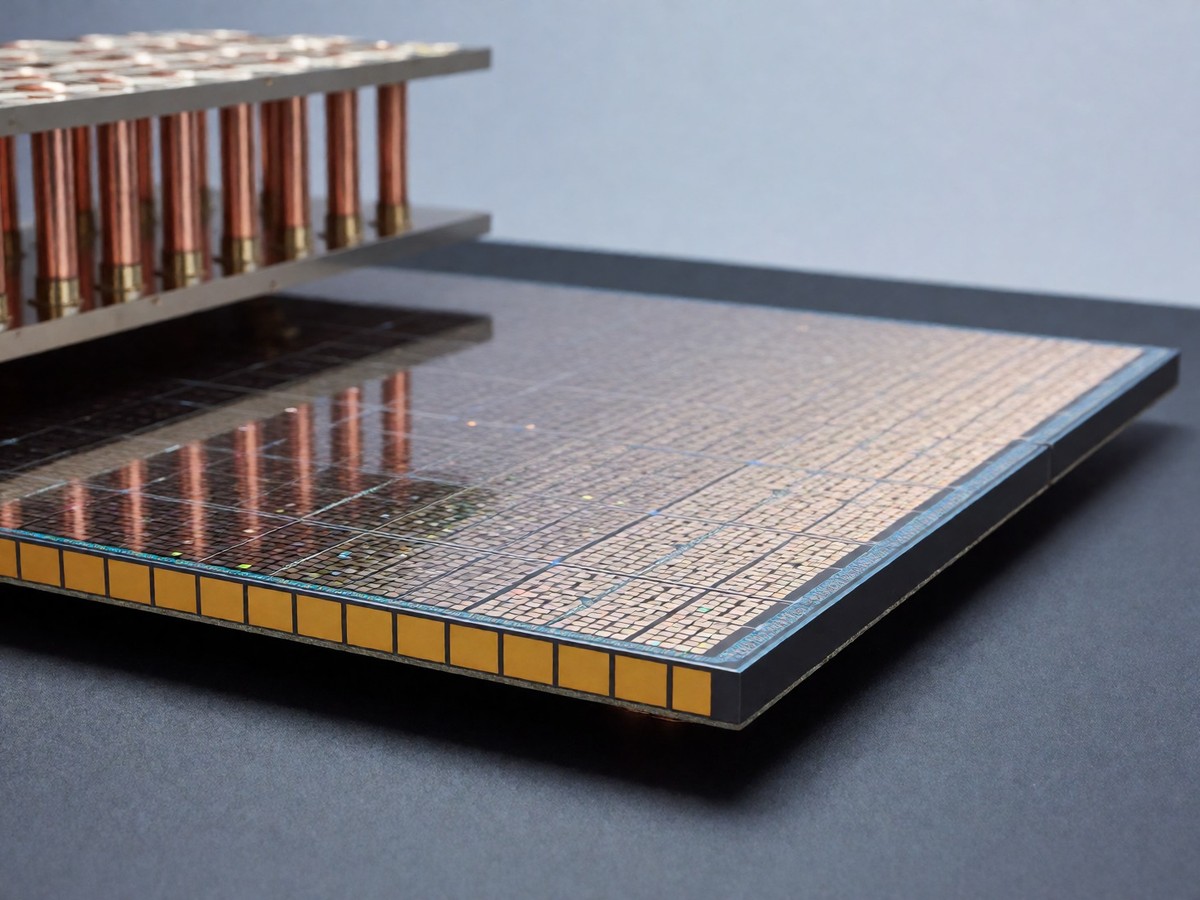
Nick Harris, co-founder of Lightmatter, says that their system sends data between components 100 times faster than the fastest PC and uses 10% of the energy. The technology uses waveguides to redirect light, which provides higher bandwidth when integrated with the NVIDIA NVLink Fusion architecture. I find the claim of 100 times greater speed than existing PCs to be an aggressive exaggeration that lacks specific workload context. Scaling these systems to large models presents hurdles because photonics supports the linear algebra used in AI through Mach-Zehnder interferometers. This creates a reality mismatch. Photonic computation relies on the intrinsic linearity of light to perform matrix vector multiplication (MVM) operations. If two numbers x and y are encoded via the intensity of two light beams sent through a beam splitter, measuring the outputs with photodetectors and then inverting one before summing results in a signal proportional to the product of the two numbers. Subsequent number pairs can be multiplied in the same way, with the products being added together by accumulating charge within a capacitor. This process also runs in parallel by using light beams at different wavelengths, where addition occurs by multiplexing the light beams into a common waveguide.
Interconnect Math and Scaling
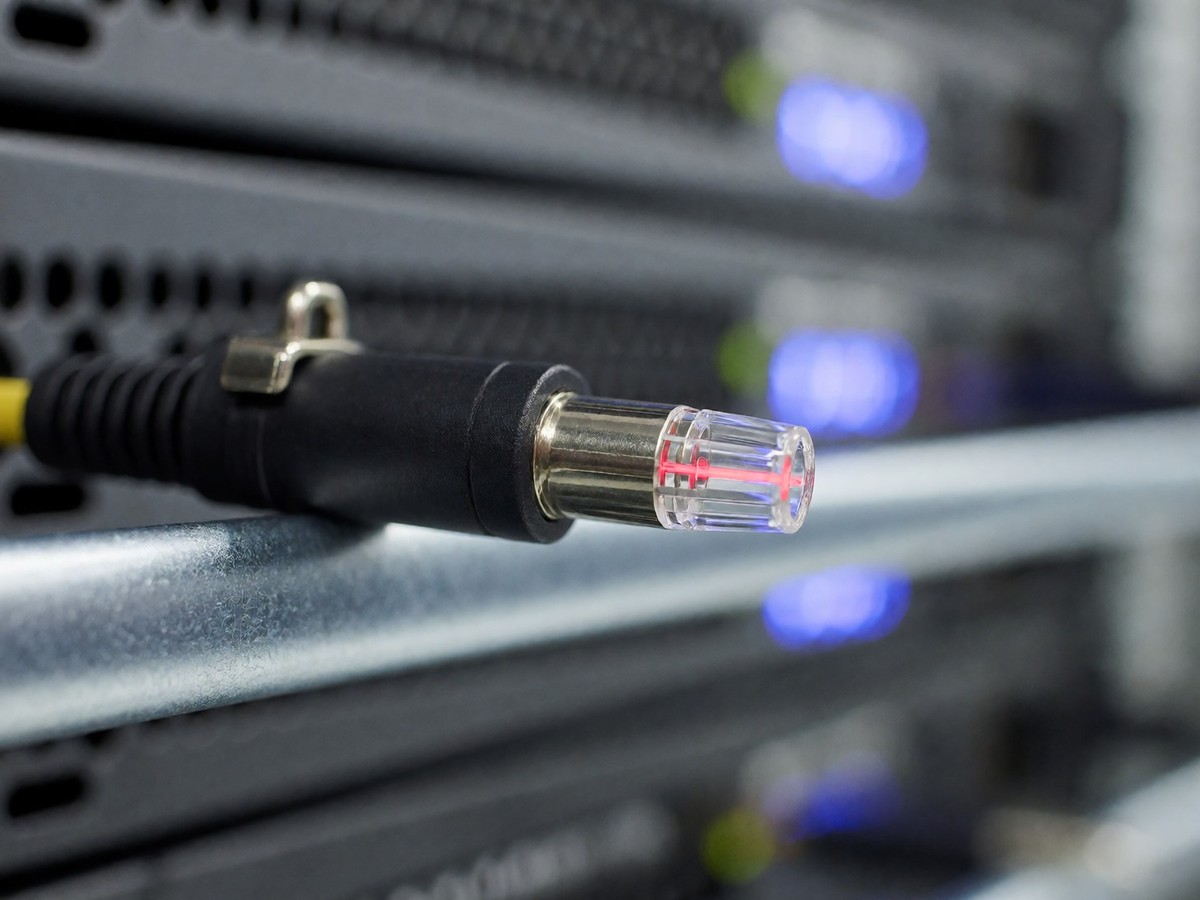
The transition from pluggable optical modules to co-packaged optics (CPO) addresses electrical loss and power consumption in AI clusters. In traditional designs, signals leave the ASIC, travel across boards and connectors, and then convert to light, which produces electrical loss up to 22 decibels on 200 Gb/s channels. NVIDIA claims that CPO reduces this loss to 4 decibels.
| Metric | Pluggable Modules | Co-packaged Optics (CPO) |
|---|---|---|
| Electrical Loss | 22 dB | 4 dB |
| Per-port Power | 30W | 9W |
| Power Efficiency | Baseline | 3.5x increase |
NVIDIA engineers state that CPO reduces per-port power consumption from 30W to 9W. This shift also produces a 3.5 times increase in power efficiency and 64 times better signal integrity. NVIDIA roadmap follows the TSMC COUPE platform in three stages. The first generation provides an optical engine for OSFP connectors with 1.6 Tb/s data transfer. The second generation moves into CoWoS packaging with 6.4 Tb/s at the motherboard level. The third generation targets 12.8 Tb/s within processor packages. NVIDIA’s next-generation Quantum-X InfiniBand switches will deliver 115 Tb/s of throughput and support 144 ports operating at 800 Gb/s each. This system integrates an ASIC featuring 14.4 TFLOPS of in-network processing and uses the 4th Generation Scalable Hierarchical Aggregation Reduction Protocol (SHARP) to cut latency. However, the necessity of converting signals between optical and electrical domains for non-linear activation functions like ReLU or softmax introduces latency and energy overhead. This overhead can negate the energy improvements of conducting matrix vector multiplication (MVM) operations photonically. Does the energy saved during MVM survive the conversion back to digital logic for every layer?
Data Center Power and Grid Myths
Large data centers consume energy, but the idea that they drive up residential electricity bills is a myth. Data centers account for 4 percent of total US generation, or 184 TWh per year, while AI-focused data centers account for about 2 percent. Alphabet, Amazon, and Microsoft increased capital expenditures by 13%, 16%, and 27% respectively. In states like Texas and Virginia, which host high densities of data centers, inflation-adjusted residential electricity prices fell over the last decade. You should know that developers often choose these states for their low power costs and existing infrastructure. The energy required for moving data between chips can reach 80 percent of total processor power, making optical interconnects an attractive way to reduce that load. Optical interconnects can improve efficiency by a factor of six when they replace electronic wires. Data center operators increasingly pursue clean power rather than a green power mindset. This shift reflects the unpredictable nature of wind and solar resources. To mitigate this, companies can use Power Couples, a strategy of co-locating near existing interconnections to add clean, modular energy generation to the grid in as little as a year. Companies like Google, Amazon, Microsoft, and Meta signed over 10 GW of wind and solar deals in the US between February and mid-July, with 80% of that coming from the technology sector.