Nvidia participated in 59 known funding rounds so far this year. This total exceeds the 53 rounds recorded in all of 2025. As the AI chip architect, the company is the most active and highest spending corporate investor in the semiconductor space. In March, Nvidia was one of eight lead investors in OpenAI’s $122 billion funding round. In July, Nvidia provided a $5 billion corporate financing to the foundational AI startup Safe Superintelligence. This deal values the research lab at $32 billion. AMD also increased its startup investment activity with 19 private company financings this year. On September 28, AMD agreed to acquire the spatial-intelligence startup World Labs for $8.2 billion. This transaction follows a $1 billion funding round for the company in February 2026 where AMD and Nvidia participated as investors. The acquisition brings Fei-Fei Li into the AMD leadership team as executive vice president and chief scientist.
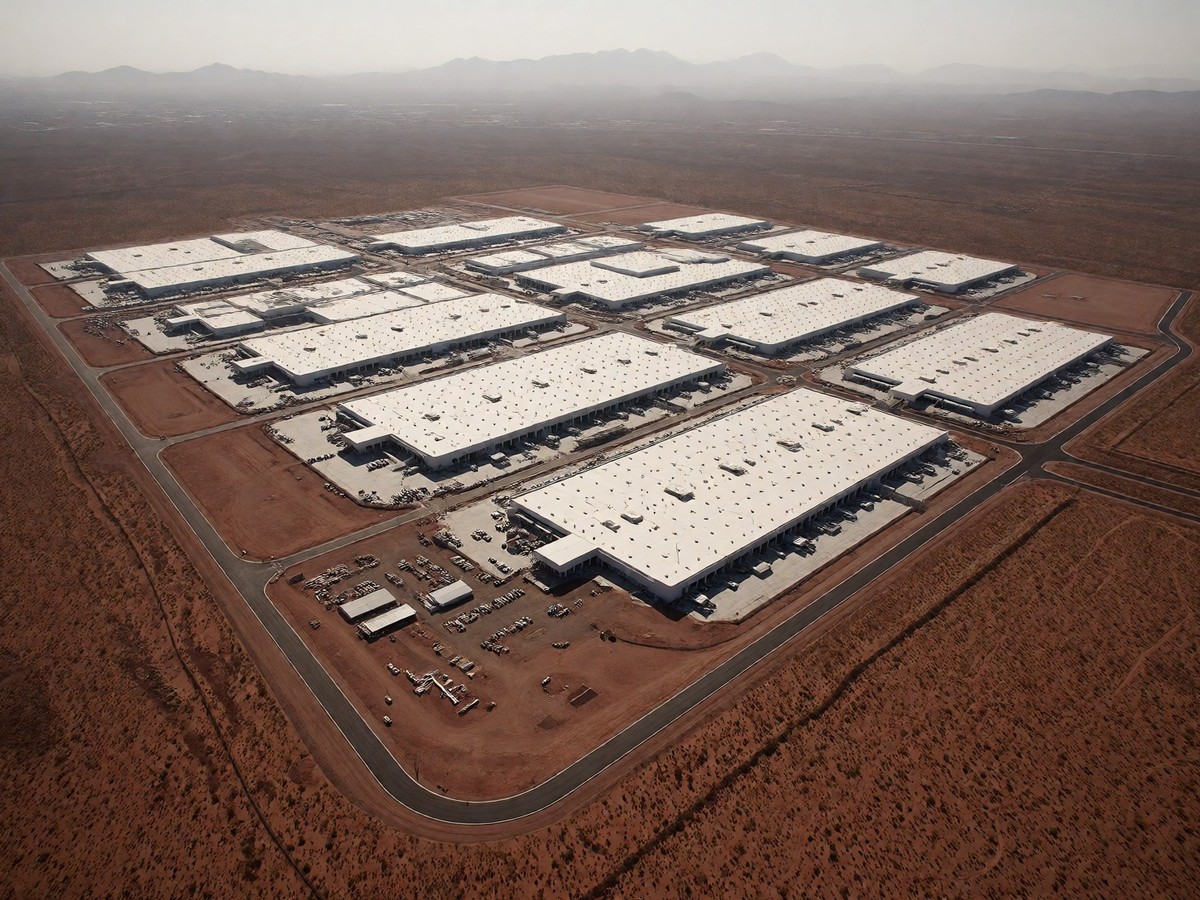
The top three semiconductor companies in the dataset, ChangXin Memory Technologies, Yangtze Memory Technologies, and Cerebras, account for $38.6 billion or 42% of the total $92.7 billion in disclosed capital. ChangXin Memory Technologies raised $19.1 billion to build DRAM manufacturing capacity. This company is building capacity on a scale that resembles heavy industry. Cerebras reached $9.3 billion in cumulative funding after adding $6 billion from its IPO. In the private sector, Positron raised $875 million in its Series C and Ayar Labs raised $500 million in its Series E. Fireworks AI raised $1.5 billion in a Series D round led by Atreides Management, Index Ventures, and TCV. This round values the Redwood City company at $17.5 billion.
Hardware specialization and inference bottlenecks
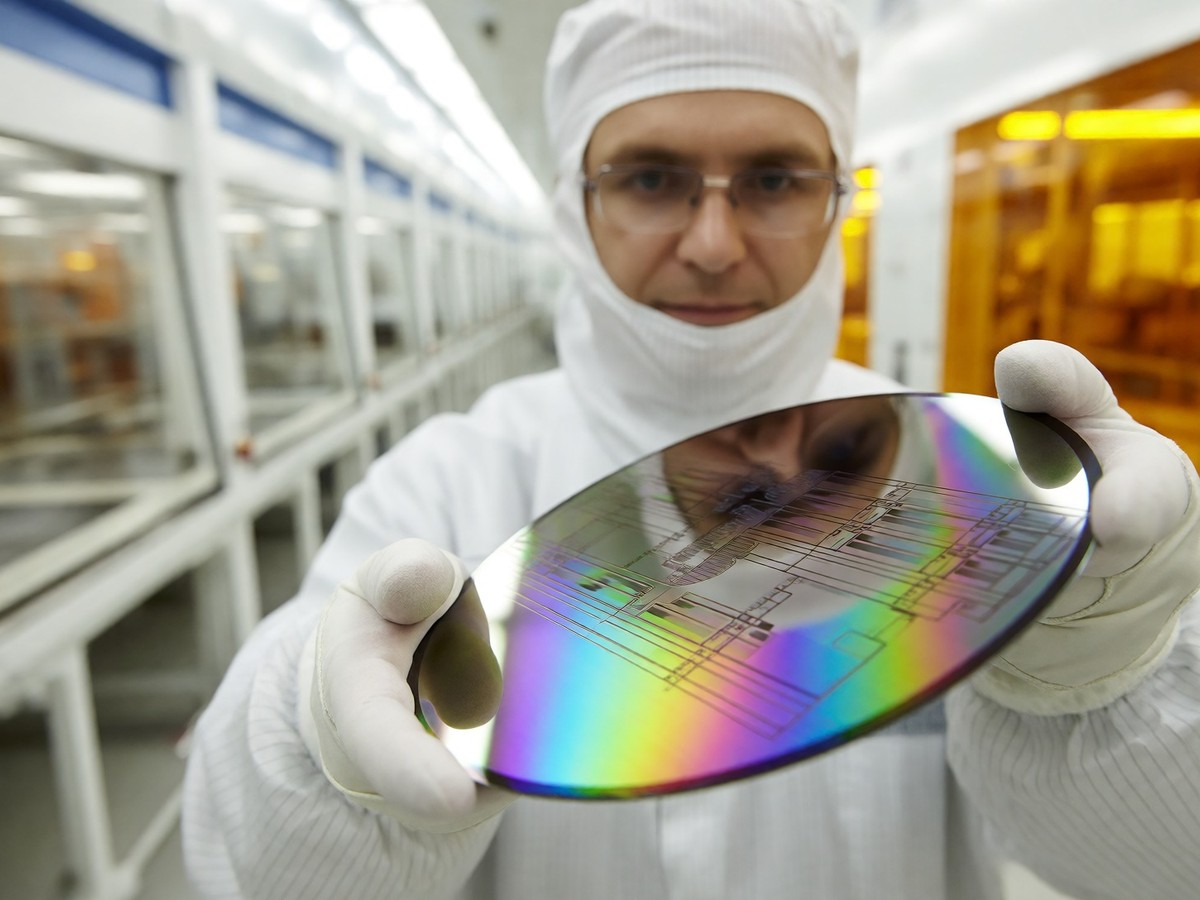
Investment focuses on AI compute, networking, and photonics. Groq produces a single-core Language Processing Unit for fast inference. Its September 2025 funding round brought its valuation to $6.9 billion. Groq’s LPU architecture feeds AI model tokens through a single, wide pipeline of functional units. This design executes all operations in lock-step with no kernel switching. SambaNova uses Reconfigurable Dataflow Unit architecture to maximize data reuse. The system consists of boards that contain multiple RDU accelerator chips and associated memory. The SambaFlow compiler maps a user’s neural network graph onto a sequence of configurations of the RDU array. The RDU chip was built on TSMC 7 nm technology. Cerebras builds wafer-scale chips to eliminate inter-GPU communication bottlenecks. Its single-die chips cover most of a 300 mm silicon wafer and contain approximately 1.2 trillion transistors.
| Company | Architecture | Latest Valuation |
|---|---|---|
| Groq | Language Processing Unit | $6.9 Billion |
| SambaNova | Reconfigurable Dataflow Unit | $5 Billion |
| Cerebras | Wafer-scale Engine | $8.1 Billion |
Groq’s marketing regarding speed is deceptive for certain users. A provider might show high throughput on a single batch job, yet engineers still report sluggish replies when processing individual messages from hundreds of users. You should check if your workload requires raw throughput or low latency. The LPU architecture provides deterministic, low-latency compute. Will these specialized architectures eventually replace general-purpose GPUs for all training tasks?
Next generation computing paradigms
Intel builds the Hala Point neuromorphic system using Loihi 2 processors. This system contains 1.15 billion neurons and 128 billion synapses. It packages 1,152 Loihi 2 processors into a six-rack-unit data center chassis. The system consumes a maximum of 2,600 watts of power. Loihi 2 utilizes asynchronous, event-based spiking neural networks. These processors use integrated memory and computing to achieve efficiency. The system includes over 2,300 embedded x86 processors for ancillary computations. The Loihi 2 architecture comprises 128 neural cores and 6 embedded processors. These neural cores are programmable digital signal processors. The Lava framework allows users to write neuro-inspired applications using high-level Python APIs.
Normal Computing develops thermodynamic computing chips to reduce AI energy consumption by up to 1000x. This company was founded in 2022 by former members of Google Brain and Google X. NextSilicon produces the Arbel RISC-V core for enterprise-grade processors. The Arbel core targets a 3.4 GHz operating frequency. It uses a 10-wide instruction-issue pipeline and a 480-entry reorder buffer to deliver up to 16 scalar instructions per cycle to meet the specific performance demands required by modern AI infrastructure. NextSilicon designed the core to handle the serial logic required for agentic AI workflows. The company expects to make these processors available in early 2028. The data center segment of the RISC-V market is projected to grow at a compound annual rate of 33.1% from 2025 to 2034.