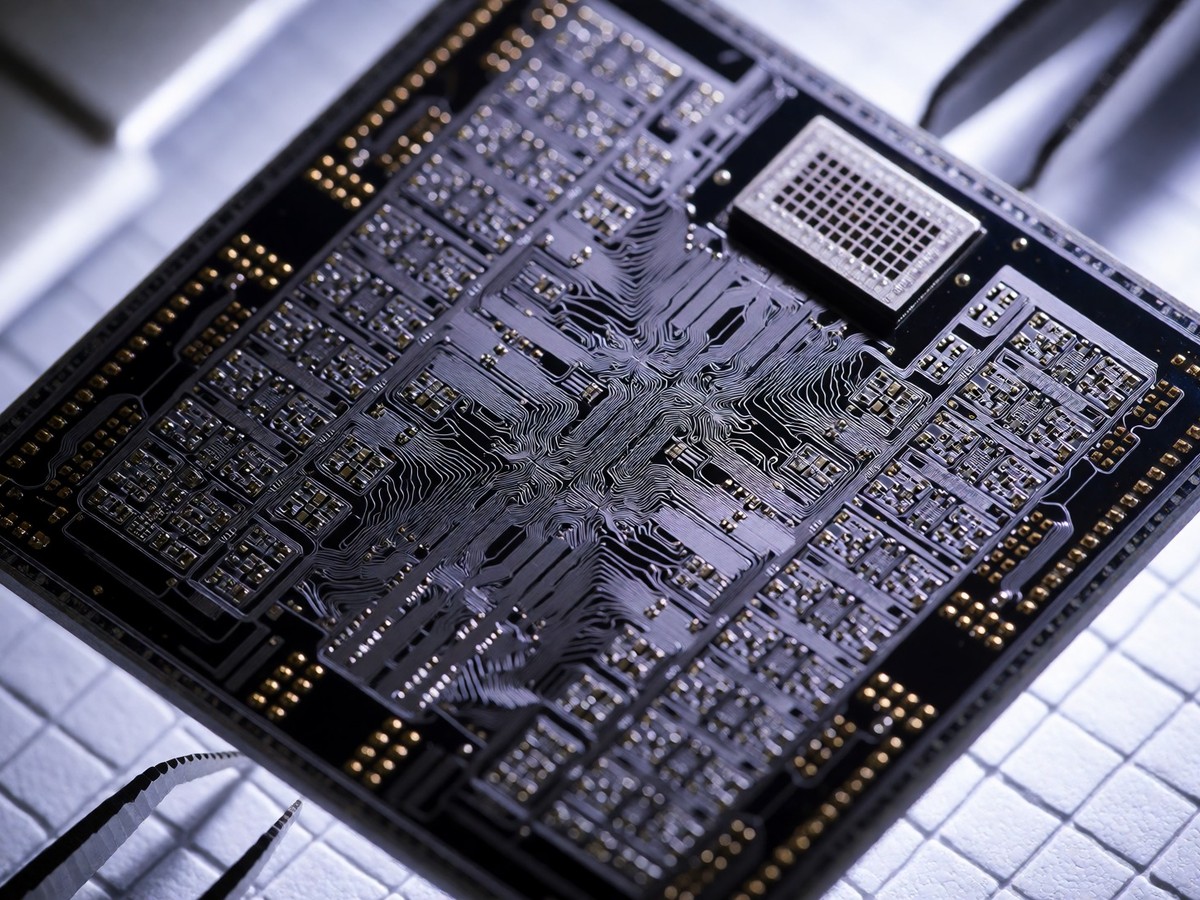
Cerebras delivers the fastest AI inference through its CS-3 systems. The company uses the Wafer Scale Engine 3, which contains four trillion transistors and 900,000 AI cores. This processor provides 44GB of on-chip SRAM and 1200GB of external HBM. A single CS-3 system reaches 125 peak AI petaflops. You should recognize that these clusters scale to 2,048 units for 256 exaflops of compute.
Disaggregated inference and cloud growth
The company shifts from hardware sales to cloud services. Cloud and other services revenue reached $141.9 million in the third quarter, a 265% increase year-over-year. This segment grew while hardware revenue declined nearly 30% compared to last year. Cerebras collaborates with AWS to deliver disaggregated inference. This technique separates prompt processing, or prefill, from output generation, or decode. AWS Trainium handles prefill while the CS-3 manages decode tasks. This combination produces five times more token throughput in the same hardware footprint. It also runs up to 15 times faster than leading GPU-based solutions.
| Feature | CS-3 Specification |
|---|---|
| AI Cores | 900,000 |
| Transistors | 4 trillion |
| On-chip SRAM | 44 GB |
| External Memory (HBM) | 1200 GB |
| Peak AI Performance | 125 PetaFLOPS |
| Power Draw | 23 kW |
Cerebras also integrates with Oracle Cloud Infrastructure for 2027. The company maintains a contract for 700 megawatts of data center capacity for delivery by late 2027. However, the company relies heavily on a small number of large clients like OpenAI. OpenAI generated $72.4 million in revenue this quarter, representing half of all cloud and other service revenues.
Manufacturing expansion and new architectures
Flex expands manufacturing in Milpitas, California, to increase CS-3 production capacity by seven times through 2026. This expansion includes new assembly lines and test infrastructure to meet demand from AI model developers. The CS-3 scales linearly because it runs in model parallel mode. This allows users to utilize twice the memory capacity when they deploy two chips in tandem. The University of Edinburgh uses a cluster of four CS-3s to train models with 240 billion to 1 trillion parameters. This cluster can fine-tune a 70 billion parameter model in one day.
The company recently introduced the CS-4, which uses three wafer-scale chips in one rack. The CS-4 delivers 750 PFLOPs of AI compute and 129.6 petabytes per second of memory bandwidth. It performs up to 30 times faster than GPU solutions. The CS-4 delivers 10 times more throughput per watt than the CS-3. Despite these gains, the CS-3 remains expensive at an estimated $2 million to $3 million per unit. Will the CS-5 reach its target of 10,000 tokens per second per user in summer 2027?