Cerebras Inference delivers Llama 3.1 70B at 446 output tokens per second. This speed sits far above the 130 tokens per second benchmarks seen on comparable H100 clusters. The company prices this 70B model at $0.6 per 1M tokens. For smaller models, the Llama 3.1 8B offering hits 1,850 tokens per second at $0.1 per 1M tokens. I find the decision to use a wafer-scale architecture for these specific price points a logical way to target the latency needs of agentic workflows.
| Metric | Cerebras Llama 3.1 8B | Cerebras Llama 3.1 70B |
|---|---|---|
| Tokens per second | 1,850 | 446 |
| Price per 1M tokens | $0.1 | $0.6 |
| Context window | 8K | 8K |
The CS-4 system uses three WSE-3 Turbo wafers to achieve these results. Cerebras claims this hardware delivers up to 30x faster inference than GPU systems for certain workloads. This speed comes from placing weights centimeters from compute instead of moving them across a switch fabric. The 2 microsecond wafer-to-wafer latency helps three wafers behave like one logical accelerator. I see this as a direct attack on the communication overhead that slows down agent loops.
Massive scale and the GSK deal
Cerebras targets the shift from training to inference. The company expects the inference market to grow from $251B in 2025 to $672B by 2029. This growth aligns with the July collaboration between Relation Therapeutics and GSK. In that deal, GSK pays Relation Therapeutics up to $110m in upfront and success-based milestone payments to generate large-scale human cellular perturbation datasets. Relation Therapeutics will use this data to train AI foundation models, including its MORGAN model. This shows pharma companies are moving toward paying for the data that makes models better.
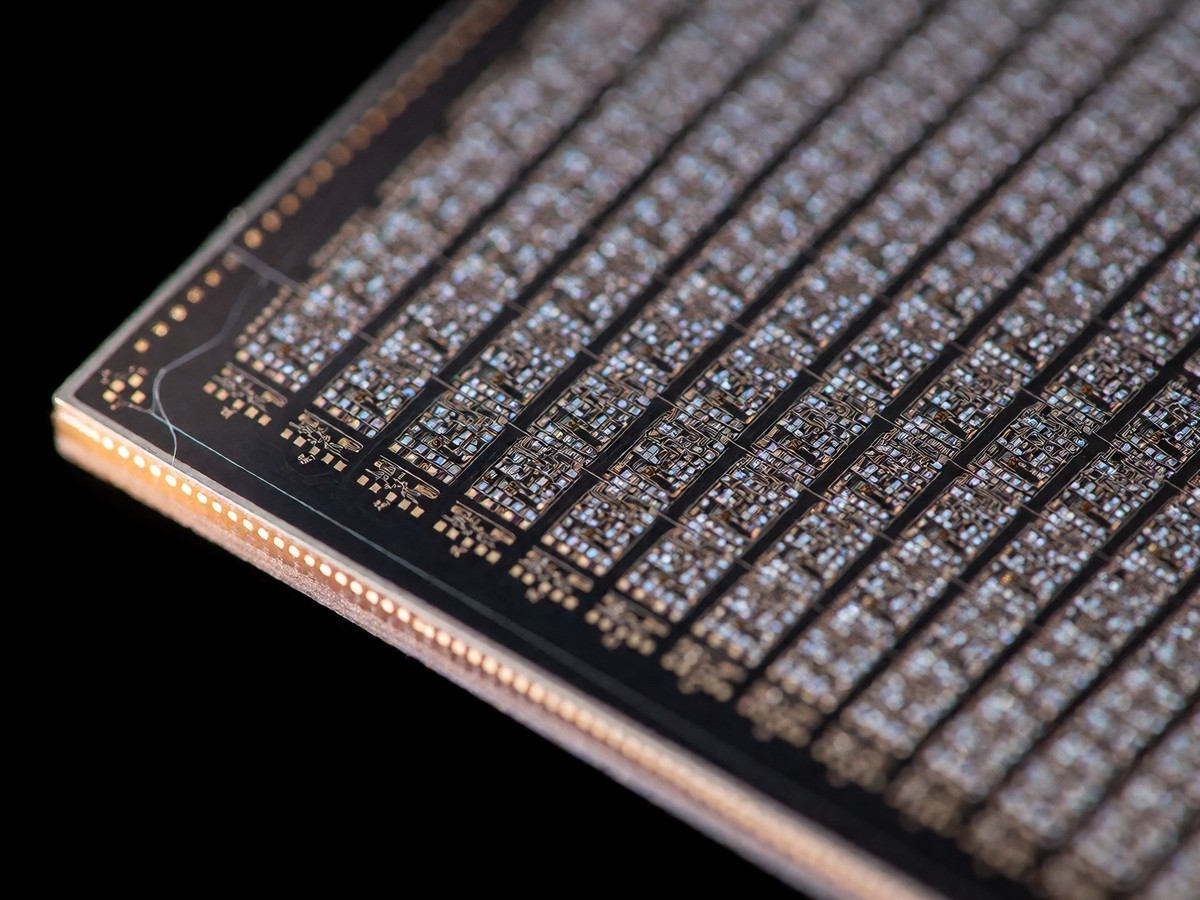
The CS-3 system uses 900,000 AI cores and 44 GB of on-chip SRAM to handle these workloads. It provides 125 petaflops of peak AI performance on a 5nm TSMC process. For users requiring more capacity, the CS-3 supports external memory up to 1.2 petabytes. A single CS-3 with 1.2 PB of MemoryX can load a 10 trillion parameter model as easily as a GPU loads a 1B parameter model. This eliminates the need to partition or refactor models across many chips.
The hardware also handles massive throughput for training. A compact four system configuration fine tunes 70B models in a day. If an organization uses a full scale cluster of 2048 CS-3 systems, it can train Llama 70B from scratch in a single day. This capability directly challenges NVIDIA’s position in the market. The CS-3 delivers 125 petaflops of AI compute using FP16 precision. A single DGX B200 server with 8 GPUs provides only 36 petaflops of AI compute.
Concentration and the IPO path
Cerebras prepares for an IPO that could raise up to $3.5 billion. The company filed an S-1 on April 17, 2026, targeting a $2 billion raise. I find the revenue concentration in this filing a massive red flag. In 2025, two customers accounted for 86% of revenue. The company reported GAAP net income of $237.8 million in 2025, but this figure includes a $363 million one-time accounting gain from restructuring a G42 commercial agreement. If you strip that gain, the company shows a non-GAAP operating loss of $75.7 million.
The customer base also faces geographic and policy risks. Revenue billed to U.S. customers dropped from $282.7M in 2024 to $187.6M in 2025. This 34% decline happened while total revenue grew 76% because revenue shifted toward MBZUAI in Abu Dhabi. The heavy reliance on UAE-linked entities like G42 creates exposure to U.S. export controls. Will the company sustain its growth if US policy further restricts its ability to serve its primary international buyers?
| Financial Metric | 2023 Value | 2024 Value | 2025 Value |
|---|---|---|---|
| Revenue | $78.7M | $290.3M | $510M |
| Net Income (GAAP) | Not stated | -$481.6M | $237.8M |
| Non-GAAP Loss | Not stated | Not stated | -$75.7M |
The company holds a $24.6 billion backlog of contracted remaining performance obligations. Much of this connects to a January 2026 agreement with OpenAI. OpenAI signed a contract worth up to $20 billion to deploy 750 megawatts of Cerebras AI compute through 2028. OpenAI also provided Cerebras a $1 billion working capital loan and received warrants to purchase 33 million shares at near-zero cost. This dependency means any change in the OpenAI relationship would fundamentally reshape the Cerebras P&L.