National lab deployments
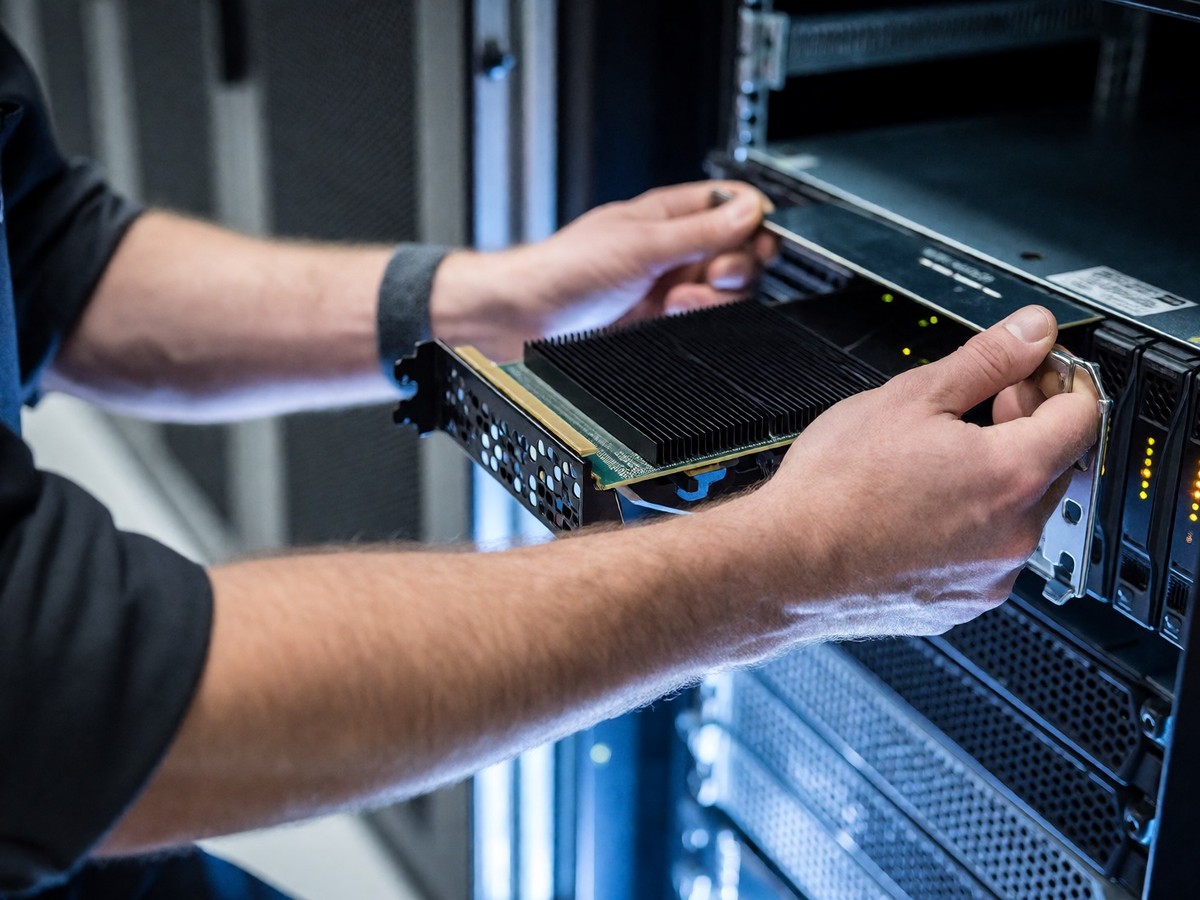
Sandia deployed four Cerebras CS-3 nodes, named Kingfisher, in October 2024 to expand research into AI workloads for national security. This cluster supports the NNSA Advanced Simulation and Computing Artificial Intelligence for Nuclear Deterrence strategy. The architecture uses the third generation Wafer Scale Engine (WSE-3) to develop large scale trusted AI models on secure internal Tri-lab data. This deployment bypasses memory and power challenges that existing GPU systems face. Researchers use the system to evaluate training and finetuning of large multimodal models and investigate traditional modeling and simulation workloads.
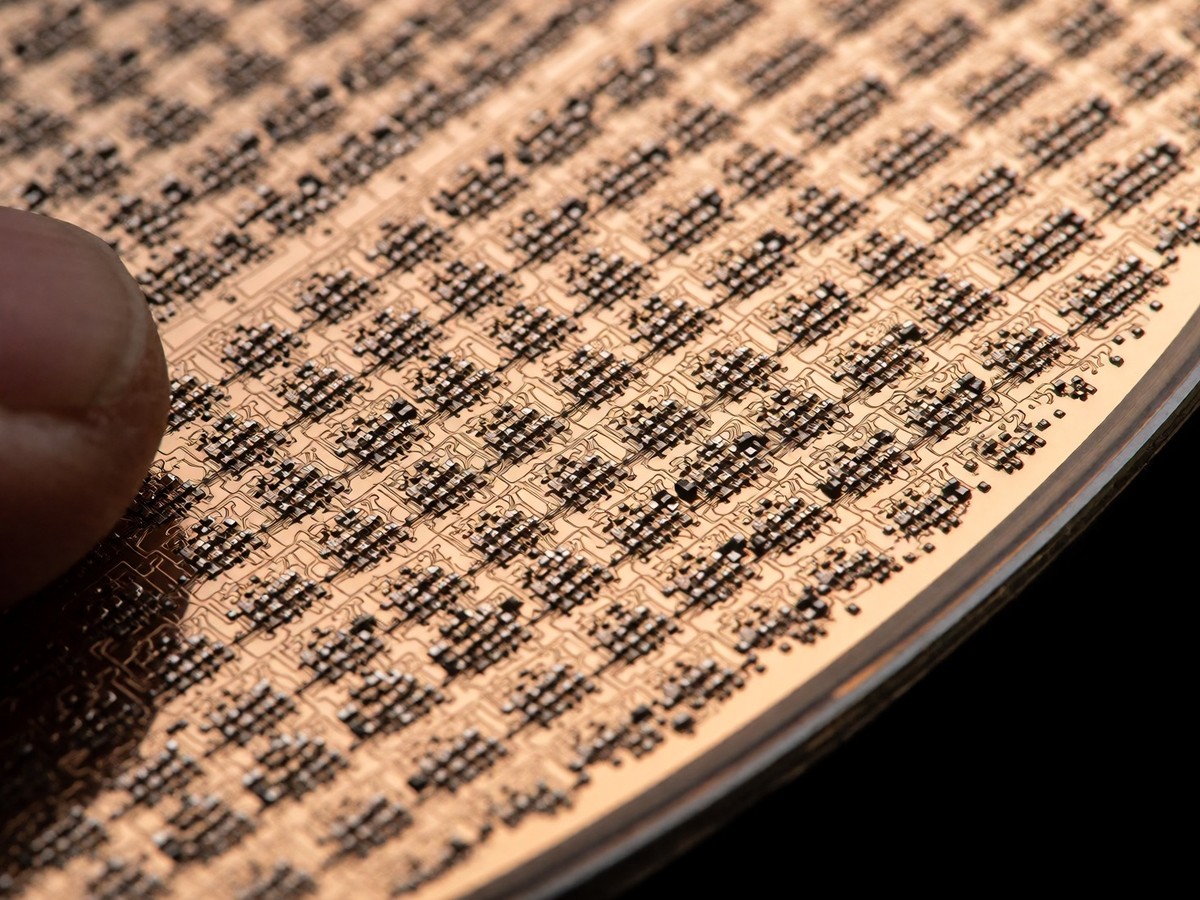
The WSE-3 integrates 900,000 processors and high-performance on-wafer SRAM memory into a single piece of silicon. This design eliminates the latency found when data moves between separate components. The WSE-3 architecture provides a novel alternative to traditional accelerators by using industry standard semiconductor manufacturing processes to etch a large number of transistors, cores, and individual processor dies onto the entire silicon wafer. While the architecture solves communication bottlenecks, the 20KW power draw of a single server requires careful facility management.
The BANYAN Institute at Sandia uses the system to evaluate the accuracy and scalability of model training and the energy consumption of training workloads. The U.S. Department of Energy awarded $8 million to NETL and Cerebras to advance the study of scientific phenomena using the WSE-3. This partnership aims to demonstrate energy-efficient, extreme-speed scientific simulation capability for distributed memory problems. Early results from this research partnership showed the WSE-3 outperforming the Joule 2.0 supercomputer by 470x. The project also develops methods to extend high-bandwidth, low-latency communications.
Hardware specifications
Cerebras produces a single processor from an entire silicon wafer rather than cutting it into smaller pieces. The WSE-3 contains 4 trillion transistors and 900,000 AI-optimized cores. This chip delivers 125 petaflops of AI compute. The WSE-3T Turbo version delivers 250 petaflops of AI compute and provides 56x more compute than the NVIDIA B300. The CS-3 uses 5nm manufacturing from TSMC. The WSE-3 provides a viable architectural alternative for national security missions.
| Specification | Cerebras WSE-3 / WSE-3T |
|---|---|
| Transistor Count | 4 trillion |
| AI-optimized Cores | 900,000 |
| AI Compute (WSE-3T) | 250 petaflops |
| Manufacturing Process | 5nm |
| System Scale (CS-3) | 15U rack, ~23 kW |
The CS-4 server system uses three WSE-3T processors and the Nexus server architecture to accelerate AI inference. This system uses 50% fewer components than the CS-3 to simplify data center deployment. The WSE-3T measures 46,225 mm2 and includes 44 GB of fast memory directly on the chip. You should note that the CS-4 provides 30x faster inference than comparable GPU-based solutions for certain workloads. The WSE-3 handles defects by using redundant compute cores, redundant routing, and a fail-in-place architecture that shuts flaws down and routes around them.
In the second quarter of 2024, G42 and Cerebras announced Condor Galaxy 3, a supercomputer in Dallas, Texas, with 64 CS-3 systems and 8 exaflops of AI compute. This system provides a massive scale of compute for users in the Middle East. The WSE-3 handles models with up to 24 trillion parameters. Earlier generations like the WSE-2 used a 7nm process and contained 2.6 trillion transistors with 850,000 cores. Can national labs scale this technology to meet every future security requirement?
Market expansion
Major AI infrastructure buyers like OpenAI and Amazon use Cerebras hardware to manage inference workloads. OpenAI signed a multi-year agreement to deploy 750 megawatts of Cerebras compute capacity to support its clients. This deployment targets performance improvements for coding assistance and AI agents through 2028. Cerebras reported 2025 revenue of $290.3 million and net income of $87.9 million. The company went public in May 2026, raising approximately $6.4 billion through its initial public offering by selling 30 million shares at a price between $150 and $160 per share.
The market prices Cerebras as a strategic hedge against single-supplier compute models. The company aims for 600 megawatts of computing capacity by the end of 2027. While Cerebras expands, it faces competition from NVIDIA. One drawback remains the reliance on a few large clients to maintain revenue.
The WSE-3 hardware enables the Ultrafast mode for OpenAI’s GPT-5.6 Sol, which achieves processing speeds of up to 750 output tokens per second. This performance is 14 times faster than standard models. The company also maintains relationships with Amazon to bring Cerebras inference capabilities to AWS. The demand for the IPO was 20 times the expected volume.