
The silicon and memory bottleneck
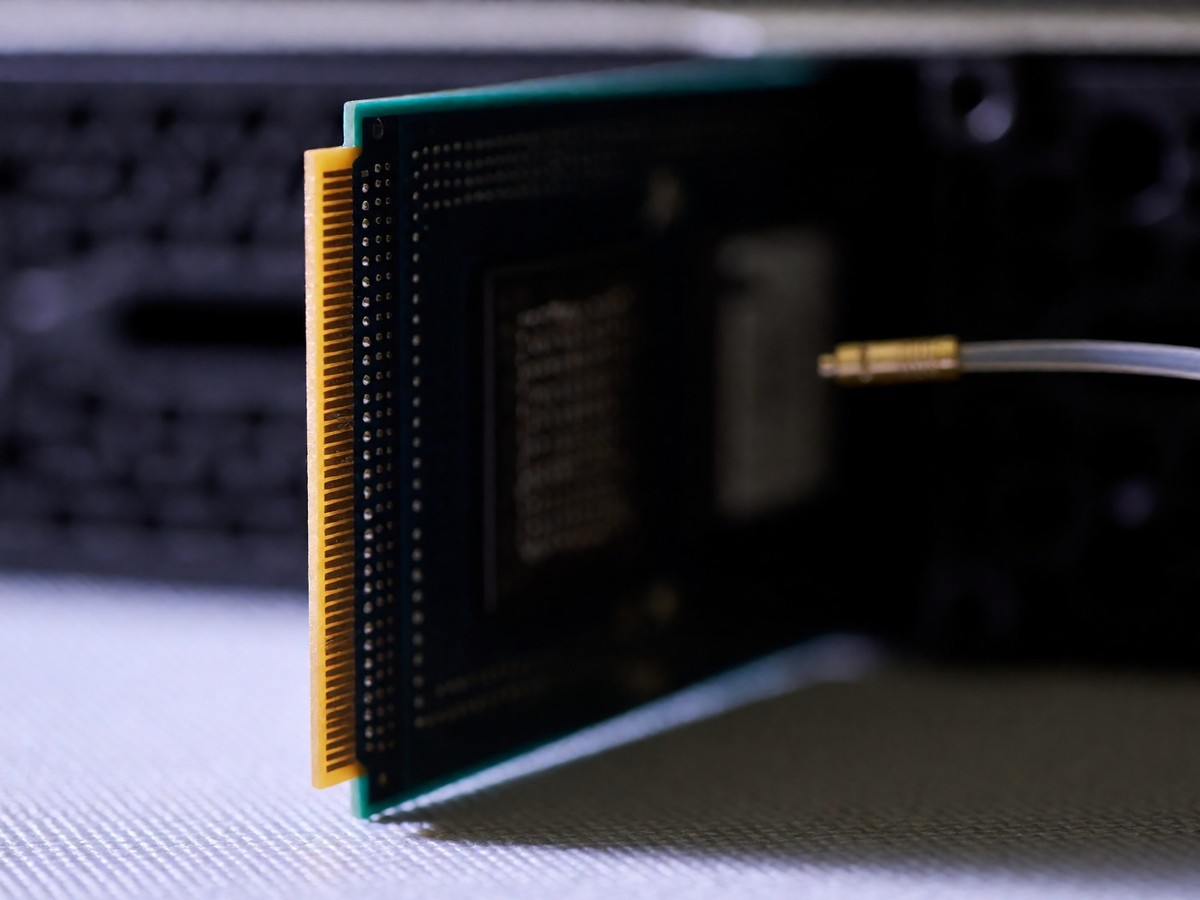
SambaNova’s DataScale SN30 systems depend on RDU accelerator chips manufactured on TSMC 7nm processes. These systems face significant supply chain hurdles as the industry moves toward massive sovereign AI deployments. TSMC aims to increase its 2nm manufacturing capacity at the N2 node to 120,000 wafers per month by the end of 2026, a 20% increase over the early August target of 100,000 wafers. TSMC’s A14 node, which produces 1.4 nm chips, has begun pilot production runs at Hsinchu Science Park’s Baoshan Fab 20 and Central Taiwan Science Park’s Fab 25 to allow customers to see how their potential designs will perform. While Intel expects its 14A node to compete closely with TSMC’s A14, the demand for leading-edge chips remains intense. The massive demand for High Bandwidth Memory diverts capacity from commodity DRAM, which creates a supply-side bifurcation that forces providers to compete for limited resources to satisfy the extremely intensive requirements of their massive, global, and very large-scale customers. A square millimeter of 1b DRAM now costs $0.654, while a TSMC N2 wafer costs $0.42 per square millimeter. This pricing imbalance places pressure on memory procurement for high-performance systems. If you are tracking these hardware shifts, you know that memory costs dictate the feasibility of large-scale deployments. The demand for specialized AI components also pushes spot prices for 12-inch silicon wafers higher. SambaNova must secure stable access to these components to maintain its 3 TB per socket memory capacity.
The inference market consolidation
NVIDIA’s massive consolidation of the inference market presents a direct threat to SambaNova’s independence. In late December 2025, NVIDIA signed a $20 billion non-exclusive licensing agreement with Groq to access its LPU technology and talent. This transaction included the acquisition of all Groq’s physical assets and the migration of CEO Jonathan Ross to NVIDIA. Such moves allow larger players to neutralize rivals through talent migration and IP access rather than traditional mergers. Gartner analyst Gaurav Gupta notes that 75% of AI startups offering custom compute silicon for data centers will face acquisition or bankruptcy by 2029. SambaNova faces a market where NVIDIA Blackwell delivers 30x higher inference throughput than the previous Hopper architecture. Groq’s architecture uses a 144-way VLIW design and 230 MB of onboard SRAM to achieve high speeds for single-user inference. Groq raised $750 million in September 2025, which brought its post-money valuation to $6.9 billion. Cerebras also competes in this space and raised $1.1 billion in new capital in late 2025 to fund its expansion. AMD’s MI300X series remains a credible second-source GPU option, outperforming NVIDIA’s H100 in certain inference workloads by up to 1.6x, and it has seen deployments at Microsoft and Meta globally.
| Hardware Feature | SambaNova DataScale SN30 |
|---|---|
| Chip Architecture | Reconfigurable Dataflow Unit (RDU) |
| Fabrication Process | TSMC 7 nm |
| Socket Memory Capacity | 3 TB |
| Deployment Focus | Enterprise and Government |
The rise of custom silicon from Google, Amazon, and Microsoft complicates the landscape. Amazon uses Trainium and Inferentia chips, while Google uses TPUs to reduce dependency on third-party GPU vendors. The global AI inference hardware market is valued at $43.78 billion in 2025 and is projected to reach $410.35 billion by 2035.
Sovereign AI and the Middle East
The push for sovereign AI in the Middle East places SambaNova in direct competition with well-funded state projects. In March 2025, NVIDIA announced a partnership with HUMAIN to build AI factories in Saudi Arabia. This partnership includes strategic partners like G42, OpenAI, Oracle, SoftBank, and Cisco to deploy the Stargate UAE infrastructure. Groq also secured a $1.5 billion commitment from the Kingdom of Saudi Arabia in February 2025 to expand its LPU-based inference infrastructure. These programs build massive, state-supported compute pools that bypass the traditional commercial cloud market. India’s AI Mission provides a similar template, having expanded its common compute pool to more than 38,000 GPUs by late 2025, with a target to reach 200,000 units. This scale of investment from sovereign entities creates a barrier for any provider attempting to enter the regional market without similar state-level backing. The market is shifting toward disaggregated, purpose-built inference architectures that separate the compute-intensive prefill stage from the memory-intensive decode stage. Google’s TPU v7 Ironwood supports over 4,600 TFLOP/s per pod and provides a specialized alternative for inference-intensive applications. Will SambaNova’s enterprise focus suffice to counter these multi-billion dollar national infrastructure projects?