The Tensix design
Jim Keller leads Tenstorrent as CEO after designing important semiconductor advances for companies like Apple, AMD, and Tesla. He previously worked on Digital Equipment Corporation’s Alpha processors and AMD’s K7 and K8 architectures. Tenstorrent builds AI hardware based on the Tensix core rather than standard GPU streaming multiprocessors. Each Tensix core includes five small RISC-V microprocessors. Two cores manage data ingress and egress, while three cores handle unpacking, computing, and packing data for the arithmetic engine. The core uses 1.5 MB of local SRAM and two NoC routers to ensure efficient communication. This design separates computation from data transport to allow for the overlapping of data movement and arithmetic. The core also includes a scalar engine, a vector engine, and a matrix engine to perform tasks. It employs circular buffers with producer-consumer semantics to handle synchronization. Unlike GPUs, the Tensix core lacks hardware multithreading and warp scheduling. The architecture uses explicit data movement between tiles over a mesh network-on-chip. I see an architecture that prioritizes deterministic memory access over complex cache hierarchies. The system scales by connecting chips through a mesh network-on-chip using 400 Gbps Ethernet or 800G QSFP-DD. This connectivity allows a cluster of chips to act as one large mesh of Tensix cores without requiring virtualization.
Wormhole hardware and scaling
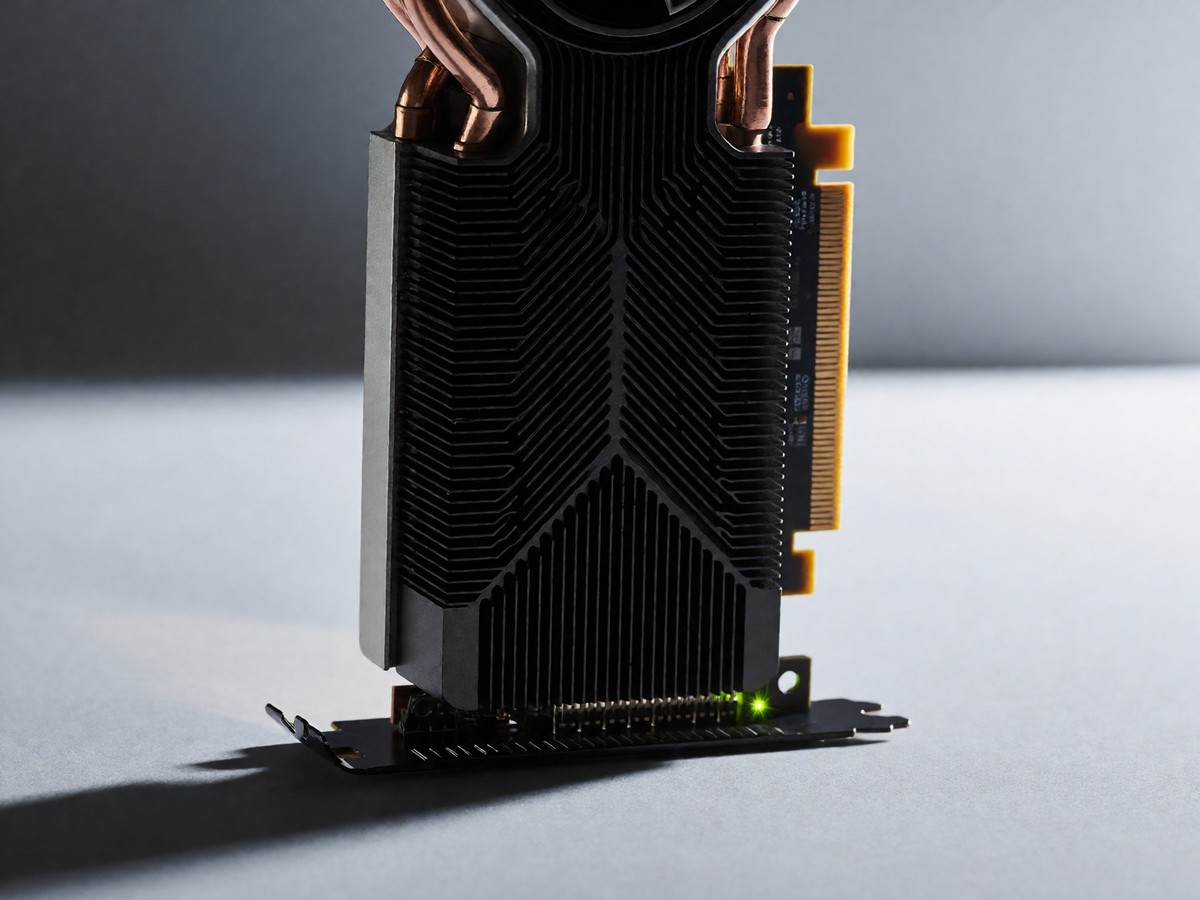
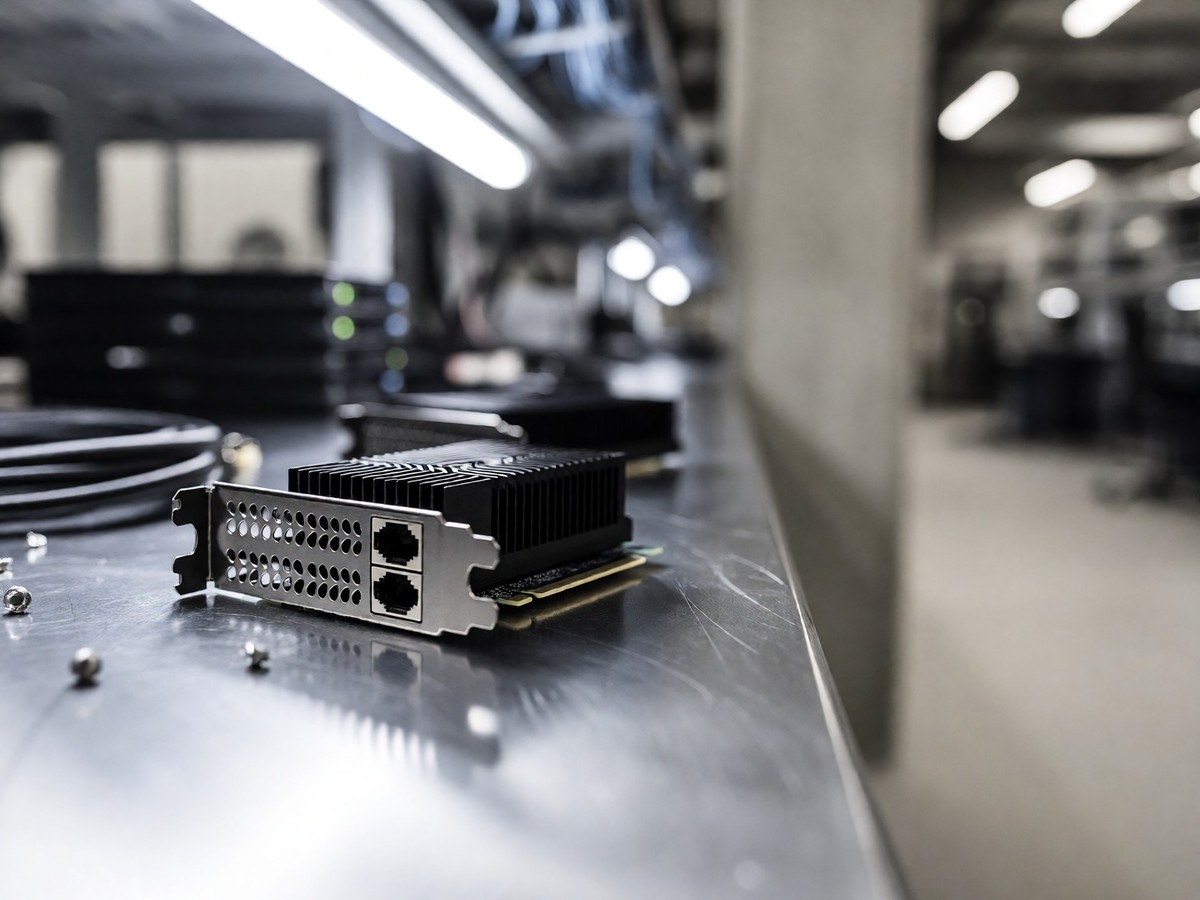
The Wormhole series provides PCIe add-in cards for server and workstation use. The n150 is a PCIe add-in card containing one processor, while the n300 is a PCIe card containing two. These cards replace the older Grayskull boards. You likely know that NVIDIA controls 80% of the AI accelerator market, so Tenstorrent targets the remaining space with scalable, low-cost options. Tenstorrent sells chips on a PCIe board for as little as $1,000, which scales to $100,000 partner-made systems. For large deployments, Tenstorrent sells the TT-LoudBox for $12,000, which contains four n300 cards and two Intel Xeon 4309Y 8-core processors. The liquid-cooled TT-QuietBox is $15,000 and includes one AMD EPYC 8124P 16-core CPU.
| Product | Processor Count | Max Power (TDP) | Price |
|---|---|---|---|
| Wormhole n150 | 1 | 160W | Varies |
| Wormhole n300 | 2 | 300W | Varies |
| TT-LoudBox | 8 | N/A | $12,000 |
| TT-QuietBox | 8 | N/A | $15,000 |
The n300 card delivers higher efficiency for specific tasks. While the Xeon Platinum finishes a 1024×1024 2D FFT in 10.24 ms, the Wormhole n300 takes 23.56 ms but uses only 42W of power compared to the 353W used by the Xeon. The n300 also achieves 0.99J of total energy versus the 3.62J used by the Xeon. Regarding the Blackhole Galaxy server, 16 units containing 512 chips can run DeepSeek-671B at up to 350 tokens per second per user at batch 32. These Galaxy boxes include 56 Ethernet ports per box, whereas GPU servers often include only eight external ports. Keller notes that compute area grows faster than communication bandwidth, a problem addressed by his networking focus. However, the Tenstorrent software stack is early in its development cycle for Blackhole, and many HuggingFace models require manual kernel rewrites.
Open-source software and IP licensing
Tenstorrent uses an open-source software stack under Apache 2.0 licenses to provide access to its hardware. This stack includes TT-Metalium for low-level access and TT-NN, which provides a PyTorch-like Python API. The software allows developers to control the RISC-V cores and the vector engines directly. Will the open-source strategy entice enough developers to overcome the CUDA moat? The company also licenses its IP to partners like LG and Hyundai. This IP business helped the company reach a $1 billion valuation after a $200 million Series C round led by Fidelity Management and Research Company. The Ascalon RISC-V CPU IP reaches single-core performance of 22 SPECint 2006/GHz and 3.6 SPECfp 2017/GHz on Samsung SF4X process nodes. This product is used for server, AI infrastructure, automotive HPC, and advanced driver assistance systems. Tenstorrent maintains a presence in Japan through a partnership with Rapidus to develop 2nm-generation edge AI chips. Tenstorrent also works with CoreLab to provide design optimization and regional customer support.