The Dataflow Vision and Leadership
SambaNova Systems builds full-stack AI solutions comprising hardware, software, and models. Rodrigo Liang, co-founder and CEO, leads a company that treats AI as an asset rather than a mere tool. The company follows a software-first approach, starting with a compiler stack that unrolls the whole computation graph to optimize the processing of all required data. This method plans all resource needs, including bandwidth and latency requirements, before execution begins. Current hardware like GPUs or CPUs process one kernel at a time, which creates inefficiencies and demands high memory bandwidth for constant data handshakes. Liang argues that because neural networks are predictable, a compiler can map the entire graph to keep data on the chip. I find this focus on the dataflow substrate provides a distinct advantage for enterprise workloads. The leadership team includes Dennis Woodside, who took over as CEO after founder Girish Mathrubootham transitioned to Executive Chairman in May 2024. P.K. Gupta leads global sales strategy and customer acquisition as the Chief Revenue Officer. The company also researches Edge AI to solve cost and privacy challenges by eliminating cloud computing requirements. Their RDU architecture includes a dedicated inter-RDU network to facilitate scaling across multiple sockets. This capability allows for the handling of complex interconnections required for massive models. The DataScale platform aims to simplify AI adoption by providing flexible, high-performance computing for modern AI workloads. The company focuses on creating AI assets through fine-tuning granular models on customer data. This allows for the creation of many AI experts to serve the enterprise.
The SN40L and Performance Benchmarks
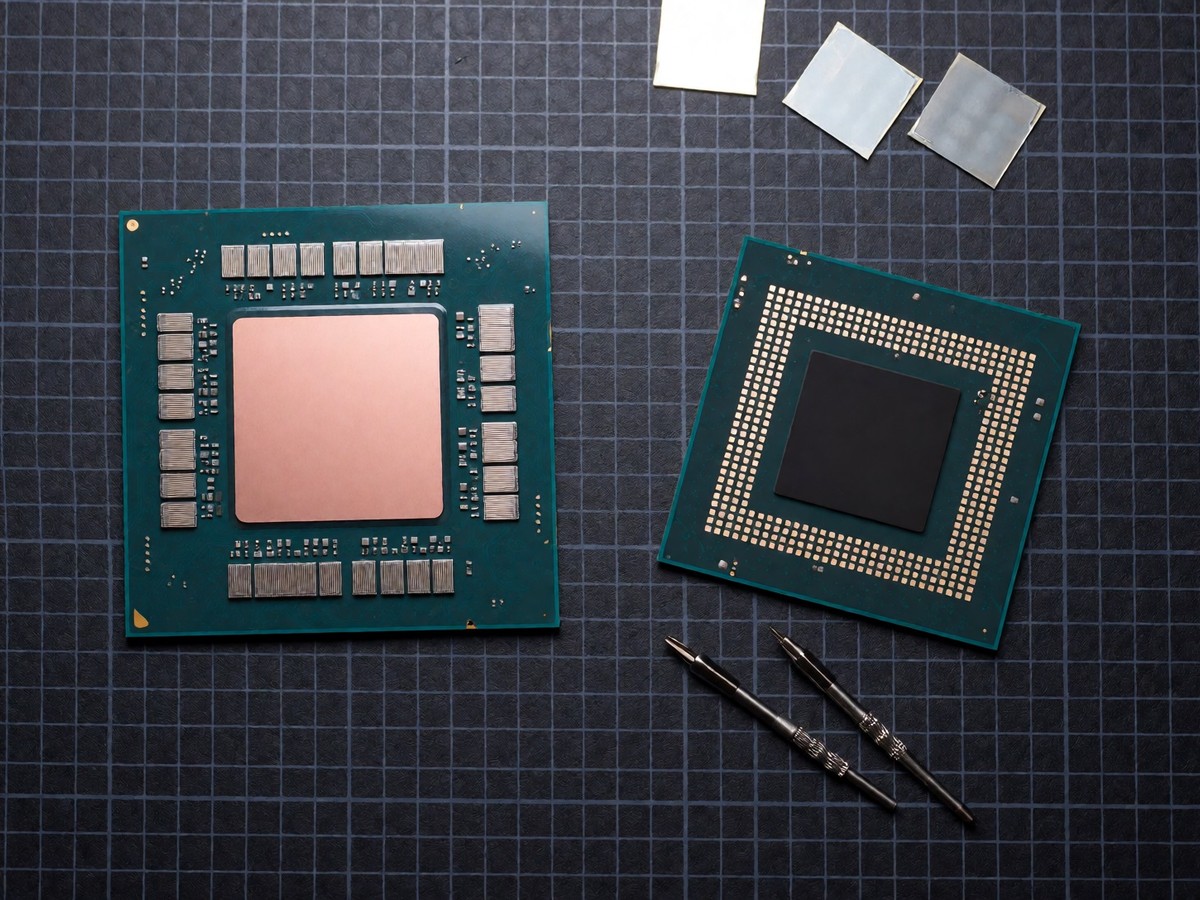
The SN40L Reconfigurable Dataflow Unit (RDU) uses a three-tier memory system to mitigate the memory wall. This architecture includes on-chip distributed SRAM, on-package High-Bandwidth Memory (HBM), and off-package DDR DRAM. The RDU node with eight sockets reduces the machine footprint by up to 19x and improves model switching times by 15x to 31x. I would note that the Samba-CoE system on these eight sockets achieves speedups from 2x to 13x compared to an unfused baseline. The Samba-1 Turbo specifically reached 1,084 output tokens per second on Meta’s Llama 3 Instruct (8B). This speed exceeds the median output speed across providers by 8 times. Unlike many competitors that require hundreds of chips to run a single instance of a model, Samba-1 Turbo runs Llama 3 8B at 1,000 tokens per second on just 16 chips. This high throughput capability allows for higher performance while maintaining full precision at a lower total cost of ownership. The 8-socket RDU node also outperforms the DGX H100 by 3.7x and the DGX A100 by 6.6x. The CoE approach integrates many smaller, specialized models with fewer parameters than monolithic LLMs. This approach addresses the compute-to-memory ratio imbalance in contemporary accelerators.
| Component | Specification |
|---|---|
| Memory Tier 1 | On-chip distributed SRAM |
| Memory Tier 2 | On-package High-Bandwidth Memory |
| Memory Tier 3 | Off-package DDR DRAM |
| Llama 3 8B Speed | 1,084 tokens/s |
| RDU Node Footprint Reduction | Up to 19x |
| Model Switching Improvement | 15x to 31x |
Enterprise Strategy and Market Competition
SambaNova raised $350 million in a Series E round with participation from Vista Equity Partners, Cambium Capital, Intel Capital, QIA, and GV. This follows a $676 million Series D round led by SoftBank’s Vision Fund 2, which brought the valuation above $5 billion. The company targets the Fortune 5000 by offering customized training and deployment through a subscription-based model. SambaNova focuses on three model types: language models, computer vision, and recommendation systems. The company claims its purpose-built chips deliver 5.7x faster throughput than the H200 on DeepSeek R1. While NVIDIA dominates the market with the Blackwell platform, SambaNova differentiates itself by handling everything from model selection to maintenance. I find that the ability to run hundreds of models on a single node at lower cost provides a clear benefit for companies avoiding vendor lock-in. However, SambaNova does not submit its results to MLPerf, an industry consortium for machine learning evaluations. You should decide if these internal benchmarks satisfy your requirements for independent verification. Does the lack of MLPerf participation impact the long-term trust of large enterprise buyers? The company also provides a GPT-as-a-service offering and an ELEVAITE membership program. The business model relies on subscriptions rather than service-heavy contracts, which distinguishes them from service providers like Accenture. This strategy allows them to compete against the massive memory capacity of AMD Instinct chips and the custom ASIC focus of Google.