Condor Galaxy deployment expands compute capacity
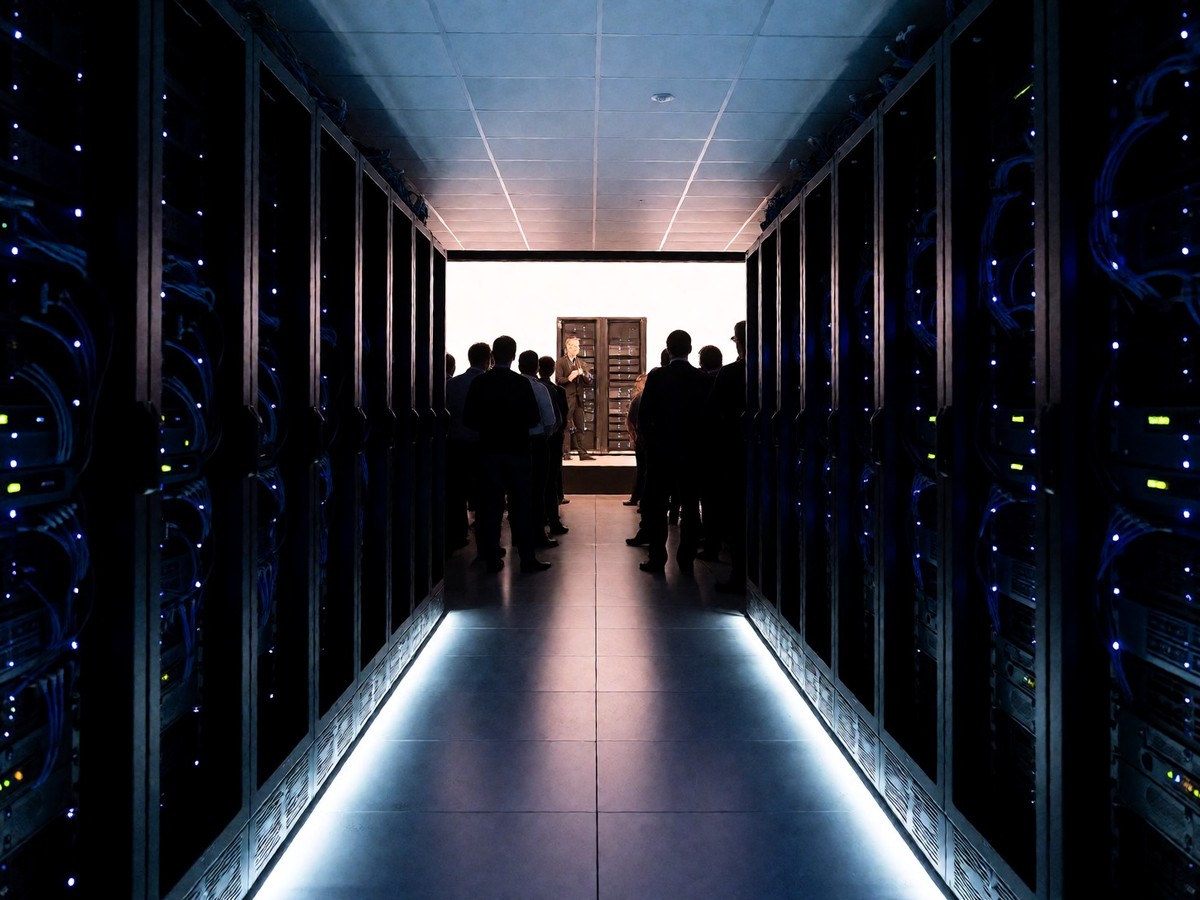
The Condor Galaxy network reaches 16 exaFLOPs of capacity through the deployment of Condor Galaxy 3. This third cluster in the network uses 64 Cerebras CS-3 systems to provide 8 exaFLOPs of AI compute and 58 million AI-optimized cores. The Condor Galaxy network plans to reach a combined training capacity of 36 exaFLOPs through a constellation of nine interconnected supercomputers, including the newly deployed Condor Galaxy 3 systems. Earlier deployments like CG-1 in Santa Clara at the Colovore facility use 64 CS-2 systems to deliver 4 exaFLOPs and 54 million cores. CG-1 is optimized for large language models and generative AI, supporting up to 600 billion parameter models and extendable configurations for up to 100 trillion parameter models. CG-1 relies on 72,704 AMD EPYC processor cores and provides 388 terabits of fabric bandwidth. The first three clusters, CG-1, CG-2, and CG-3, interconnect to form a 12 exaFLOP distributed supercomputer with 162 million cores and 192 CS-2 systems fed by more than 218,000 high performance AMD EPYC CPU cores. These systems enable G42 and its cloud users to train large models for Arabic bilingual chat, healthcare, and climate action. The partnership has already produced models like Jais-30B, Med42, Crystal-Coder-7B, and BTLM-3B-8K, with Jais-30B and Jais-13B currently available on Azure Cloud. The UAE, where G42 is based, was the first nation to appoint a Minister for AI and established the Mohamed bin Zayed University of Artificial Intelligence.
The performance of WSE-3 systems
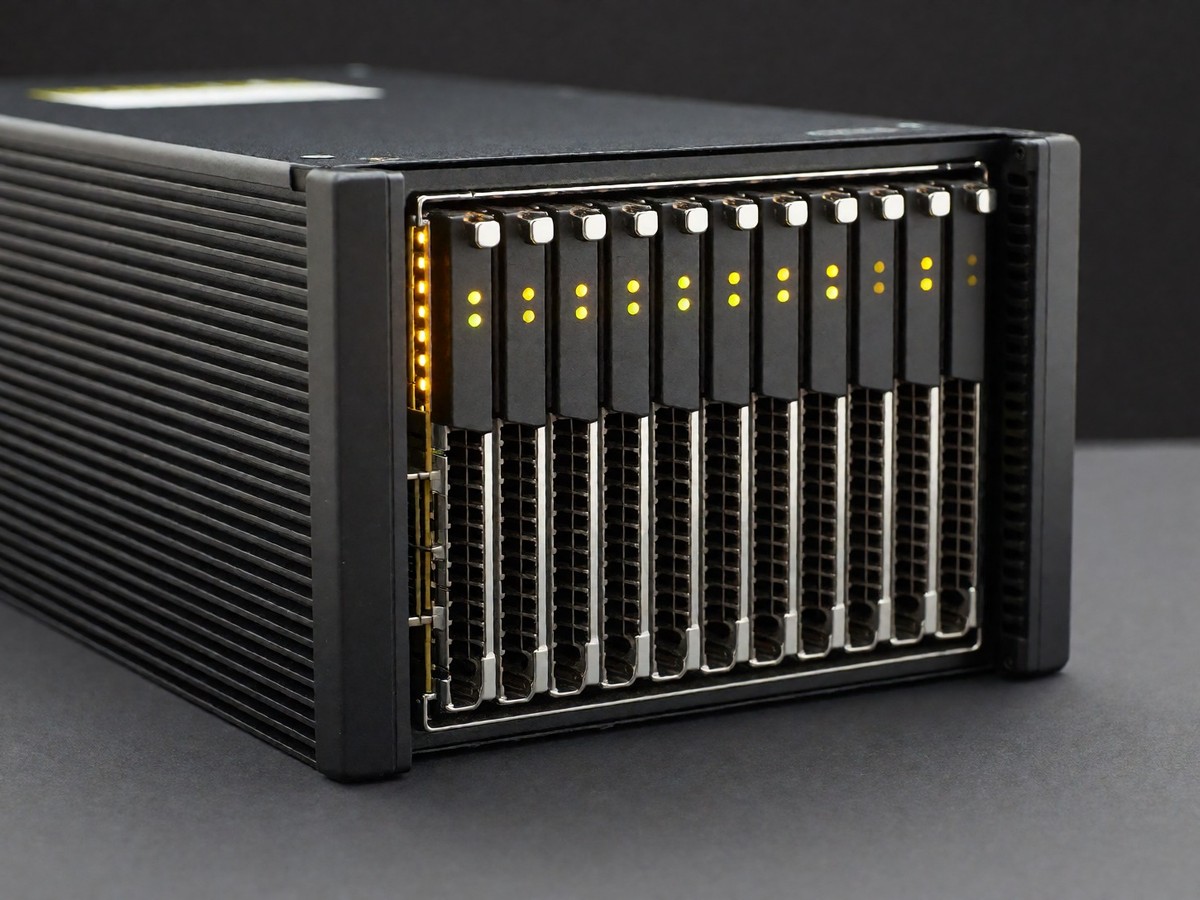
The WSE-3 chip provides the scale for frontier AI models. This 5nm-based processor contains 4 trillion transistors and 900,000 AI-optimized cores. Each CS-3 system delivers 125 petaflops of peak AI performance. The hardware supports models up to 24 trillion parameters. The CS-3 can train a Llama 70B model from scratch in a single day. I find the WSE-3 efficient because it doubles the performance of the WSE-2 while maintaining the same power draw and price. You know the difficulty of distributing models over thousands of small GPUs, but these systems enable training in minutes instead of months. The WSE-2 architecture includes 850,000 cores, 2.6 trillion transistors, 40GB of on-chip SRAM, 20 petabytes of memory bandwidth, and 220 petabits of aggregate fabric bandwidth. The WSE-3 expands this with 44GB of on-chip SRAM and external memory pools up to 1.2 petabytes. The system supports training with long sequence lengths up to 50,000 tokens out of the box.
| Hardware Spec | CS-2 (WSE-2) | CS-3 (WSE-3) |
|---|---|---|
| AI Cores | 850,000 | 900,000 |
| Transistors | 2.6 Trillion | 4 Trillion |
| Peak AI Performance | N/A | 125 Petaflops |
| Max Parameter Support | 120 Trillion | 24 Trillion |
| Process Node | 7nm | 5nm |
The systems work to solve complex problems in molecular biology and space exploration. However, the partnership involves G42, a company whose CEO previously worked for DarkMatter, a firm accused of developing spying tools.
Financial momentum and market growth
Cerebras maintains a high valuation as it scales its infrastructure. The company reached an $8.1 billion valuation in September 2025 during its Series G round. A later Series H round in February 2026 brought the valuation to approximately $23 billion. This round included $1 billion in funding with participation from Tiger Global, AMD, and Altimeter Capital. Cerebras filed for an IPO on the Nasdaq in April 2026. The company also secured an $850 million revolving credit facility in April 2026 to expand its data center capacity. G42, which has raised $800 million from Silver Lake and Mudabala, uses these systems to sell AI computing services. The company signed a $100 million deal to supply the first of three supercomputers to G42. Two more supercomputers will arrive in Austin, Texas, and Asheville, North Carolina, in the first half of 2024. The company was founded in 2015 by Andrew Feldman, Gary Lauterbach, Michael James, Sean Lie, and Jean-Philippe Fricker, who previously worked at SeaMicro. G42, the leading AI and cloud computing company in the UAE, also took a $100 million stake in ByteDance. The company has raised over $3.4 billion across multiple rounds, including a $250 million Series F in 2021 led by Alpha Wave Ventures and Abu Dhabi Growth Fund. Will the massive capital influx allow Cerebras to finally displace NVIDIA as the primary provider for hyperscale cloud companies?