Google acquired DeepMind in 2014 for a price between $400 million and $650 million. Demis Hassabis, Shane Legg, and Mustafa Suleyman founded the London-based laboratory in 2010. DeepMind researchers developed AlphaGo, which defeated Lee Sedol in a 2016 match, and AlphaFold, which predicts protein structures. Demis Hassabis and John Jumper received the 2024 Nobel Prize in Chemistry for their work on AlphaFold. Alphabet merged DeepMind with Google Brain in April 2023 to form Google DeepMind. This merger responded to the release of ChatGPT.
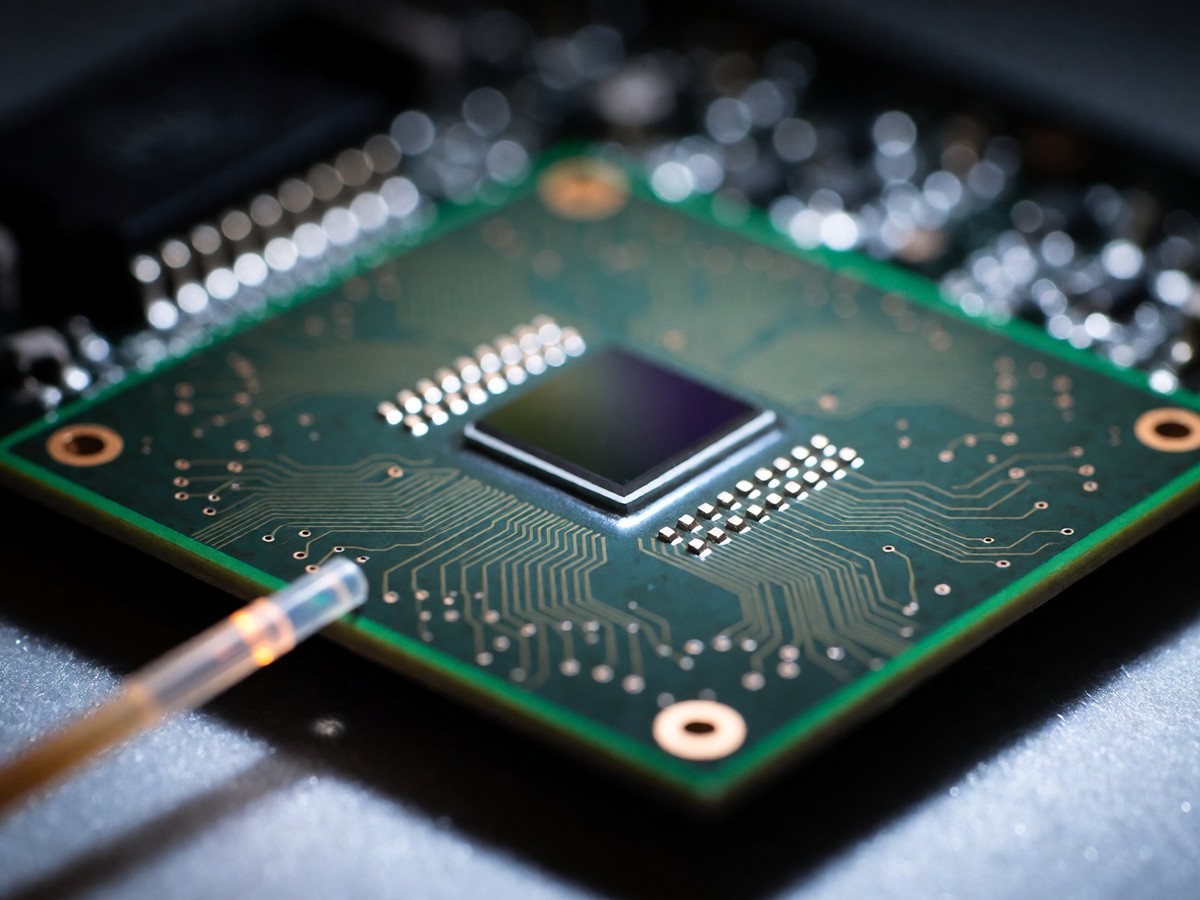
The combined entity grew from 1,567 employees in 2022 to approximately 8,000 by early 2026. Gemini reached 750 million monthly active users by the end of the fourth quarter of 2025. The company maintains a 78% employee retention rate, which exceeds OpenAI’s 67% rate. Google DeepMind possesses a specific combination of three assets: the Gemini frontier model, Tensor Processing Units (TPUs) for AI chips, and the Google Cloud datacenter network. No other company possesses two of these three components. OpenAI and Anthropic provide models, while NVIDIA provides chips. Microsoft and Amazon provide datacenter networks but lack the same scale of model and chip integration.
| Asset Type | Google DeepMind Capability | Competitor Status |
|---|---|---|
| Frontier Model | Gemini | OpenAI and Anthropic have models |
| AI Chips | TPUs at scale | NVIDIA has chips |
| Datacenter Network | Google Cloud | Microsoft and Amazon have networks |
DeepMind’s hiring process for research roles lasts about 45 days. Candidates undergo recruiter calls, technical conversations, coding interviews, machine-learning rounds, and research deep-dives. This process contrasts with OpenAI’s four-to-six hour final loops.
The infrastructure battle and OpenAI’s capital strategy
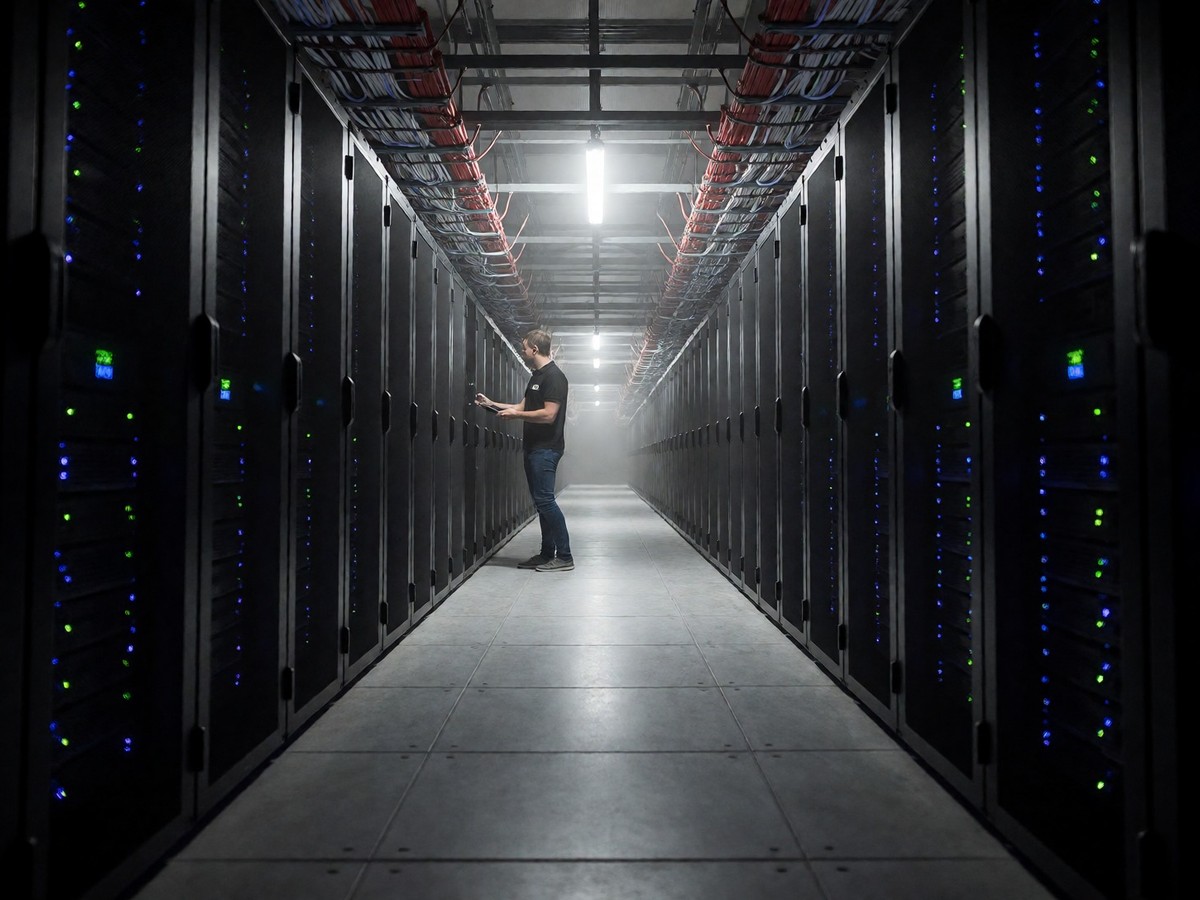
OpenAI negotiates to lease a $500 billion AI data center campus in southern Ohio. This facility would provide 10 gigawatts of electrical capacity. SoftBank and SB Energy develop the campus in partnership with the US Department of Energy on the site of a former uranium enrichment facility. NVIDIA negotiates a $250 billion financial backstop to help OpenAI raise debt. NVIDIA also evaluates financing $350 billion worth of AI chips for the Ohio facility. OpenAI’s valuation reached $500 billion during a secondary share sale that allowed employees to sell stock to investors like Thrive Capital and SoftBank Group Corp.
OpenAI faces competition from companies like Google, Anthropic, and Meta. Meta recruits researchers from OpenAI with nine-figure compensation packages. OpenAI’s success depends on large capital requirements, whereas Google funds its AI development through search advertising revenue. OpenAI previously received over $13 billion from Microsoft between 2019 and 2023.
| Project Detail | Ohio Data Center Specification |
|---|---|
| Total Project Value | $500 billion |
| Electrical Capacity | 10 gigawatts |
| NVIDIA Financial Backstop | $250 billion |
| Primary Developer | SoftBank and SB Energy |
The economics of code are changing. Benoit Schillings, VP of Research at Google DeepMind, stated in a July 2026 talk that writing software approaches zero marginal cost. He noted that 80% of new code on GitHub comes from machines. DeepMind uses self-play to train models, a method similar to how AlphaZero learned chess. This method uses the model to create challenges and judge outputs without human training data.
Scaling research into products
DeepMind transitioned from a research lab that published papers to a product-driven organization. In 2020, DeepMind reported a profit of £43.8 million on revenue of £826 million. This followed a loss of £476 million in 2019. The company’s revenue tripled from £265 million in 2019 to £826 million in 2020. Google DeepMind produces the Gemini model family, Gemma, Imagen, Veo, and Lyria.
The integration of research and engineering allows for faster deployment. The organization includes a Core research team for projects like AlphaZero and an Applied team for production deployment. Koray Kavukcuoglu, the CTO, bridges these two modes. While DeepMind’s research has solved the 50-year-old protein folding problem, the company faces internal pressures to ship products at the same speed as its competitors.
Google’s 2017 Transformer paper, "Attention Is All You Need," provided the architecture that powers modern large language models. OpenAI used this technology to launch GPT-1. Google continues to invest in its own infrastructure, including the development of TPUs and the expansion of Google Cloud. The company’s search advertising business generates enough profit to fund these massive capital expenditures. DeepMind’s ability to deploy SynthID Bio watermarking and the Gemini 4.0 Argon model demonstrates its focus on integrated AI ecosystems. How will Google maintain its lead as AI agents begin to handle complex, multi-step reasoning tasks?