Data pipelines and context constraints
Apache Spark delivers the most efficient way to manage the 12 trillion tokens required for DBRX training. Teams lose their performance advantage when they neglect Spark-based data preparation or ignore the 32,000 token context limit. DBRX relies on 12 trillion tokens for its capability, but it lacks the 128,000 token context window found in Llama 3.1 405B. If you attempt to ingest large codebases without managing this 32k limit, the model will fail where Llama 3.1 405B succeeds. Data management in Delta Lake requires strict schema validation at pipeline boundaries to prevent failures. Teams should use Spark to filter noisy records, format prompt-response pairs, split the dataset, and remove duplicates. For example, an optimized pipeline filters records where the quality score is at least 0.85 and messages exceed 20 characters. It also removes duplicate messages based on a hash to ensure data uniqueness. Effective engineering also requires using Unity Catalog to manage and govern the vast amounts of training data. MLflow provides the necessary tools to log and track experiments and training runs. When engineering teams deploy DBRX for tasks requiring massive document ingestion, they often overlook that its 32,000 token context window falls significantly short of the 128,000 token window available in the Llama 3.1 405B model. Llama 3.1 405B provides an expanded context of 128,000 tokens, which is approximately 85,000 words.
MoE training stability risks
Auxiliary losses provide the necessary stability for Mixture-of-Experts (MoE) training. The DBRX architecture includes 16 experts and selects 4 for any given input, which yields 36 billion active parameters. This differentiates DBRX from models like Mixtral, which uses 8 experts and selects 2. Without a load balancing auxiliary loss, the model suffers from routing collapse where the gating network repeatedly selects the same few experts. Numerical instability also occurs because the router uses a softmax function that produces round-off errors. To mitigate this, engineers add a router z-loss to keep values from becoming too large. Databricks DBRX provides the best performance for specialized coding tasks when teams manage its MoE architecture and context limits correctly. Many developers use LoRA to reduce GPU memory requirements by 70% during fine-tuning, which helps with parameter-efficient adaptation. This technique freezes the base model and only trains a small set of adapter matrices. The development of DBRX took three months and utilized a $10 million budget. The training process required 3072 NVIDIA H100 GPUs connected via 3.2Tbps Infiniband. The model utilizes next-token prediction, Rotary Position Encodings, Grouped Query Attention, and Gated Linear Units. How will specialized inference hardware change the economics of MoE deployment?
Memory bottlenecks and Llama 3.1 cost comparisons
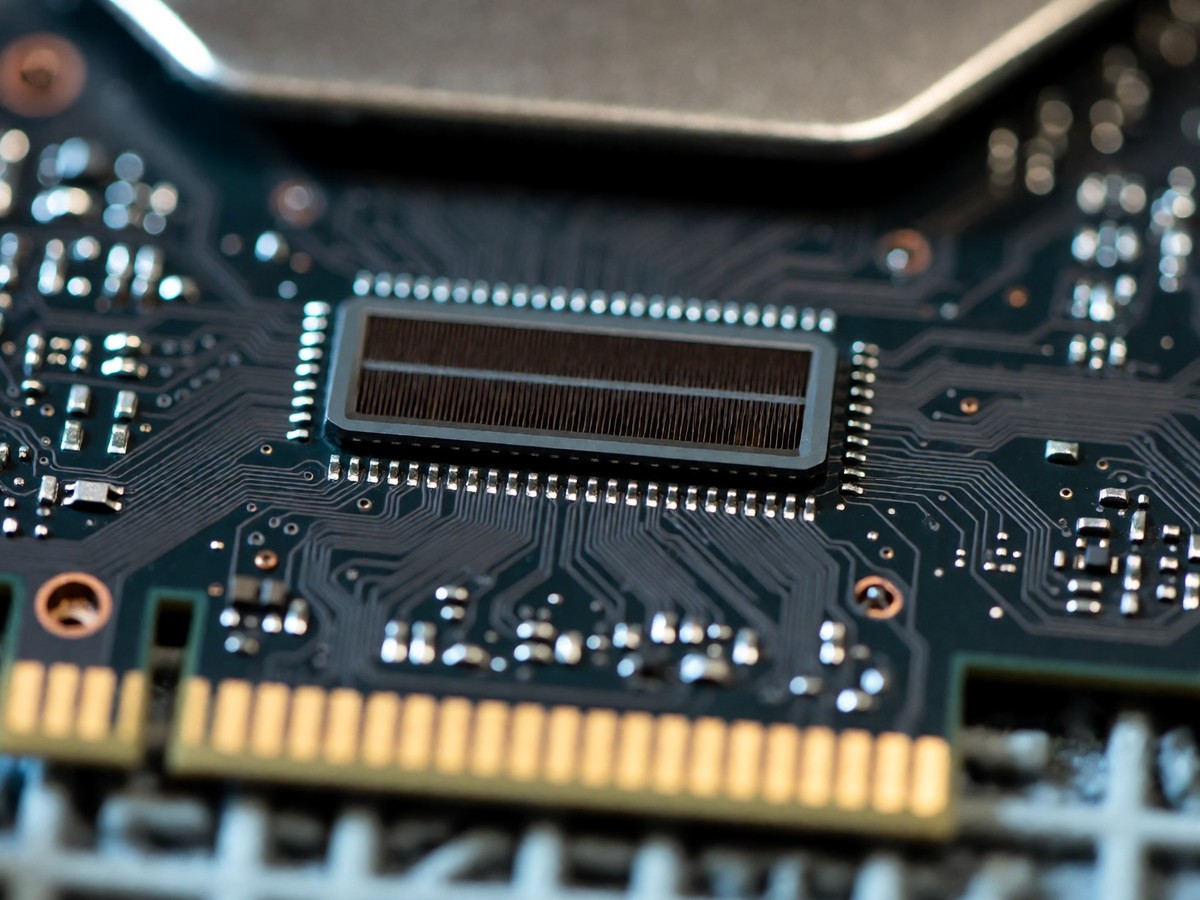
Efficient inference requires managing the memory bandwidth bottleneck to maintain the DBRX advantage. DBRX achieves text generation speeds of up to 150 tokens per second on Mosaic AI, but inference hits a wall because of memory limitations. AI chip compute power grew 80x over the last decade, but memory bandwidth only grew 17x. This creates a 4.7x differential between compute and memory bandwidth scaling. Llama 3.1 405B ranks #197 of 224 on the public leaderboard with a score of 28.21/100. Buying GPUs for memory aggregation rather than compute power leads to expensive hardware sitting idle. The pricing of HBM is increasing while standard DDR prices drop, creating a strategic disadvantage for compute-heavy configurations. Because the autoregressive decode phase requires repeated memory access, performance relies on bandwidth rather than raw FLOPS. While Llama 3.1 405B provides high throughput, it also provides a much larger context window than the 8,192 tokens in previous Llama models. You should check your VPC configuration to prevent bootstrap errors when launching clusters.
| Feature | Databricks DBRX | Llama 3.1 405B |
|---|---|---|
| Total Parameters | 132B | 405B |
| Active Parameters | 36B | 405B |
| Context Window | 32,000 | 128,000 |
| Input Cost (per 1M) | N/A | $0.89 |