The yield and scaling reality
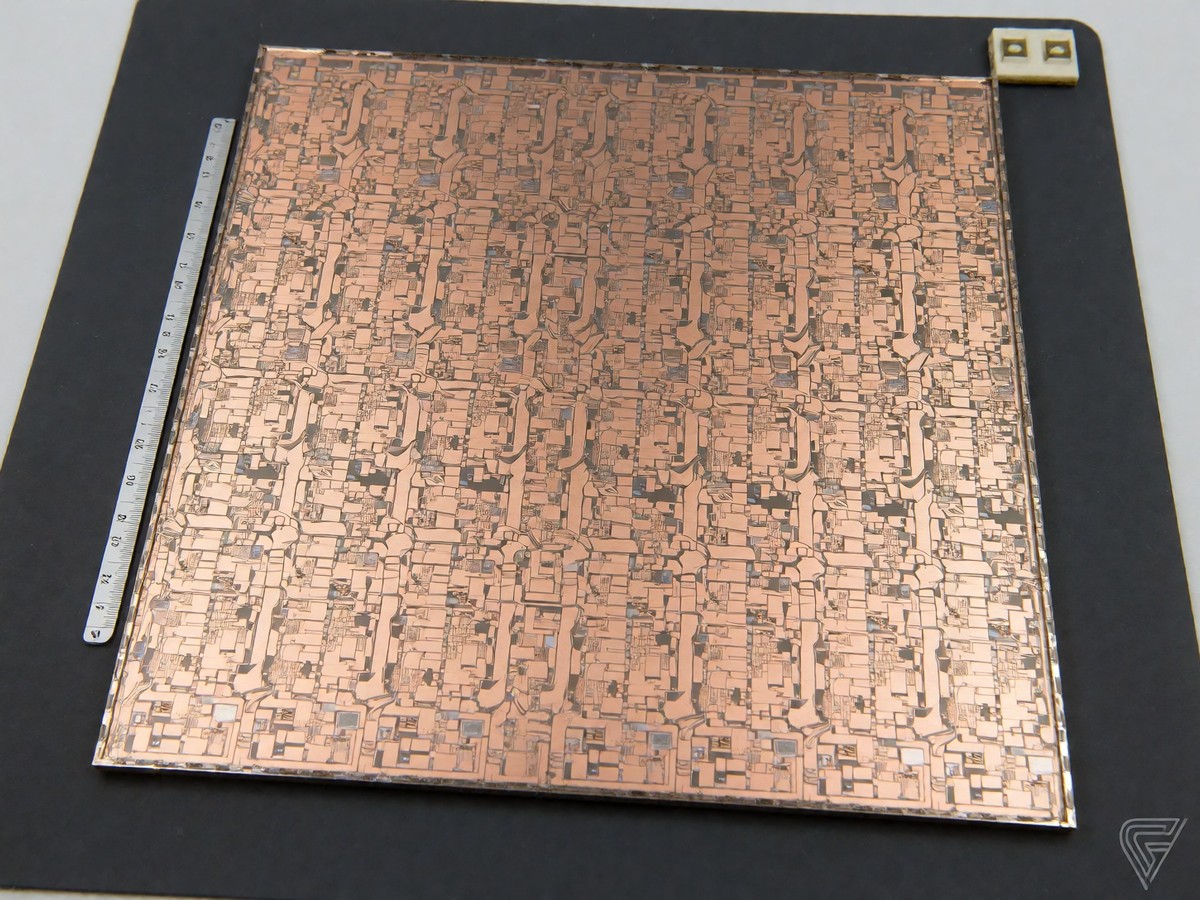
The reliance on a single, massive piece of silicon introduces manufacturing yield risks that smaller, chiplet-based designs from NVIDIA and AMD handle better. Cerebras plans to grow its manufacturing capacity more than tenfold by the end of 2026. The company works with contract manufacturers Flex and Sanmina, alongside chip foundry TSMC. This scaling effort follows a reported $26.1 billion backlog of contracted future business as of September 30, 2026. A large portion of this order book includes a multi-year agreement with OpenAI valued at over $20 billion. Cerebras reported Q3 2026 core revenue of $230.9 million, a 70% increase from the same quarter a year earlier. On a GAAP basis, total revenue for the quarter was $210.8 million, up 55% year over year. Cloud and services revenue rose 272% year over year to $144.9 million. Management raised full-year 2026 core revenue guidance to between $940 million and $960 million, up from the prior range of $880 million to $890 million. This growth comes as the company clears regulatory hurdles, such as G42 divesting its ownership stake to satisfy U.S. national security reviews. While the WSE-3 uses a 5nm process, the massive 46,225mm2 die size presents a physical production challenge.
Power and cooling requirements
The CS-3 system draws 23 kilowatts of electricity per unit. Because the CS-3 cluster includes a dedicated NET cabinet, the 240 kW provisioned heat load figure exceeds the simple calculation of eight times the 27 kW per system power draw. This 240 kW load includes 220 kW carried by water and 20 kW carried by air. The physical infrastructure required to support such high-density computing is a barrier to entry for smaller data centers.
| Component | Specification |
|---|---|
| WSE-3 Transistor Count | 4 trillion |
| WSE-3 AI Core Count | 900,000 |
| WSE-3 On-chip SRAM | 44GB |
| WSE-3 Memory Bandwidth | 21 PB/s |
| CS-3 Cluster (8-node) Heat Load | 240 kW |
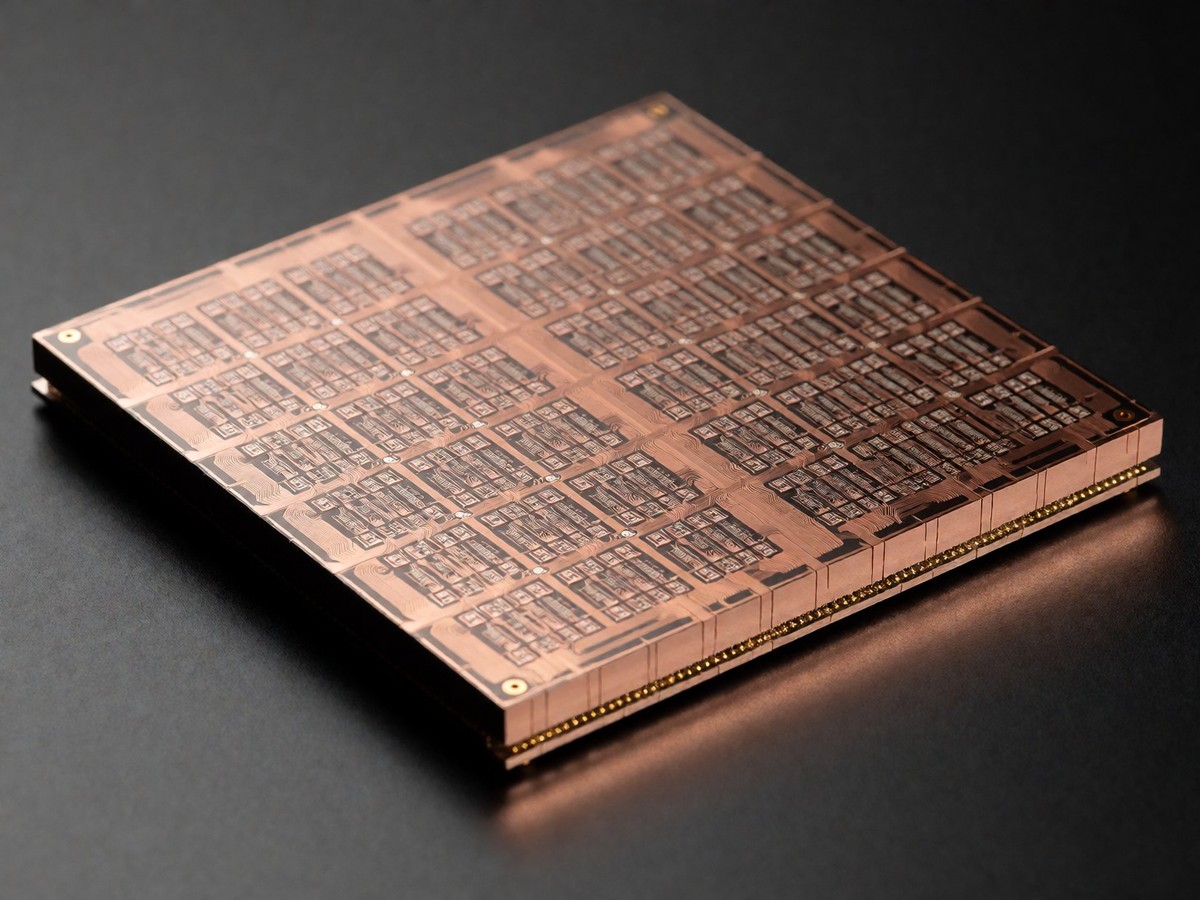
The older CS-2 system draws 15 kW of power. To manage this, Cerebras uses a liquid cooling manifold and a cold plate where the wafer floats. This design allows the wafer to expand and contract while it remains in contact with the polished front side of the cold plate, despite the different coefficients of thermal expansion of copper and silicon. The cold plate uses a labyrinth of coolant channels designed with computational fluid dynamics. The internal manifold transfers heat between the CS-2 system’s internal coolant and facilities water. This separation ensures that facility water quality does not affect the CS-2 system. The two pump modules plug into the upper four dry-break connectors, while the lower two handle air-cooling or water-cooling heat exchangers. You should plan your data center infrastructure around these specific cooling requirements.
Inference speed and memory bandwidth
The WSE-3 delivers 21 petabytes per second of memory bandwidth. This bandwidth allows the CS-3 to run the Llama 3.1 70B model at 2,100 tokens per second per user. The system also runs the Llama 3.1 405B model at 970 tokens per second and the Llama 3.1 8B model at 1,800 tokens per second. The WSE-3 contains 4 trillion transistors and 900,000 AI-optimized cores while it keeps the entire model within 44GB of on-chip SRAM. This SRAM capacity is approximately 1,000 times the capacity of an NVIDIA H100. The architecture provides a memory bandwidth 2,600 times faster than the NVIDIA Blackwell B200, and the CS-3 training speed is 8x faster than DGX solutions. For the Llama 70B model, a task that takes 30 days on GPUs completes in 1 day on a CS-3 cluster. The WSE-3 also delivers 2,522 tokens per second for the Llama 4 (Maverick) model. The processor interconnect bandwidth reaches 214 petabits per second, while the SRAM-to-core bandwidth is 9 petabytes per second. Cerebras prices its inference API at $0.60 per 1 million tokens for Llama 3.1 70B. This aggressive pricing follows a massive $1.1 billion Series G funding round in late 2025. The company also targets a Q2 2026 IPO on the Nasdaq. The WSE-3 is manufactured on a 5nm process by TSMC. Cerebras rates each engine at 125 petaFLOPS, though this figure is sparse. Can the company maintain this lead as competitors like Groq and SambaNova target the low-latency market?