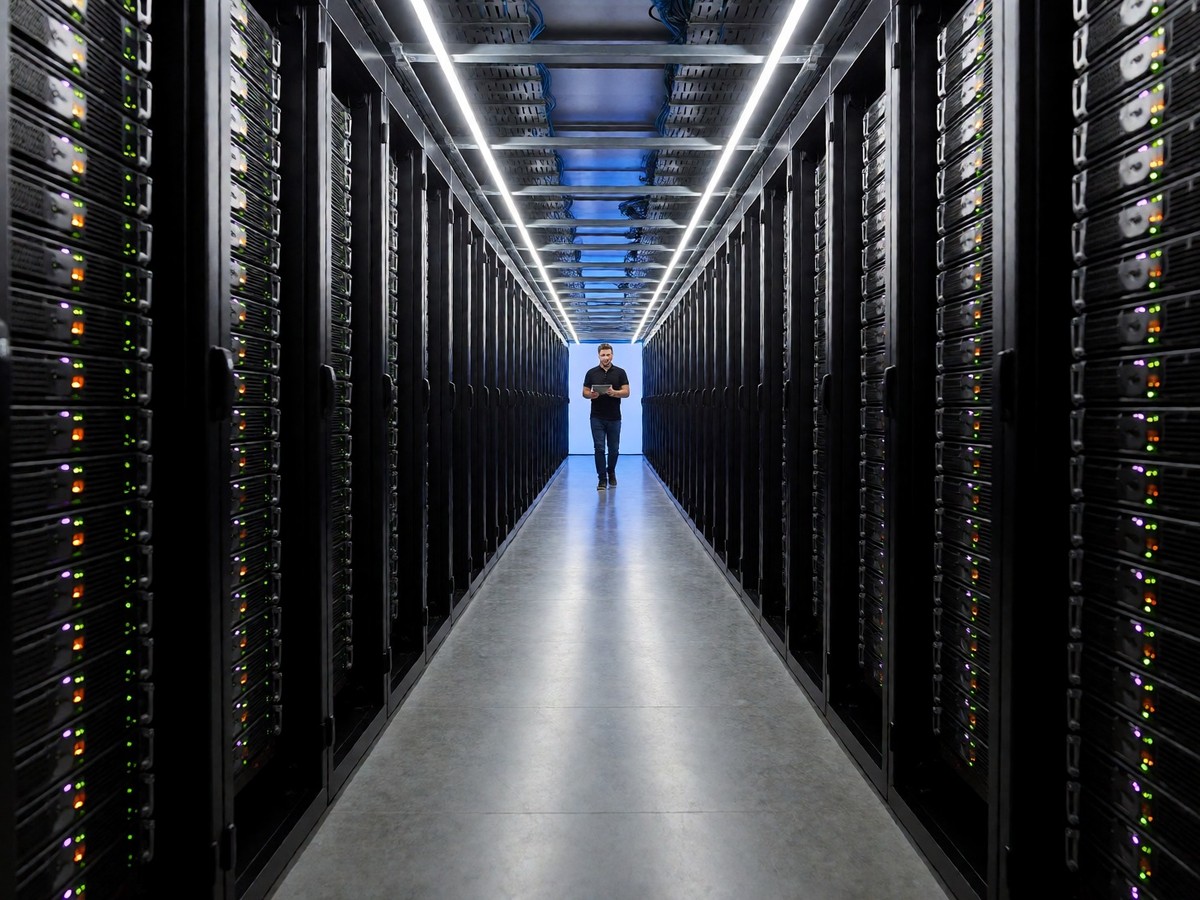
Baseten operates 18 different clouds and 90 clusters worldwide to manage machine learning workloads. The company raised $300 million in new financing at a $5 billion valuation, bringing its total funding to $585 million. This marks Baseten’s third capital raise in the past year. I find the Baseten GPU pricing competitive for high-performance tasks, though the company loses to Avian Compute on certain high-end configurations. Specifically, Baseten charges $9.98 per hour for an 8x B200 GPU configuration, while Avian Compute sets that rate at $3.42 per hour.
| GPU Model | VRAM | Price per hour |
|---|---|---|
| Tesla T4 | 16 GB | $0.6312 |
| Nvidia L4 | 24 GB | $0.8484 |
| Nvidia A10G | 24 GB | $1.2072 |
| Nvidia A100 | 80 GB | $4.00 |
| Nvidia H100 | 80 GB | $6.50 |
| Nvidia H100 MIG | 40 GB | $4.95 |
Baseten delivers serverless GPU inference for custom and open-source models. Their T4 instance costs $0.6312 per hour, which beats Replicate’s T4 rate of $0.81 per hour. For users requiring higher memory, the A10G provides 24 GB of VRAM at $1.2072 per hour. Replicate provides a T4 instance at $0.81 per hour. Replicate also provides an A100 (80 GB) at $5.04 per hour. For heavier workloads, Replicate provides an A40 GPU with 48 GB of VRAM for $2.07 to $2.61 per hour.
Specialized efficiency and training infrastructure
Baseten achieved a 225% improvement in cost-performance for high-throughput inference by using Nvidia Blackwell GPUs on Google Cloud A4 virtual machines. This achievement helps companies move models from experimental phases to production environments. I see real value in how AlliumAI used the platform to reduce total inference costs from $46,800 to $7,530, which is an 84% saving. Parsed also achieved 50% lower end-to-end latency for transcription use cases. The company uses a Dynamic Workload Scheduler.
The company delivers Baseten Training to help customers fine-tune open-source models. This platform allows users to own their model weights and avoid the lock-in seen with other providers. The company provides infrastructure rails that allow companies to retain full control over their training code, data, and model weights, which helps them avoid the restrictive terms of service seen with many training-focused competitors. Baseten Training supports multi-node training on clusters of Nvidia H100 or B200 GPUs with automated checkpointing and sub-minute job scheduling. This supports the need for specialized intelligence. As the cost of inference drops, the Jevons Paradox suggests that users will not save money; instead, they will consume more intelligence through long-running, complex agentic workflows.
Scaling custom models in a multi-model future
Over 95% of Baseten’s tokens come from custom, post-trained models rather than generic open-source versions. This concentration shows the shift toward specialized intelligence where users encode unique signals into their models. You know how quickly deployment costs spiral when scaling custom models. Baseten grew 30x in a single year by focusing on this inference-heavy market. Baseten supports users through its Multi-Cloud Management system, which provisions GPU capacity across multiple cloud providers and regions.
Baseten maintains operations through Multi-Cloud Management, which allows for automated failover. This helped the company maintain operations when AWS experienced a major outage several weeks ago. The company also provides tools for observability, A/B testing, and model management to assist engineering teams. These tools help manage the "multi-model future" where organizations run many domain-specific models. Baseten employs 50 people to maintain these services. The company relies on a "pager culture" to avoid downtime. Pricing in this market is shifting from software seats to units of cognition, where companies sell the completion of a task.
How long will the industry maintain this intense focus on custom model training before returning to generalist architectures? Baseten works with customers like Cursor, OpenEvidence, and Abridge to deliver these specialized services.