The OpenAI Shift and Market Volatility
Cerebras’ WSE-3 delivers 250 petaflops of AI compute, which is 56 times more compute than the NVIDIA B300. I find the report that OpenAI will use NVIDIA GPUs for its GPT-6.1 Sol "Ultrafast" mode to be a significant setback for the Cerebras rollout. This news sent Cerebras stock down nearly 20% this week, pushing its market cap to just over $39 billion from its $95 billion IPO peak in May. The decision by OpenAI to power its GPT-6.1 Sol "Ultrafast" mode with NVIDIA GPUs instead of Cerebras hardware has directly caused the stock to drop nearly 20% this week. While Cerebras markets the CS-3 for inference, some industry observers at SC24 noted that the company’s largest customers buy for training. This shift matters because OpenAI signed a deal worth more than $20 billion with Cerebras in January 2026 to supply 750 megawatts of compute through 2028. OpenAI also provided a $1 billion working capital loan tied to deployment milestones. The company’s market cap now sits at just over $39 billion, a significant fall from its $350 opening on the Nasdaq.
Training Economics and Rack Density
I look at the training costs for a 1 trillion parameter model to see if the wafer-scale advantage holds up. To finish a 1 trillion parameter model training in 30 days, a user needs 40 CS-3 racks which results in a total project cost of about $6.8 million after accounting for electricity and a 20% operational overhead. By comparison, a cluster of 92 B200 racks costs $5.0 million for the same 30-day window because the B200 shows strong performance per dollar.
| Hardware | Racks for 30-day training | Total Project Cost (30 days) |
|---|---|---|
| CS-3 | 40 | $6.8 million |
| H100 | 311 | $15.7 million |
| B200 | 92 | $5.0 million |
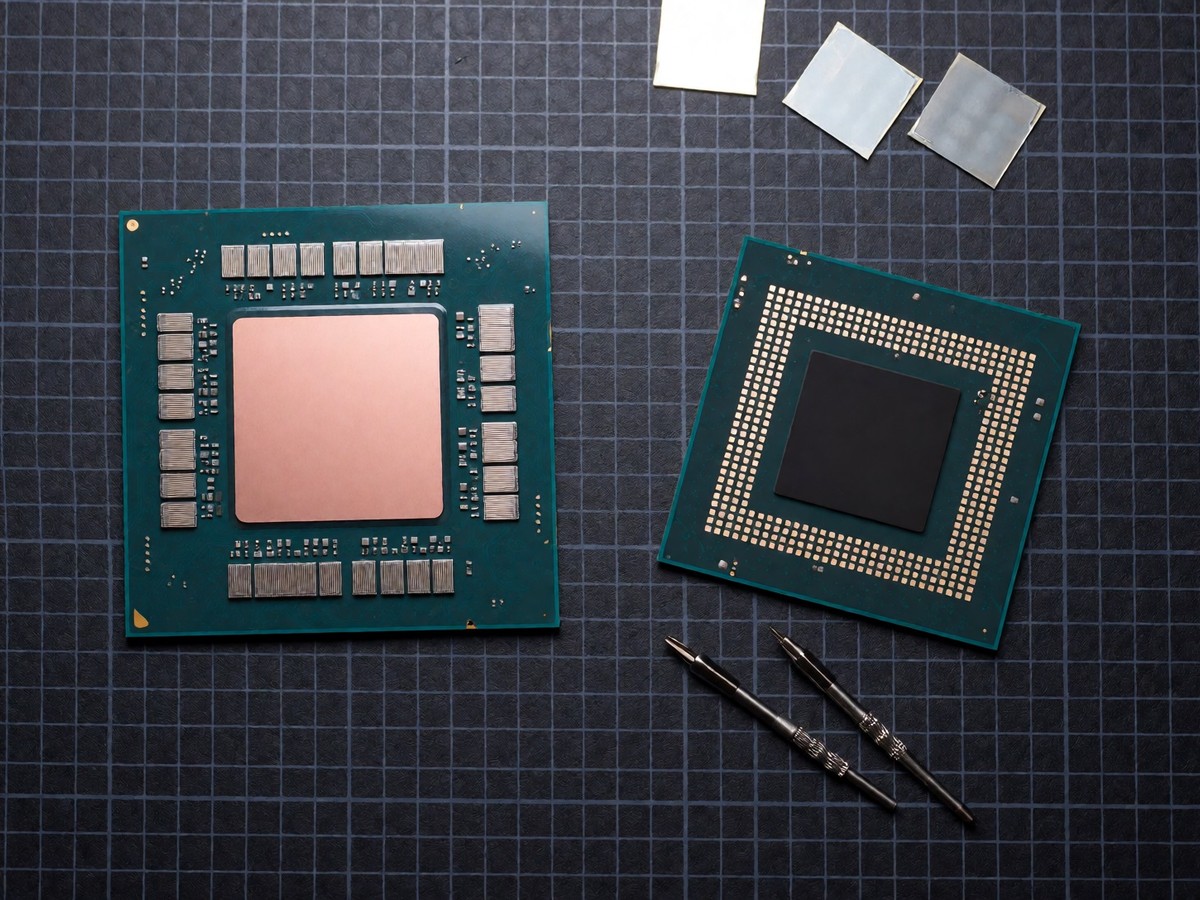
A single CS-3 rack can finish training a 1 trillion parameter model in roughly 3.26 years, while a single B200 rack would take 7.55 years and an H100 rack would take 25.5 years. The WSE-3 contains 900,000 AI-optimized cores and 4 trillion transistors, which is a 50 percent increase over the previous generation. The design of the WSE-3 uses 4 trillion transistors across a 46,225 mm2 die. I see a serious problem with the area-bandwidth tradeoff because the architecture uses much of the die for compute rather than memory. To reach the same amount of GPU compute and memory, Cerebras requires 10 times the rack space used by traditional GPU clusters. You should watch how the scaling of models affects this density gap.
Customer Concentration and Supply Chains
Customer concentration remains a major risk because a significant portion of revenue comes from a few entities like OpenAI, G42, MBZUAI, and AWS. OpenAI holds the ability to terminate portions of its $20 billion agreement if Cerebras fails to deliver promised compute capacity on schedule. The company also faces supply chain complexity involving semiconductor fabrication, cooling infrastructure, networking equipment, or power availability. Insider selling adds more pressure to the stock price, as 19.4 million shares held by directors and officers unlocked this Wednesday. Cerebras reported revenue of $510 million in 2025, with core revenue growing 92% in Q1 2026 and 103% in Q2 2026. NVIDIA is also moving into the inference market, with demand for its LPU solutions expected to reach several hundred thousand units in 2026. Can Cerebras maintain its momentum if its largest customers pivot back to NVIDIA’s Blackwell architecture?