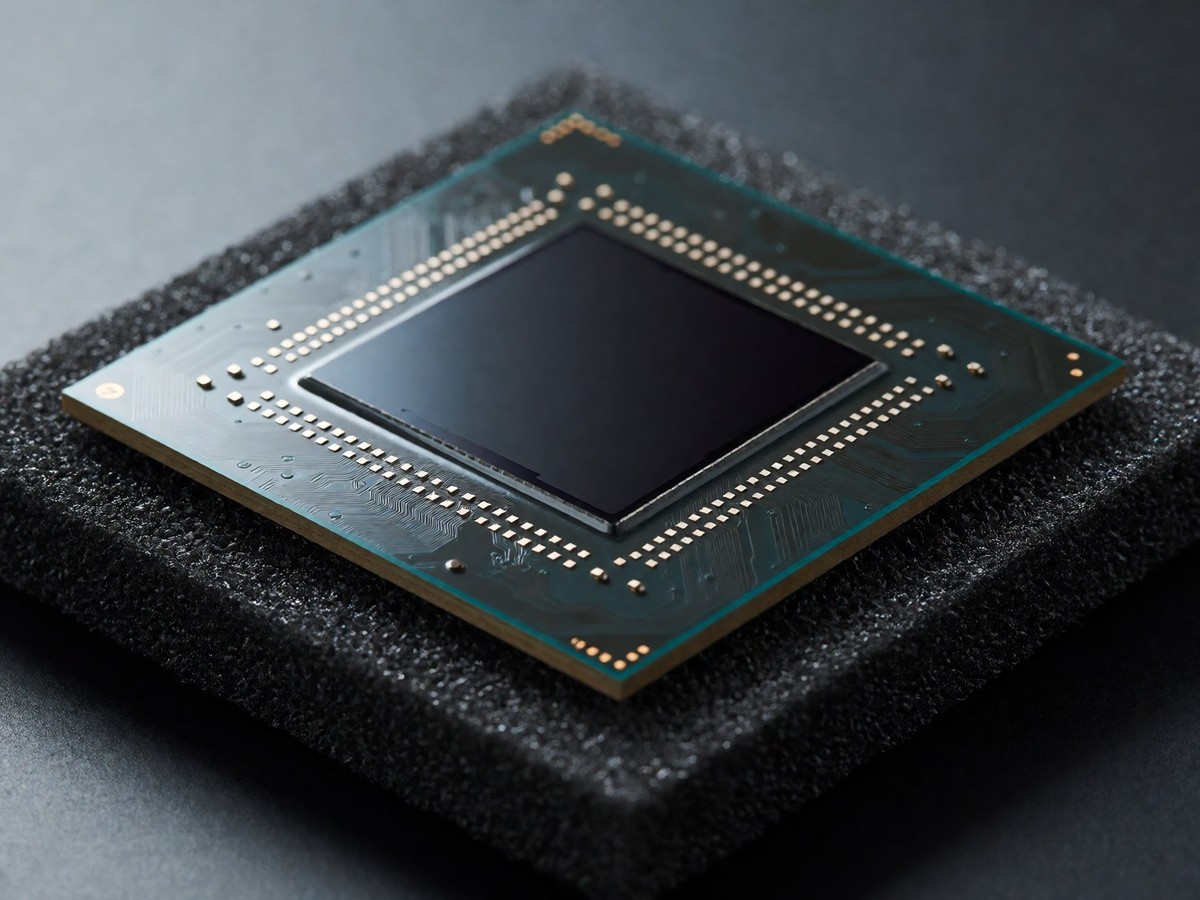
Why the RDU outruns the GPU
The SN40L Reconfigurable Dataflow Unit (RDU) provides much higher speed for AI workloads than traditional GPUs. I find the RDU architecture effective because it fuses operations into one continuous pipeline. This design removes the memory round trips between kernels that slow down GPU-based inference. While GPUs struggle during decode because the bottleneck shifts from math to memory, the RDU keeps data moving through the chip along the dataflow graph to serve more concurrent users without hitting the memory wall. The RDU uses streaming dataflow parallelism to fuse hundreds of operators and pipeline parallelism across compute units. Every AI chip relies on three factors: compute, memory, and communication. GPUs use cores, HBM, and interconnects for these tasks, but kernel-by-kernel execution sends data on constant round trips to memory. As AI grows, the growing KV caches across concurrent users limit how many people a single GPU can serve. The Generation Four silicon is an RDU that matches the way neural nets run, an idea researched by the co-founders at Stanford. This efficiency helps when you deal with reasoning tasks that require 100 times more tokens than a standard prompt.
Handling trillion parameter models
The SN40L handles massive datasets through a three-tier memory architecture. This setup uses 520 MiB of on-chip distributed SRAM, 64 GiB of on-package HBM, and 1.5 TiB of off-package DDR. The hardware provides 1 TB/s throughput between DDR and HBM to allow for fast model loading. This architecture keeps hot data close to compute and reduces unnecessary data movement. One SN40L RDU node runs 150 7B experts totaling over 1 trillion parameters with 19 times the footprint reduction compared to GPUs. This node achieves a 3.7x speedup over DGX H100 and a 6.6x speedup over DGX A100. A single node can serve a 5 trillion parameter model with a 256k+ sequence length. The architecture uses a coarse-grained reconfigurable architecture (CGRA) that arrays more than a thousand switch-connected memory and computing units. I see that the SN40L is a highly scalable solution for large models. A SambaNova SN40L cluster uses six SambaRacks, where each rack houses 16 SN40L RDU systems. This setup delivers high-throughput and low-latency performance for machine learning workloads. The system uses 10 kilowatts of power, while an Nvidia rack uses 140 kilowatts. The SN40L also provides 31 times faster model switching time than the DGX H100. This capacity helps handle the massive parameter counts that make it impossible to run certain models on existing hardware. Rodrigo Liang, the CEO, says that most data centers do not have a gigawatt of power to support growing AI needs. How will the power efficiency of this architecture affect data center deployments for large enterprises?
Cloud access and token costs
SambaNova Cloud provides the speed needed for real-time AI applications. I find the performance on Llama 3.1 405B impressive because it reaches 132 tokens per second at full precision. You can access these models through OpenAI-compatible API endpoints. The pay-as-you-go model charges based on tokens. For DeepSeek-V3.1, you pay $3.00 per 1M input tokens and $4.50 per 1M output tokens. For MiniMax-M3, the rate is $0.60 for input and $2.40 for output. For Llama-3.3-70B-Instruct, you pay $0.60 per 1M input tokens and $1.20 per 1M output tokens. For Google-gemma-4-31B-it, the cost is $0.38 per 1M input tokens and $1.15 per 1M output tokens. For OpenAI-gpt-oss-120b, the cost is $0.22 per 1M input tokens and $0.59 per 1M output tokens.
| Model | Input Price / 1M tokens | Output Price / 1M tokens |
|---|---|---|
| DeepSeek-V3.1 | $3.00 | $4.50 |
| MiniMax-M3 | $0.60 | $2.40 |
| Llama-3.3-70B-Instruct | $0.60 | $1.20 |
| Google-gemma-4-31B-it | $0.38 | $1.15 |
| OpenAI-gpt-oss-120b | $0.22 | $0.59 |
The pricing model leads to high costs as token counts increase for reasoning tasks. Agentic systems use 10 to 100 times more tokens per prompt than standard chat interactions. I noticed the cost gap between models is wide, with the top output rate being 7.6x the bottom one. The free tier requires a payment method and credits before you run requests, but one Reddit user noted the free tier limit after only 3 messages. The Developer tier has a limit of 20 million tokens per day. The Enterprise plan provides a custom subscription for organizations that need custom rate limits or BYOC. SambaNova also laid off 15% of its workforce.