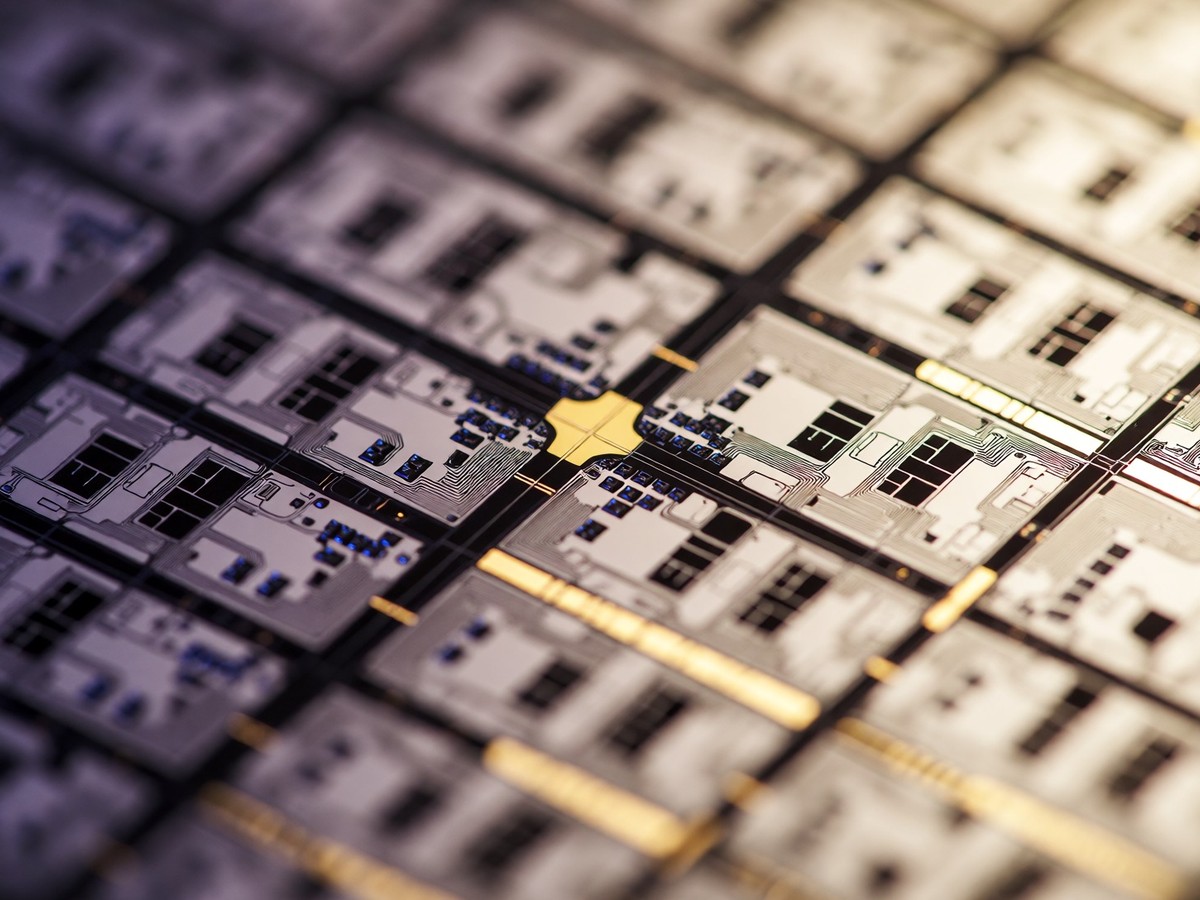
Cerebras Systems priced its initial public offering at $185 per share on May 14, 2026, and the stock closed at $311. The company’s market capitalization briefly exceeded $100 billion, making it the largest pure-play AI IPO on record. This financial milestone validates a hardware strategy that rejects the standard industry practice of dicing silicon wafers into smaller dies. Instead, Cerebras fabricates an entire 300mm wafer as a single monolithic processor. The Wafer-Scale Engine 3 measures 46,225 mm2, which is more than 50 times the die area of Nvidia’s largest GPU. It contains 4 trillion transistors and 900,000 AI-optimized cores. For buyers seeking to reduce dependence on Nvidia’s dominant supply chain, this architecture offers a distinct path by eliminating inter-chip communication bottlenecks.
Solving the memory wall with on-wafer bandwidth
The primary constraint in large language model inference is memory bandwidth, not raw compute power. When generating tokens one at a time, conventional GPUs must load model weights from high-bandwidth memory to compute units repeatedly. This process creates a "memory wall" where processing cycles sit idle waiting for data. Cerebras addresses this by storing 44 GB of SRAM directly on the wafer, delivering 21 petabytes per second of memory bandwidth. That figure exceeds the H100’s 3 TB/s bandwidth by a factor of 7,000. By keeping data and compute on the same piece of silicon, the system removes the latency associated with off-die communication.
| Metric | Cerebras WSE-3 | Nvidia H100 |
|---|---|---|
| Die Area | 46,225 mm2 | ~800 mm2 |
| Transistors | 4 Trillion | 80 Billion |
| On-Chip Memory | 44 GB SRAM | ~50 MB SRAM |
| Memory Bandwidth | 21 PB/s | 3 TB/s |
This architectural choice allows the chip to operate above its ridge point even at batch size one. In practical terms, this means the processor remains compute-bound rather than memory-bound during single-user inference tasks. I find this specific advantage decisive for latency-sensitive applications like real-time coding assistants. OpenAI signed a contract for 750 MW of Cerebras capacity through 2028, a deal worth over $20 billion. This commitment demonstrates that major labs view speed per user as a critical differentiator for their next generation of products.
Manufacturing resilience and sovereign infrastructure
TSMC agreed to manufacture the WSE-3 after Cerebras engineers proposed modifying scribe lines to stitch 84 reticle dies into a single logical unit. This collaboration required TSMC to adapt production lines for a startup with only five employees in 2015. The partnership has since evolved into a strategic direction for TSMC, which now plans to commercialize System-on-Wafer technology more broadly. For US data centers, this dependency on TSMC offers a different risk profile than relying solely on Nvidia’s CoWoS packaging ecosystem. Cerebras operates dedicated data centers in locations including Oklahoma City and Montreal, hosting thousands of CS-3 systems. These facilities deliver more than 40 million Llama 70B tokens per second.
However, the customer concentration remains a significant risk. In 2025, 86% of Cerebras revenue came from two customers in the UAE. The company reported $510 million in revenue for that year, up 76% from the previous period. While the backlog stands at $24.6 billion, much of that value depends on continued spending from these anchor clients. If those customers shift spend to Nvidia or in-house silicon, the forward thesis collapses. The architecture is proven, but the commercial diversification is still pending. Can Cerebras expand beyond its current base before the market prices in that volatility?