Scaling through defect tolerance
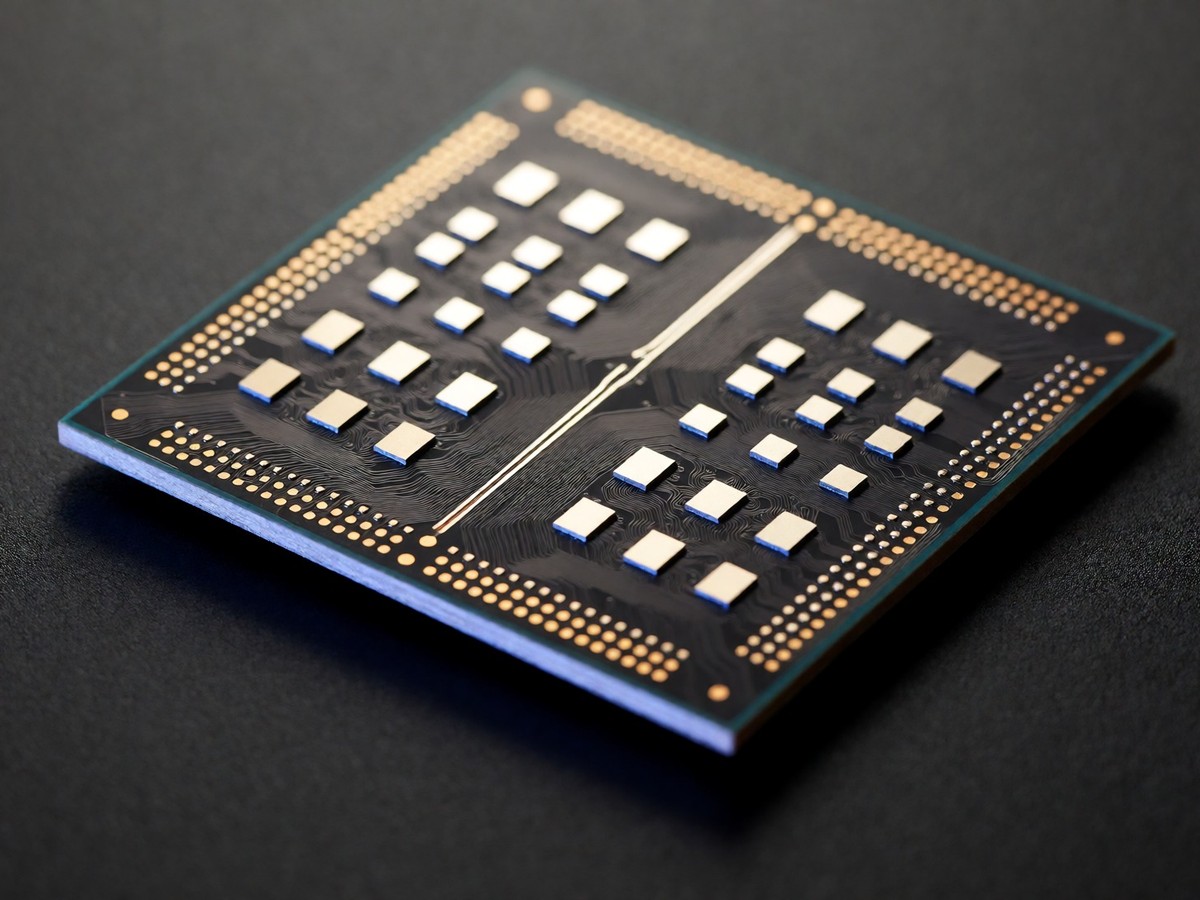
I observe that Cerebras solves the manufacturing paradox where larger chips typically lead to worse yields. On a TSMC 5nm 300mm wafer, an 814 mm2 H100-sized chip with 144 fault tolerant cores would see 59 defects. These defects would consume 361 mm2 of die space. The WSE-3, with its 46,225 mm2 area, would see 46 defects. Since each core is only 0.05 mm2, these defects consume only 2.2 mm2 of silicon. This allows the WSE-3 to achieve 93% silicon utilization. The system uses a sophisticated routing architecture to dynamically reconfigure connections between cores. When a defect is detected, the system automatically routes around it using redundant communication pathways. This makes the WSE-3 100x more fault tolerant than a GPU when considering the silicon area affected by each defect. The 4-trillion-transistor chip utilizes 900,000 active cores from a physical pool of 970,000. Because the cores are so tiny, the number of cores is so much larger, which provides tremendous, fine-grained, defect tolerance. The system’s ability to maintain high utilization despite 46 defects proves that wafer-scale computing is commercially viable.
Thermal loads and physical deployment
The WSE-3 architecture bypasses the memory wall. By placing 44 GB of SRAM directly on the die, Cerebras provides 21 PB/s of bandwidth. This eliminates the need to move data across slow interconnects. The WSE-3 is 57 times the size of an H100, and this massive scale creates intense power and thermal issues. The 23 kW power draw from a single wafer requires 300 distributed VRMs for vertical power delivery. The necessity of a custom water-cooled solution using 100 liters of water per minute makes deploying these massive wafers into standard data center racks a significant logistical hurdle for many enterprise operators who want to avoid specialized infrastructure. Cerebras uses a custom copper cold plate and a closed-loop liquid system to manage these temperatures. The silicon expands at 2.6 ppm/K, while the FR-4 PCB expands at 15 ppm/K. Cerebras uses a custom connector material to absorb this displacement. The WSE-3 is not one die. TSMC prints 84 identical copies of the same die on the wafer. Cerebras avoids sawing the wafer apart by adding extra lithography steps to pattern short wires across the scribe lines. These wires are less than 1mm.
| Specification | Cerebras WSE-3 | NVIDIA H100 |
|---|---|---|
| Transistor Count | 4 Trillion | 80 Billion |
| Active AI Cores | 900,000 | 132 |
| On-Die SRAM | 44 GB | 50 MB |
| Memory Bandwidth | 21 PB/s | 3.35 TB/s |
| Peak Compute | 125 PFLOPS | 989 TFLOPS |
The CS-4 is a rack-scale system. It delivers 750 petaflops of AI compute using three WSE-3 Turbo processors. This system produces more than 4,400 tokens per second per user on GPT-OSS-120B. It also delivers 129.6 petabytes per second of memory bandwidth and 7.2 terabits per second of I/O bandwidth. While the performance is unmatched, the requirement for specialized liquid cooling hardware remains a real problem for users wanting standard air-cooled racks.
Packaging bottlenecks and capacity constraints
TSMC CoWoS capacity remains the primary hardware throttle through 2026. NVIDIA commands 62% of total CoWoS capacity, which amounts to 23,500 wafers per month. The CoWoS-L variant, required for larger dies like the Blackwell architecture, only reached 14,000 wafers per month in Q1 2026. This creates an 18-24% supply-demand gap for GPUs in 2026. Because NVIDIA holds such a massive share, other manufacturers like AMD fight for the remaining 40% of the supply. AMD holds just 11% of the allocation, which limits its scale. Lead times for CoWoS-L packaging range between 52 and 78 weeks. The industry also faces a massive ABF substrate bottleneck. A single Japanese supplier holds 95% of the global capacity for ABF film, and building new substrate capacity takes 2.5 to 3 years. The supply-demand gap in ABF is projected to widen to 21% in 2027 and 42% in 2028. This scarcity affects the production of high-layer count PCBs and high-speed connectors. Does the expansion of OSAT partners like ASE and Amkor provide enough relief to prevent a total supply freeze?