Magic secured $320 million in Series C funding to accelerate product development and expand market reach. This investment brings the San Francisco company’s total funding to $465 million since its founding in 2022. The round includes participation from Eric Schmidt, CapitalG, Atlassian, Sequoia, Nat Friedman, Daniel Gross, and Elad Gil. Magic currently negotiates a new funding round that could value the company at $1.5 billion. This amount would triple the company’s valuation from its previous $500 million mark in February. The startup employs between 100 and 200 people. Founders Eric Steinberger and Sebastian De Ro lead the company toward automating software development. Before this latest raise, Magic raised $140 million from backers including NFDG Ventures and CapitalG. The company seeks to build tools that help software engineers write, review, debug, and plan code. The competitive landscape for AI coding assistants remains intense. Augment raised $252 million, while Cognition secured $175 million at a $2 billion valuation. Investors see the success of GitHub Copilot as evidence of a large market. GitHub reported 40% higher year-over-year revenue in its latest quarter, driven by its 1.3 million paid subscribers. Magic also negotiates a $200 million raise with potential participation from Jane Street. This ongoing discussion follows a period of rapid growth and intense interest in generative AI technologies for software development. Software developers represent a significant cost for tech companies, which attracts investment into tools that can assist in more efficient programming.
The LTM-2 100M Context Window
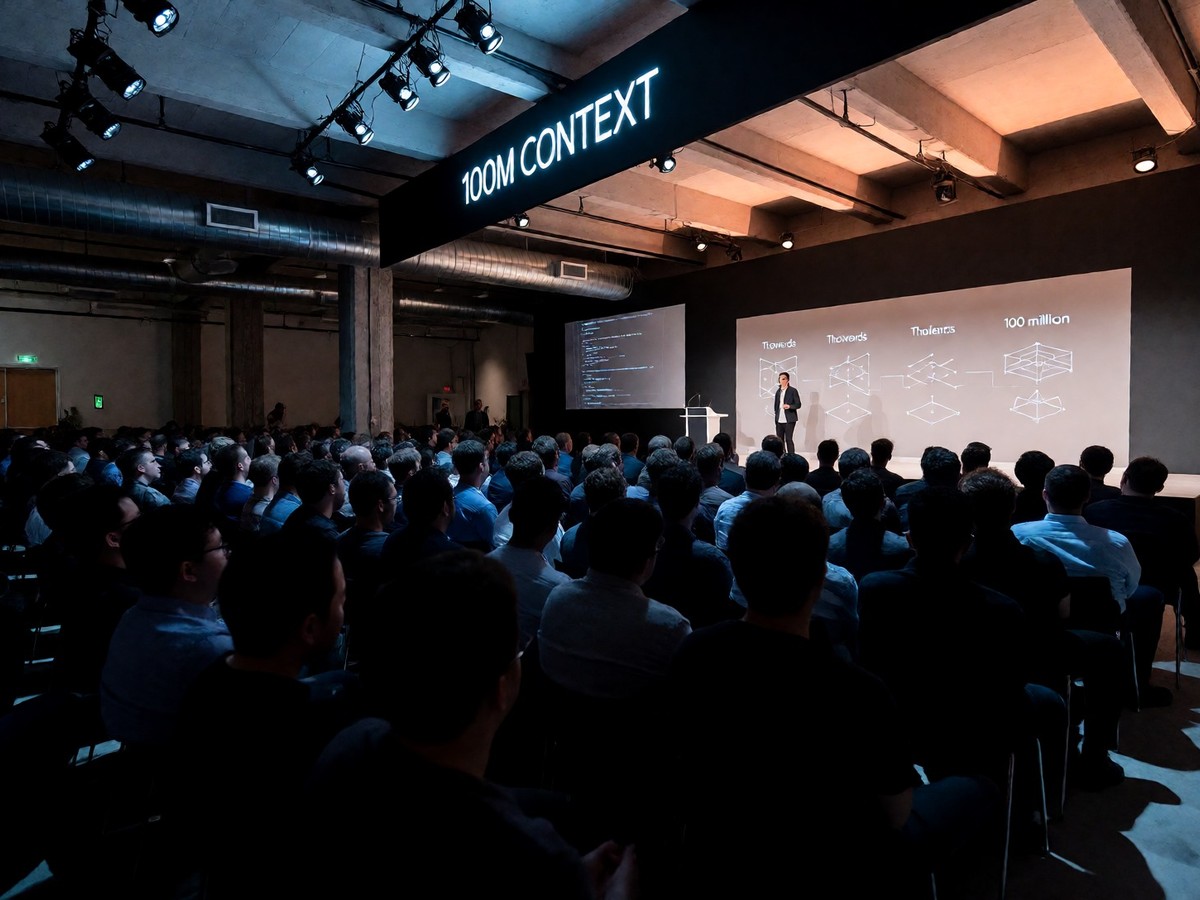
The LTM-2-mini language model uses Long-term Memory Network (LTM) technology to process up to 100 million tokens of context. This capability allows the model to understand the entire code, documentation, and literature of large software projects. Most existing models operate on much smaller contexts, such as the 128k tokens of GPT-4 Turbo or the 200k tokens of Claude 2.1. The LTM-2-mini model processes the entire code, literature, and documentation of large software projects by using a design that moves beyond the traditional transformer architecture used by most companies. This scale helps the model reason over entire repositories and dependency trees. Last year, the company showed its earlier LTM-1 model which featured a 5 million context window. Google’s Gemini 1.5 model provides a 1 million token context window, which Magic intends to exceed for coding tasks.
| Specification | LTM-2-mini Detail |
|---|---|
| Max Context | 100 million tokens |
| Technology | Long-term Memory Network |
| Target | Software development |
The ability to process a large amount of context at once comes from a design that moves beyond the traditional transformer model used in large language models. While current models like GitHub Copilot suggest how to complete lines of code, the goal for Magic is to design and write entire software applications without human help. This requires intensive spending on data, chips, and electricity to improve models that support long-context windows. By accessing an enormous amount of data within a project, the model improves the process of code generation and revision. The model’s ability to manage a massive context window targets the needs of enterprise developers working with deep codebases. This allows for a deeper understanding of how separate files and directories interact within a single project structure.
Enterprise Codebase Understanding
Developers use these tools to write, review, debug, and plan code changes. The model handles code generation and the management of large software libraries. Because it processes error reports and documentation alongside code, the model helps with debugging and troubleshooting. You should know that the model still needs to improve its ability to handle complex, real-world workflows. The company focuses on building an AI software engineer that functions as a coworker. This tool aims to assist with complex coding tasks across the software development lifecycle. The founders believe that advancing intelligent code generation tools provides a path toward artificial general intelligence. This pursuit involves creating broadly capable AGI systems that align with human values. High software developer costs drive interest in tools that can generate code or assist in more efficient programming. GitHub Copilot already has 1.3 million paid subscribers, which proves the market demand for coding assistants. The company plans to spend its funding on improving its own models. This includes improving the ability to process large amounts of data in a single query. The vision extends to creating AGI systems that can assist with humanity’s most complex challenges. The team expands across engineering, sales, and operations to support this growth. This expansion follows a series of funding rounds that helped the company scale its infrastructure. The company also seeks to strengthen partnerships with key industry players to expand its reach. The model’s training focuses on providing more nuanced code comprehension for professional engineers. How will the company maintain performance as it moves from research to commercial deployment?