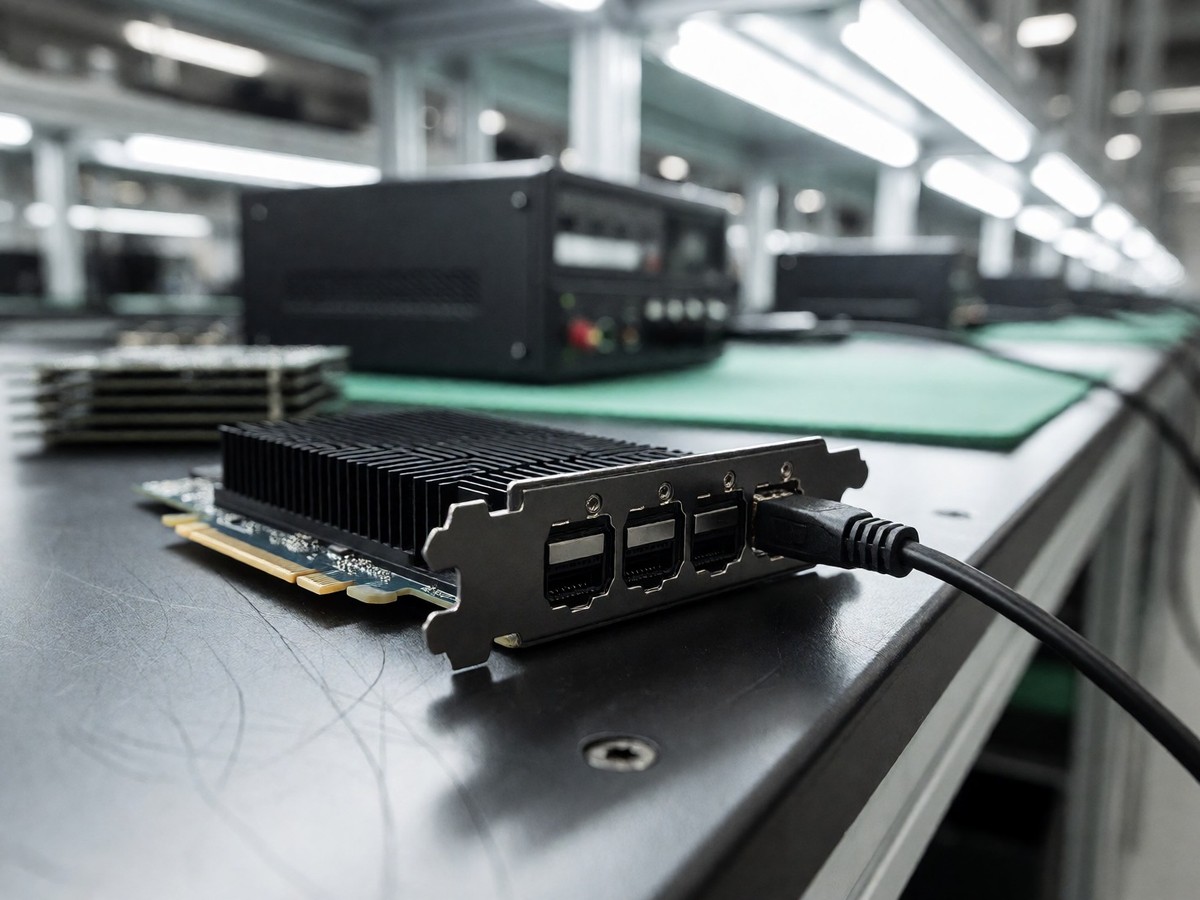
Nvidia released the Jetson AGX Thor developer kit at a starting price of $3,499 to accelerate physical AI development. The system uses the Blackwell GPU architecture and provides 2,070 FP4 teraflops within a 130-watt power envelope. This platform provides 7.5 times the compute of the Jetson Orin line and more than three times the energy efficiency of its predecessor. The hardware integrates 128GB of memory, which allows the platform to handle larger AI workflows at the edge. More than two million developers use the Nvidia robotics stack, and over 7,000 customers have deployed Jetson Orin hardware in edge AI projects. Early adopters of the Jetson Thor platform include Amazon Robotics, Agility Robotics, Boston Dynamics, Caterpillar, Hexagon, and Medtronic. While these companies test the hardware, many current bipedal humanoids still face shortcomings, specifically an inability to perform multiple tasks simultaneously. Most robots currently work on one-off, repeated tasks and require retraining for anything outside those specific bounds. You should observe that the Jetson Orin line has been in wide use since 2022.
| Spec Category | Jetson AGX Thor | Jetson T3000 | Jetson T2000 |
|---|---|---|---|
| AI Compute | 2,070 FP4 teraflops | 865 FP4 teraflops | 400 FP4 teraflops |
| Memory | 128GB | 32GB LPDDR5X | 16GB |
| Power Envelope | 130 watts | Half of T5000 | Half of T5000 |
Managing complex warehouse tasks
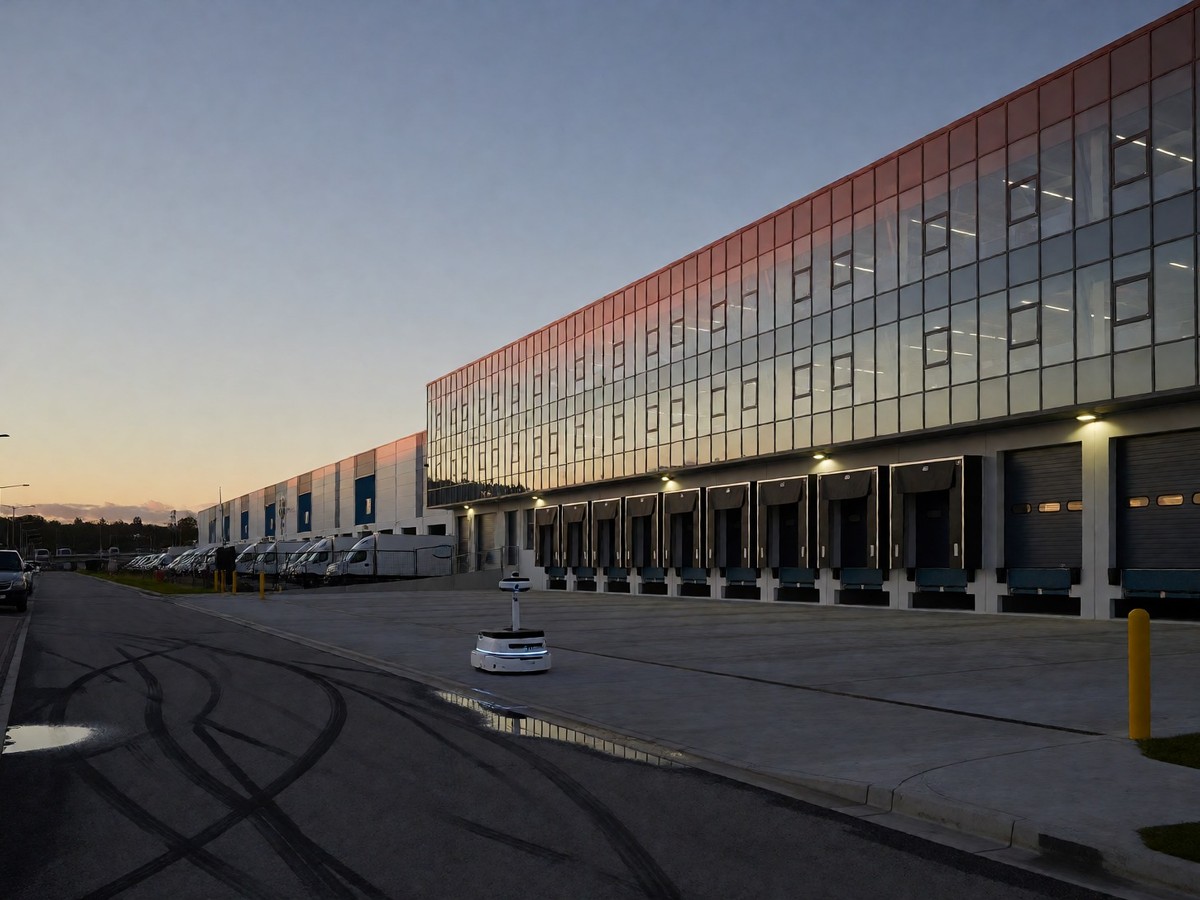
The Jetson Thor architecture allows a robot to run a large language model and a vision language system in tandem. This setup enables a machine to understand external stimuli in real time and act accordingly. Vision language systems typically pair physical hardware like cameras with digital systems such as computer vision models to help a robot see and contextualize its surroundings. For example, if a worker instructs a robot to move all items labeled "fragile" off a pallet, the machine uses vision systems to identify the correct boxes and then uses LLM reasoning to break the task into parts. This capability addresses a hurdle for companies like GXO, which uses humanoids from partners like Agility and Apptronik. Amazon is also testing humanoids for delivery applications. Tye Brady, the chief technologist at Amazon Robotics, says the computational horsepower and energy efficiency of Jetson Thor allow developers to scale the next generation of AI-powered robots that work in dynamic, real-world environments. The platform supports vision-language-action models like Isaac GR00T N1.5, alongside other LLM systems, and allows for real-time reaction to sensor data.
Software suites and memory optimization
Nvidia provides a scalable edge AI platform with performance ranging from 70 TOPS to 2,000 teraflops. The Jetson T3000 and T2000 modules arrive in Q1 2027. The T3000 module delivers 865 FP4 teraflops of AI compute and includes an eight-core Neoverse Arm CPU with 32GB of LPDDR5X memory, 273GB/s of memory bandwidth, and 25 GbE connectivity. The T2000 module provides 400 FP4 teraflops of compute and 16GB of memory. Will the lower cost of the T2000 module lead to even faster widespread adoption in small-scale fulfillment centers? The T3000 achieves similar inference performance to the T5000 for multimodal workloads, including large language models, vision language models, and world foundation models. Developers use the Nvidia Isaac software suite for simulation and motion planning, Metropolis for vision AI, and Holoscan for real-time sensor processing. This arrangement allows one system-on-module to support many AI models and workflows rather than requiring several separate chips.
New agent skills also automate memory optimization and system configuration. Companies like UBTech and Agile Robots used these skills to reduce memory usage by up to 15GB, allowing them to move from the Jetson AGX Orin 64GB to the 32GB module. SandStar reduced memory usage by 4GB to deploy on the NVIDIA Jetson Orin NX 8GB module. In companion robotics, GROOVE X uses heterogeneous AI accelerators to optimize workload distribution. NoTraffic reduced memory usage by 30% on the Jetson TX2 NX to add more capabilities to its smart traffic platform. NVIDIA also expanded its Cosmos 3 frontier open world foundation model family with Cosmos 3 Edge, a 4-billion-parameter model compatible with Thor platforms. This model helps embodied systems see the world, reason over it in real time, and predict and generate actions through on-device inference. Developers can post-train Cosmos 3 Edge for specific embodiments and sensors in about a day, which closes the sim-to-real gap.