Architecture and Memory Bottlenecks
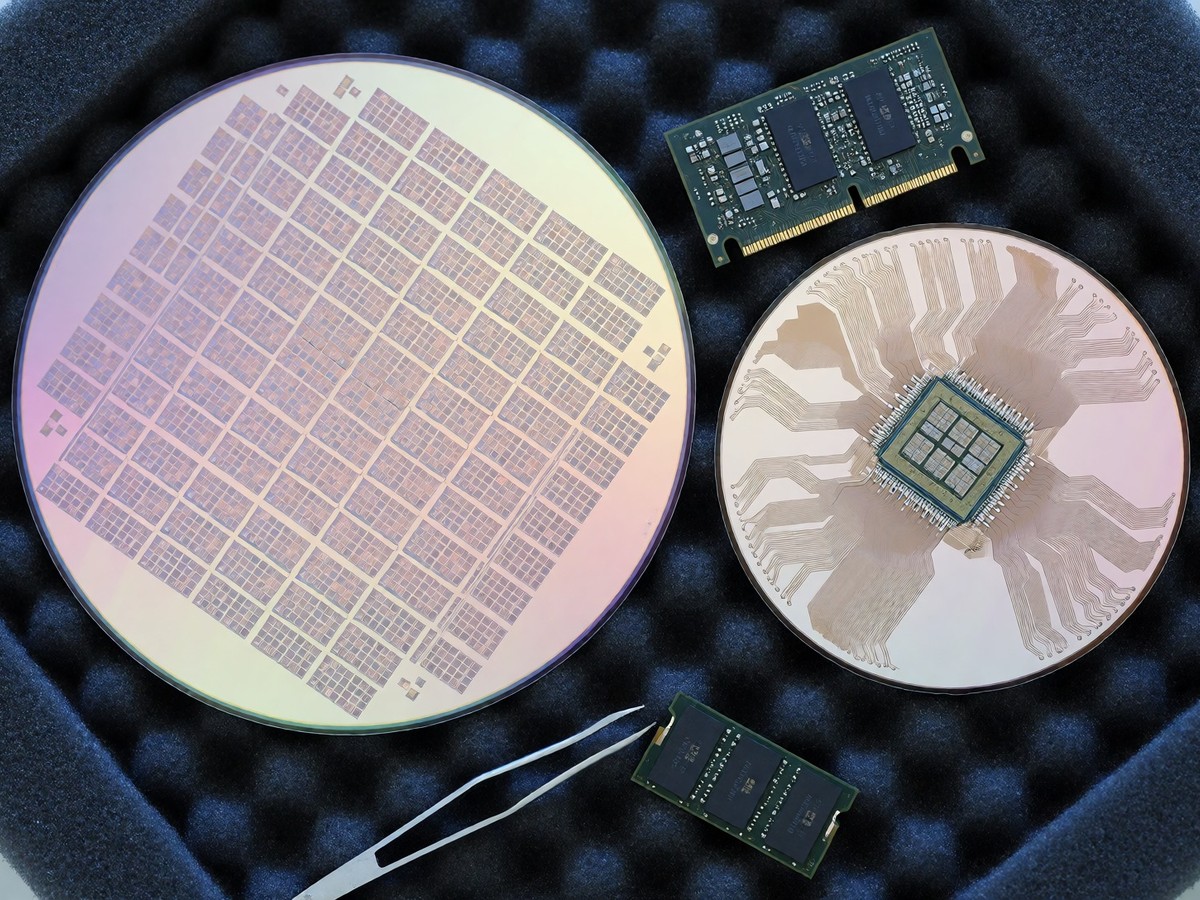
Cerebras WSE-3 uses a single 12-inch semiconductor wafer as a processor to bypass the memory bandwidth bottleneck. This chip contains 4 trillion transistors and 900,000 AI-optimized cores. It provides 44 gigabytes of on-chip SRAM sitting directly next to the compute cores. This arrangement eliminates the need for data to travel between separate memory chips and the processor. This hardware is 50 times larger in transistor count than Nvidia’s H100. SambaNova uses the Reconfigurable Dataflow Unit architecture to solve the same data movement problem. The RDU maps the AI model graph to the most efficient path for data across the processor. This design reduces redundant memory calls and lowers energy consumption compared to traditional GPU configurations. While Cerebras focuses on scale within one piece of silicon, SambaNova utilizes a tiered memory architecture. This hierarchy includes on-chip distributed SRAM, on-package HBM, and off-package DDR DRAM. The RDU can host the largest models and run many models in parallel. Models in HBM and SRAM can swap in milliseconds. This capability handles agentic workloads that switch frequently between multiple models. The SN40L RDU, a predecessor to the SN50, uses a 5nm design and provides 638 BF16 TFLOPS of peak compute performance. It includes 1040 distributed Pattern Compute Units and 1040 distributed Pattern Memory Units. The SN40L provides 520 MiB of on-chip SRAM and 64 GiB of co-packaged HBM. It can also access up to 1.5 TiB of DDR DRAM through pluggable DIMMs. On an eight-socket RDU node, this hardware achieves speedups ranging from 2x to 13x on various benchmarks. This performance includes a 3.7x speedup over a DGX H100 and a 6.6x speedup over a DGX A100.
Performance and Economic Trade-offs
SambaNova SN50 delivers 5x the maximum speed and 3x the throughput for agentic inference relative to Blackwell B200 GPUs. For models like Llama 3.3 70B, the SN50 provides 8x the savings in total cost of ownership. The SN50 RDU provides low latency, high throughput, and power-efficient performance for AI inference workloads and changes the economics of token generation for providers who run models like gpt-oss at scale. SambaNova SN50 comes ahead for agentic inference, while Cerebras WSE-3 leads for large-scale training and extreme single-stream speed. Cerebras WSE-3 delivers 20x faster inference than GPU alternatives. A single CS-3 system handles a 24 trillion parameter model. However, the 44 gigabytes of SRAM on the WSE-3 means a 70B FP16 model requires four CS-3 systems to host one instance. This capacity limit makes hosting large models more expensive than on GPU systems. The WSE-3 is 56 times larger than the largest GPU. Cerebras WSE-3 is built on a 5-nanometer process by TSMC. Cerebras delivers 125 petaflops of AI performance. These systems can be linked together up to 2,048 units at a time for a combined 256 exaflops of compute. The WSE-3 can train large language models 30 times faster than current leading machines. You should look at the capacity constraints before committing to a wafer-scale build.
| Feature | Cerebras WSE-3 | SambaNova SN50 |
|---|---|---|
| Transistor Count | 4 trillion | Not stated |
| AI Cores | 900,000 | Not stated |
| On-chip SRAM | 44 GB | Not stated |
| Inference Speed vs B200 | 20x | 5x |
| TCO Savings vs B200 | Not stated | 8x |
Scaling and Disaggregated Architectures
Disaggregated inference separates the prefill and decode phases of LLM workloads onto different hardware. The prefill phase is compute-bound and processes input tokens in parallel. Prefill processing requires the system to saturate every available FLOP to process the full input prompt. The decode phase is memory-bandwidth-bound and generates tokens one at a time. The model must repeatedly access previously generated information stored in memory, known as the KV cache, to maintain context. Cerebras works with AWS to provide this by using Trainium for prefill and CS-3 for decode. This combination uses high-speed EFA networking to connect the two stacks. SambaNova pairs GPUs for prefill with RDUs for decode. This pairing achieves up to 2x the speed of GPU-only setups. Modern AI agents create unpredictable token demand that forces these architectures to scale prefill and decode independently. The SN50 RDU targets the requirements of agentic AI through its dataflow architecture. The WSE-3 enables the training of substantial neural networks. To meet demand for an OpenAI contract, Cerebras must stand up 250 megawatts of computing capacity by the end of 2026. The OpenAI deal is valued at more than $20 billion through 2028. How will the industry reconcile the massive power requirements of these scaling strategies?