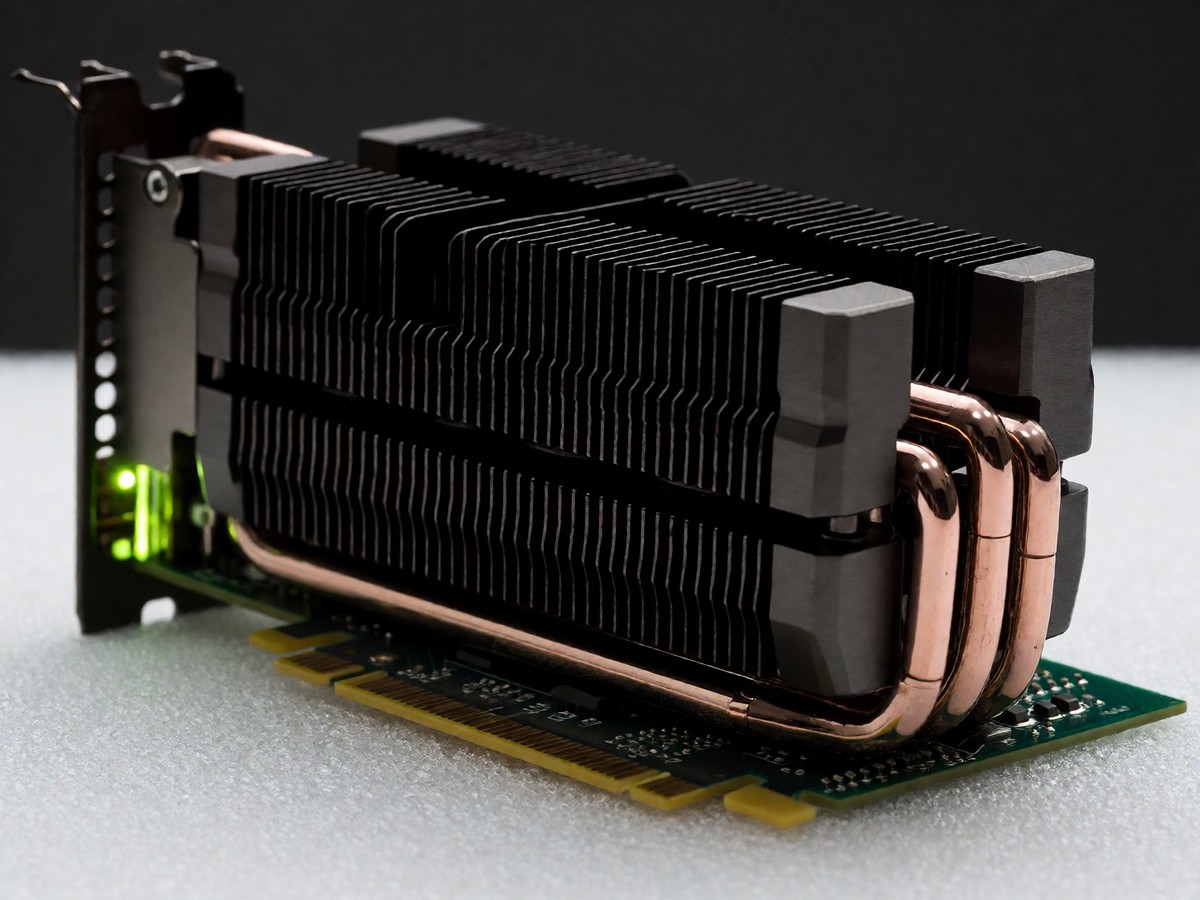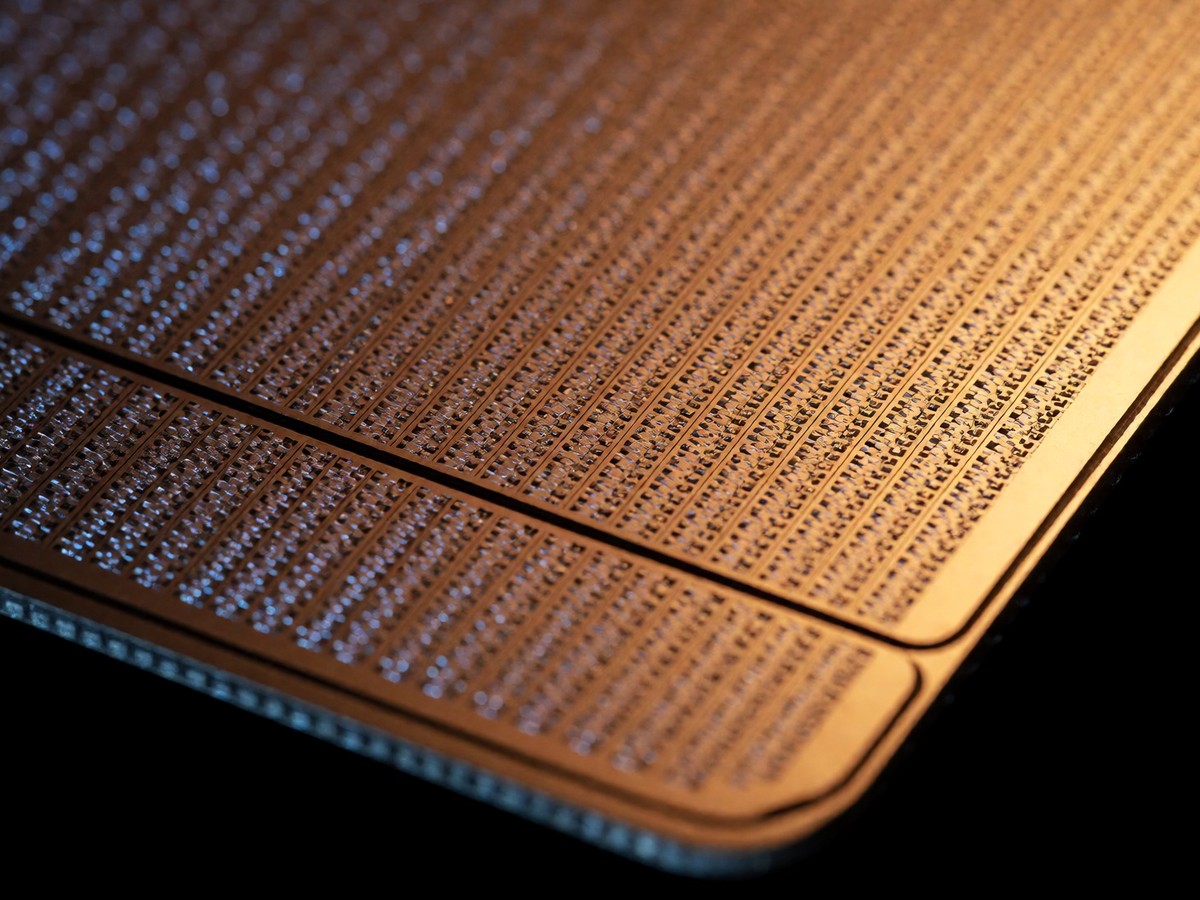
The Cerebras CS-3 system delivers Llama 4 Maverick inference at 2,500 tokens per second per user. This performance exceeds the 1,000 tokens per second per user produced by an NVIDIA DGX B200 running the same 400-billion parameter model. The CS-3 uses the WSE-3 chip, which contains 4 trillion transistors and 900,000 AI-optimized cores. This processor delivers 125 petaflops of peak AI performance using FP16 precision. The WSE-3 utilizes 44GB of on-chip SRAM and provides 21 petabytes per second of memory bandwidth. This bandwidth exceeds the 3 TB/s available on an NVIDIA H100 by a factor of 7,000.
The WSE-3 architecture uses a single 46,225 mm2 silicon wafer. This size is 57 times larger than the NVIDIA V100. Cerebras manages manufacturing defects by using redundant compute cores and redundant routing. The system also uses hardware-level dynamic rerouting to bypass failed cores or broken connections. This approach allows the chip to achieve 100% yields despite the large surface area. You should recognize that this design eliminates the communication bottlenecks found in traditional GPU clusters.
| Specification | Cerebras WSE-3 | NVIDIA H100 | NVIDIA B200 |
|---|---|---|---|
| Transistors | 4 trillion | 80 billion | 208 billion |
| AI Cores | 900,000 | 16,896 (FP32) | 25,000 (est.) |
| Peak AI Performance | 125 Petaflops | 20 Petaflops (FP4) | 4.4 Petaflops (FP16) |
| On-chip Memory | 44 GB SRAM | 80 GB HBM3 | 192 GB HBM3 |
| Memory Bandwidth | 21 PB/s | 3 TB/s | 8 TB/s |
| Die Area | 46,225 mm2 | 814 mm2 | ~800 mm2 |
The WSE-3 provides 214 Pb/s of aggregate on-wafer fabric bandwidth. This bandwidth is 3,715 times higher than the 57.6 GB/s per GPU provided by NVIDIA NVLink. The CS-3 system requires a specialized perpendicular water cooling system to manage heat. This cooling system takes up about one-third of a standard rack volume. The bare die price for a WSE-3 chip sits between $2 million and $3 million. The NVIDIA GB200 costs between $80,000 and $100,000.
Scaling for 24 trillion parameter models
Cerebras designed the CS-3 to train next generation models up to 24 trillion parameters. The system uses MemoryX external memory to provide up to 1.2 petabytes of capacity per system. This capacity allows a single CS-3 to store a 1 trillion parameter model. Using NVIDIA B200 GPUs, a 1 trillion parameter model requires over 100 B100s. The WSE-3 uses TSMC 5nm process technology. It provides 52 times more transistors than the NVIDIA B300.
The WSE-3 eliminates the need for distributed training code complexity. Training a 175-billion parameter model on 4,000 GPUs requires 20,000 lines of code, but Cerebras completes the task with 565 lines. The CS-3 cluster can scale to 2,048 systems to reach 256 exaflops of FP16 compute. The CS-3 provides a 2.2x improvement in performance per watt compared to the DGX B200.
The 44GB SRAM limit on the WSE-3 acts as a hard ceiling. This capacity restricts the maximum context window to 128K tokens. This limit falls short of the million-token context demands found in some workloads. The CS-3 consumes 23 kW of peak power per system. The DGX B200 consumes 14.3 kW. Large installations require significant infrastructure modifications because of the specialized cooling and power needs.
Market expansion and customer concentration
Cerebras secured a $500 million sovereign wealth round from Abu Dhabi. The company also holds a partnership with G42 to build Condor Galaxy 3. This installation will use 64 CS-3 systems to produce 8 exaFLOPs of AI compute. OpenAI signed a contract in April 2026 to receive 750MW of computing power between 2026 and 2028. Cerebras reported total orders of $24.6 billion by the end of last year.
The company faces high customer concentration because G42 and its affiliate MBZUAI once contributed 86% of revenue. Diversifying this base remains a priority to reduce exposure to lumpy demand. The NVIDIA software ecosystem, specifically CUDA, maintains a dominant position in the market. NVIDIA holds 95% of the AI hardware market share. Cerebras revenue reached $136.4 million in the first half of 2024. NVIDIA reported $13.5 billion in revenue in Q2 2024.
Cerebras uses a proprietary software stack to manage data throughput. The Cerebras Software Framework provides native support for PyTorch 2.0 and vision transformers. The system allows for real-time prediction access during inference runs. The company provides a managed inference service for Llama 3.1 models. This service costs $0.10 per million tokens for the 8B model and $0.60 per million tokens for the 70B model. Will the high capital cost of the CS-3 prevent mass adoption in standard data centers? The CS-3 remains the best choice for organizations that require the highest possible inference speed for large models.