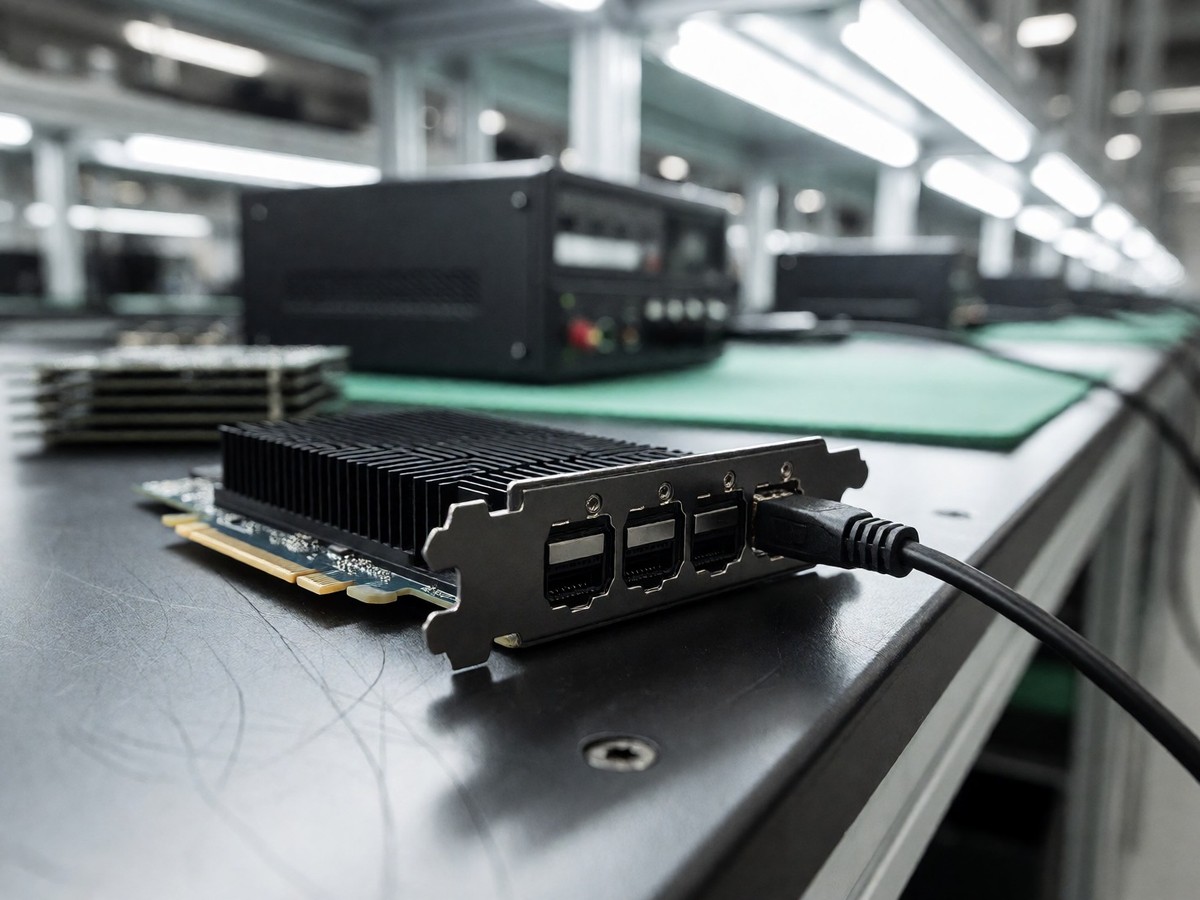
DeepSeek shifts the cost curve
DeepSeek-V3 required 2.788 million H800 GPU-hours for training, costing $5.576 million. This efficiency changes how enterprises view AI infrastructure. A researcher confirmed that DeepSeek-V3-0324 in 4-bit runs at more than 20 tokens per second on a 512GB M3 Ultra. This local capability removes cost barriers for organizations that previously viewed frontier models as accessible only to the well-resourced. DeepSeek-V4-Pro-0813, which released on August 12, 2026, contains 1.6T total parameters and 49B active parameters. DeepSeek processed 14.37 trillion tokens on OpenRouter between November 2024 and November 2025, which is 2.6 times the volume of the Qwen model family. The company raised more than $7.4 billion in June 2026, reaching a valuation of more than $50 billion. DeepSeek also reported that V4-Pro-0813 leads V4-Flash-0731 on all eleven benchmarks it reported. In January 2025, the DeepSeek launch caused NVIDIA to lose $589 billion in market value in one day as investors rethought the cost curve of frontier AI. DeepSeek’s GitHub project, DeepSeek Harness, grew to over 100,000 stars in under 48 hours after its August 13, 2026, release. On August 23, 2026, DeepSeek narrowed peak windows and dropped weekend peak pricing for its V4 models. The industry’s shift toward mid-tier efficiency and consumption-based billing makes proprietary dominance harder to maintain.
| Model | Input Price (per 1M tokens) | Output Price (per 1M tokens) |
|---|---|---|
| GPT-5.6 Sol | $5.00 | $30.00 |
| GPT-5.6 Luna | $0.20 | $1.20 |
| DeepSeek V4-Flash (Peak) | $1.32 | $0.66 (Off-peak) |
| Claude 3.5 Sonnet | $3.00 | $15.00 |
Migration frameworks for the cloud
Anthropic made Claude available in Microsoft Foundry on June 29, 2026. Azure customers can deploy Claude Opus 4.8 and Claude Haiku 4.5 using existing Azure authentication, billing, and compliance workflows. This integration removes procurement friction for Microsoft-centric shops. For enterprises managing complex migrations, Techstack provides migration pods consisting of a cloud architect, engineers, and a project lead. Techstack specializes in re-architecting monolithic applications into containerized, Kubernetes-based systems. Deloitte handles regulated industries such as insurance and banking by building compliance frameworks into migration plans. Accenture manages large-scale migrations for Fortune 500 manufacturers using delivery centers spread across multiple continents. For companies moving massive workloads, firms like Accenture provide the ability to run parallel migration tracks across a dozen countries simultaneously, which relies on delivery centers spread across multiple continents to maintain momentum. Cognizant serves mid-to-large enterprises by providing managed services after go-live to handle ongoing optimization and cost management. Capgemini manages hybrid cloud engagements for European manufacturers who keep certain workloads on-premise for regulatory reasons. IBM Consulting and Capgemini both provide deep hybrid cloud and legacy-systems experience for clients running significant on-premise infrastructure. Cloud migration consultants assess existing environments by mapping every server, database, and undocumented integration to produce a realistic roadmap that avoids mid-project surprises.
Consumption billing and security flaws
Microsoft Copilot Cowork reached general availability on a consumption-only model at $0.01 per Copilot Credit. This model requires an existing Microsoft 365 Copilot seat and administrative approval to enable usage billing. Tasks range from simple operations costing between $1 and $3 to complex operations that can reach hundreds of dollars per run. Microsoft also plans to fold consumer and enterprise Copilot into a single "super app" around August. Anthropic addressed the cost-governance gap on July 2, 2026, by rolling out new analytics and cost controls for Claude Enterprise. Admins can now set spend-threshold alerts at 75% and 90% of an org-level limit. The Analytics/Admin API pushes this information into finance tools like Datadog and CloudZero. Security risks also increased when Cato AI Labs disclosed DuneSlide on July 1, 2026. DuneSlide includes two zero-click remote code execution flaws, CVE-2026-50548 and CVE-2026-50549, in the Cursor AI code editor. These flaws have a CVSS rating of 9.8 and affect every version of Cursor before 3.0. A malicious instruction in a web search result or an MCP connector response can escape the terminal sandbox to run commands on a developer’s machine. CISA also added CVE-2026-45659, a deserialization RCE in Microsoft SharePoint Server, to its Known Exploited Vulnerabilities catalog on July 1, 2026. The vulnerability affects SharePoint Subscription Edition, 2019, and Enterprise 2016, and the patch has been available since May. The Government of Alberta used Claude to find and fix cybersecurity vulnerabilities across its government systems. This provides a way to use AI for defense. You should confirm your engineers use Cursor 3.0 or later. Will the increasing speed of AI-driven exploitation outpace traditional enterprise patching cycles?